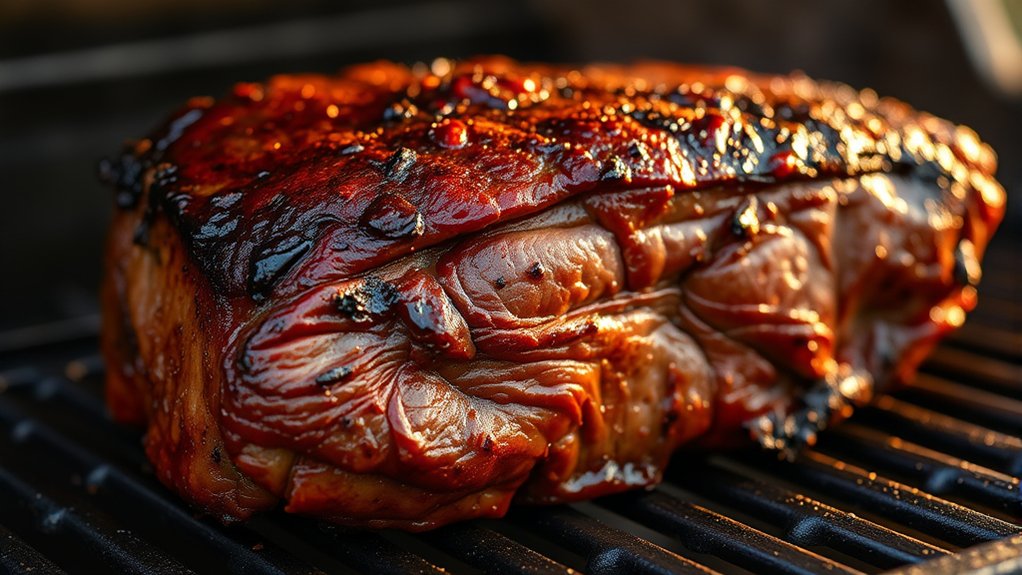
How Long to Cook Chuck Roast on a Pellet Grill?
Cooking a chuck roast on a pellet grill can seem tricky, especially if you’re aiming for that perfect tender bite. Many people struggle with getting the right texture while maintaining flavor, but you’re not alone. With a little patience and the right techniques, you can make a mouthwatering roast every time.
To cook a chuck roast on a pellet grill, aim for 4 to 6 hours at a steady 225°F to 250°F temperature. Start by marinating and seasoning your meat, then cook low and slow to break down collagen for tenderness.
Use a meat thermometer to check for an internal temp of 195°F to 205°F. For perfect results, keep an eye on texture and juices—if you want to know all the tips, keep exploring.
Key Takeaways
- Cook at 225°F to 250°F for 4 to 6 hours for tender, low-and-slow results.
- Use a meat thermometer to monitor the internal temperature, aiming for 195°F to 205°F.
- Let the roast rest for 10-15 minutes after cooking to help redistribute the juices.
- Wrap it in foil during the last hours if you want to keep it moist.
- Longer cooking times help break down collagen, making the meat extra tender.
How to Prepare and Season Your Chuck Roast for Pellet Grilling
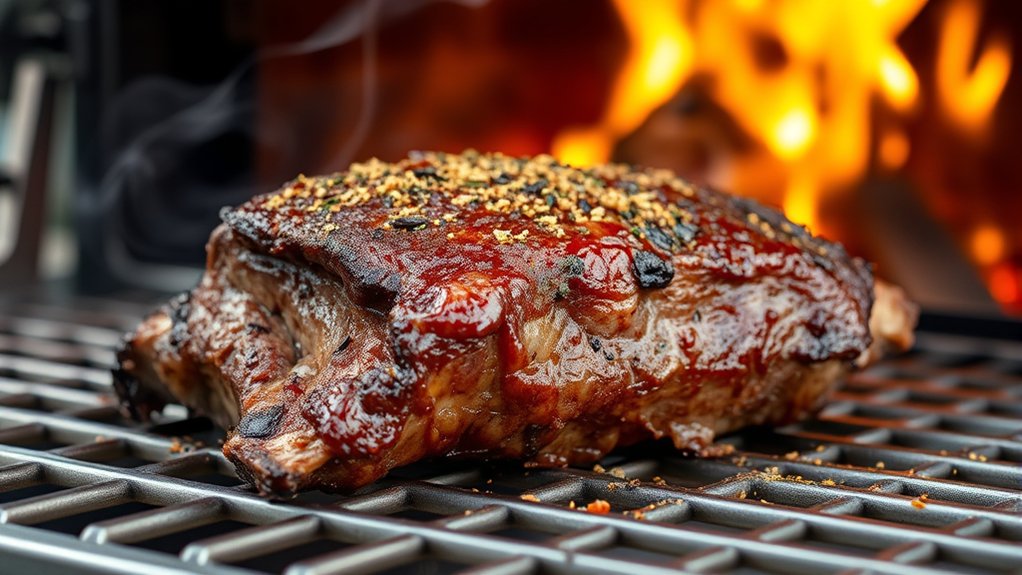
Before you start grilling, it’s important to properly prepare and season your chuck roast to guarantee maximum flavor. Begin by choosing a marinade that infuses moisture and boosts taste—think soy sauce, garlic, or a simple mixture of olive oil and herbs.
Properly prepare and season your chuck roast with marinade and spices for maximum flavor and tenderness.
Marinating for at least a couple of hours or overnight helps tenderize the meat and amplifies flavor. Next, pat the roast dry with paper towels to ensure a good sear.
Use quality cooking accessories, like a meat thermometer, to monitor internal temperature. Consider adding a smoker box or foil to help retain moisture during grilling.
Season your roast generously with salt, pepper, and your favorite spices or dry rub. Applying a layer of mustard or oil before seasoning helps the spices stick better.
Proper preparation and seasoning create a flavorful crust and tender interior, setting the stage for a perfectly cooked chuck roast on your pellet grill.
What’s the Best Temperature for Cooking Chuck Roast?
To get the best results, you want to cook your chuck roast at a temperature around 225°F to 250°F. That low and slow approach really helps the meat become tender without overdoing it.
Just keep an eye on the temperature, and you’ll end up with a juicy, flavorful roast that’s cooked to perfection.
Ideal Cooking Temperature
Achieving the perfect tenderness for your chuck roast depends heavily on maintaining the right cooking temperature. For maximum flavor infusion and smoke penetration, keep your pellet grill between 225°F and 250°F.
This range allows the meat to slowly break down, locking in juices and developing rich, smoky flavors. Cooking too hot can toughen the meat and reduce the smoke’s ability to penetrate deeply, while too low might extend cooking time unnecessarily.
Consistently maintaining this temperature ensures your roast absorbs maximum smoke flavor without drying out. It’s a balance that guarantees a juicy, tender result with well-infused flavors.
Use a reliable meat thermometer to monitor your grill’s temperature, and adjust as needed to stay within this ideal range.
Temperature for Tenderness
Maintaining the right internal temperature is key to getting tender, easily shreddable chuck roast. Aim for a temperature between 195°F and 205°F, which helps break down connective tissue for maximum tenderness.
Using marinade techniques beforehand can boost flavor and moisture, making the meat even more succulent. Once cooked, pair your roast with hearty sides like roasted vegetables or mashed potatoes.
Here’s a quick guide:
| Temperature (°F) | Result |
|---|---|
| 190-195 | Slightly firmer, good for slicing |
| 195-205 | Perfect for shredding, tender consistency |
| 205+ | Overcooked and may become dry |
| 170-185 | Too low, less tender |
| 210+ | Dry and tough texture |
Adjust your cooking based on how tender you want your meat, and enjoy your flavorful meal.
How Long Should You Cook a Chuck Roast on a Pellet Grill?
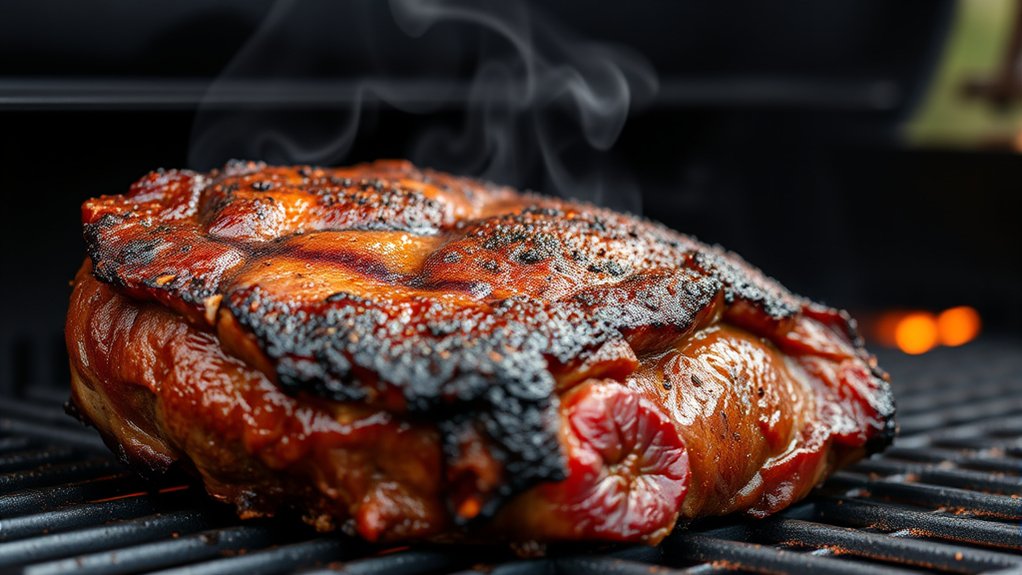
The perfect cooking time for your chuck roast really depends on a few things like how big it is, how thick it’s cut, and the temperature you’re cooking at. Usually, you’re looking at several hours to get that roast nice and tender, with plenty of flavor.
Ideal Cooking Time
To cook a chuck roast to perfection on a pellet grill, aim for about 4 to 6 hours total, depending on the size and how tender you want it. Keeping the temperature steady at around 225°F to 250°F helps ensure even cooking.
Slow cooking allows the collagen to break down, making the meat tender and full of flavor. For extra taste, try applying a dry rub or marinade before grilling—that way, the flavor deepens as it cooks.
Keep an eye on the internal temperature, aiming for around 195°F to 205°F for that perfect pull-apart tenderness. This method balances time and technique to give you a juicy, melt-in-your-mouth chuck roast with rich flavor.
Factors Affecting Duration
Several key factors influence how long you should cook a chuck roast on a pellet grill, and understanding them can help you get the perfect result. Marinating techniques can impact cooking time by tenderizing the meat, so if you marinate beforehand, you might need slightly less time.
The thickness and size of your roast also matter—thicker cuts take longer to cook through. Your grilling accessories, like a meat thermometer or a smoker box, help maintain consistent heat and monitor internal temperature, making sure you cook it just right.
External factors such as ambient temperature and wind can affect cooking times too. Adjusting based on these variables will help you avoid under- or overcooking, leading to a juicy, tender chuck roast every single time.
How Do I Know When My Chuck Roast Is Done?
Knowing when your chuck roast is done is key to making sure it’s tender and flavorful. You’ll want to rely on your senses and proper techniques to tell if it’s ready.
First, check the texture. The meat should easily pull apart with a fork, which means it’s reached the perfect tenderness. If it’s still tough, give it more cooking time.
Check if the meat easily pulls apart with a fork for perfect tenderness.
Next, look for clear juices when you pierce the roast. If the juices run pink or bloody, it needs more time. Clear juices are a good sign it’s done.
Also, pay attention to the color and appearance. A rich, caramelized crust on the outside shows it’s developed great flavor from grilling. It’s a visual cue that your roast is on the right track.
Finally, trust your nose. A deep, savory aroma indicates the flavors are fully developed and the meat is ready to enjoy.
Using these cues helps you avoid overcooking or undercooking. While a meat thermometer can be helpful, your senses are the best tools for perfect tenderness on your pellet grill.
Using a Meat Thermometer to Check for Perfect Doneness
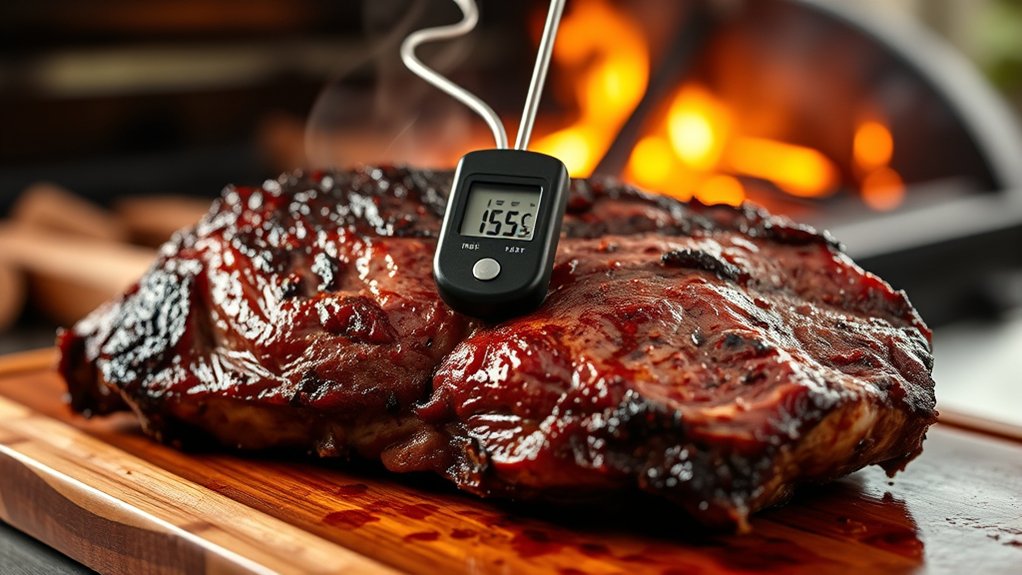
Using a meat thermometer is a reliable way to make sure your chuck roast reaches the perfect doneness, especially when visual cues and texture checks aren’t enough. Just insert the thermometer into the thickest part of the roast, avoiding fat or bone for an accurate reading.
This step is especially important if you’ve marinated the meat or used spice rubs, as you want to confirm even cooking without overcooking the outside. For tender, pull-apart meat, aim for an internal temperature around 195°F to 205°F.
If you prefer a slightly firmer texture, cook it to about 190°F. Using a thermometer helps take the guesswork out of cooking, especially when spice rubs or marinades might hide signs of doneness.
It also helps prevent undercooking, which can leave the meat tough, or overcooking, which can dry it out. Remember to check the temperature regularly during the final stages of cooking for the best results.
How Long Should You Rest Your Chuck Roast Before Serving?
Allowing your chuck roast to rest after cooking is key to juicy, tender meat. Resting helps the juices redistribute, making each bite flavorful. Usually, you should rest your roast for about 10 to 15 minutes.
During this time, cover the roast loosely with foil to keep it warm. It’s also a good moment to think about your marinade ideas for next time, adding even more flavor.
While waiting, consider side dishes like roasted vegetables or mashed potatoes to complement the rich meat. Remember, don’t slice immediately—cutting too soon lets the juices escape and can dry out the meat.
Resting is a perfect chance to finalize your marinade plans or pick your sides. This simple step helps keep your meat moist and full of flavor when served.
Taking this time to rest makes a big difference in how tender and tasty your chuck roast turns out.
Tips for Cooking Juicy and Tender Chuck Roast Every Time
After resting your chuck roast, the next step is to make sure it stays juicy and tender during cooking. Start with marinade variations to boost flavor and moisture. Use acidic ingredients like vinegar or citrus, or try soy sauce and herbs for added depth.
Let the roast marinate for at least a few hours or overnight for the best tenderness. When it’s time to cook, pick a suitable cooking vessel—like a roasting pan, Dutch oven, or foil-lined tray—that keeps moisture in and heats evenly.
Covering the roast during cooking helps trap steam, which keeps it moist and prevents it from drying out. Maintain a steady temperature on your pellet grill, around 225°F to 250°F, for slow, even cooking.
Basting occasionally with marinade or juices can also help boost juiciness. By paying attention to your marinade choices and the right cooking vessel, you’ll always produce a chuck roast that’s tender, flavorful, and juicy.
Troubleshooting Common Issues When Grilling Chuck Roast
Grilling a chuck roast can sometimes lead to issues like dryness, toughness, or uneven cooking, but many of these problems are easily fixable with proper troubleshooting.
First, make sure you’re choosing the right wood pellets. Mesquite or hickory add great flavor but can cause dryness if overused.
Second, keep an eye on your grill temperature. If it’s too hot, the meat might dry out, so aim for a steady 225-250°F.
Third, think about how long you cook. Undercooking can make the meat tough, so use a meat thermometer to check for an internal temp of 195°F.
Fourth, when serving, pair your roast with a bold red wine to complement the richness.
If the meat feels tough, try wrapping it in foil during the last hours of cooking to help retain moisture.
Addressing these issues will help ensure your chuck roast stays tender and flavorful every time.
Serving Ideas to Maximize Flavor and Satisfaction
Once your chuck roast is perfectly cooked on the pellet grill, the next step is serving it in ways that boost its rich flavor and tender texture. Start with marinade options; a simple mix of soy sauce, garlic, and herbs can improve juiciness and add depth.
For serving, slice the roast against the grain for maximum tenderness, and pair it with hearty sides like roasted vegetables or creamy mashed potatoes. You can also shred the meat for sandwiches, adding BBQ sauce or a tangy glaze for extra flavor.
To elevate the experience, serve with a fresh herb garnish or a side of flavorful gravy. Remember, the goal is to highlight the natural richness of the meat, so avoid overpowering it with heavy sauces.
Frequently Asked Questions About Pellet Grill Chuck Roast
If you’re curious about the best way to cook a chuck roast on your pellet grill, figuring out the right temperature is a big part of the process. It’s pretty important to get that just right so your roast turns out tender and flavorful.
You might also run into some common issues, like uneven cooking or ending up with a dry roast. Don’t worry, though—there are some quick troubleshooting tips that can help you fix these problems and get perfect results every time. Let’s go over some of these questions so you’re all set for your next great cook!
Ideal Cooking Temperatures
Achieving the perfect cook on your pellet grill starts with knowing the right internal temperature for your chuck roast. For tender, juicy results, aim for an internal temperature of 195°F to 205°F.
To improve flavor, consider marinade options like soy-based or citrus marinades, which can add moisture and depth. When choosing cooking methods, low and slow is best—think about indirect heat and extended cooking times.
Here are key points to remember:
- Use a reliable meat thermometer for accuracy.
- Target 195°F-205°F for ideal tenderness.
- Select marinades that complement your flavor preferences.
- Adjust cooking times based on your chosen method and roast size.
Following these temperature guidelines ensures your chuck roast turns out perfectly every time.
Troubleshooting Common Issues
Troubleshooting common issues with your pellet grill chuck roast can save you time and guarantee a delicious result. If your roast isn’t tender enough, try different marinade options to add moisture and flavor. Switching to a better cooking vessel, like a foil pan or roasting tray, can also help trap heat and juices.
If the meat is overcooked or drying out, reduce the cooking time or temperature. Make sure you’re using a vessel that retains moisture. Sometimes, uneven cooking happens because the grill temperature isn’t steady.
Check your pellet supply and clean the grill regularly to keep the heat consistent. Remember, choosing the right marinade and cooking vessel helps prevent common problems, so your chuck roast stays juicy, flavorful, and perfectly cooked.
Frequently Asked Questions
Can I Cook Chuck Roast at Higher Temperatures for Faster Results?
Yes, you can cook a chuck roast at higher temperatures for faster results, but it might affect meat tenderness. Cooking temperature influences how quickly the meat cooks, but higher heat can risk drying out or toughening the roast if not monitored carefully.
To preserve tenderness, consider a moderate temperature and cook it slowly. If you choose higher heat, keep an eye on the roast and use a meat thermometer to prevent overcooking.
Should I Wrap the Chuck Roast During or After Cooking?
Think of wrapping your chuck roast like a cozy blanket wrapping a cherished gift. Wrapping during or after cooking helps seal in moisture, boosting flavor infusion and moisture retention.
It keeps the meat tender and juicy, preventing it from drying out. For the best results, wrap it after cooking to lock in those delicious juices or during the process if you’re aiming for more tender, flavorful meat.
Either way, it’s about safeguarding that savory goodness.
How Does the Size of the Roast Affect Cooking Time?
The size of your roast directly impacts cooking time variations. Larger roasts need more time to cook through evenly, so you should plan for longer durations to guarantee tenderness. Smaller roasts cook faster, so keep a close eye to prevent overcooking.
Always use a meat thermometer to check for doneness. Consider roast size when timing your pellet grill session for perfect results.
Can I Cook Frozen Chuck Roast on a Pellet Grill?
Starting with a frozen chuck roast is like awakening a sleeping giant—it’s possible, but it takes patience. You should thaw it first for even cooking.
When you do, try marinade options and seasoning techniques that infuse flavor deep into the meat. This will turn it into a tender masterpiece.
Cooking from frozen might take a bit longer, but with care, your pellet grill will transform this raw potential into a delicious, hearty meal.
What Wood Pellets Are Best for Smoking Chuck Roast?
For smoking chuck roast, hickory or oak pellets are your best bet—they give a rich, smoky flavor that pairs perfectly with beef.
Before you start cooking, think about marinades like soy and garlic, or keep it simple with a dry rub of salt, pepper, and paprika.
Apply your seasoning evenly and let the roast sit for a few hours. This helps boost the flavor and tenderizes the meat, making your smoked chuck roast juicy and delicious.
Conclusion
So, there you have it—your foolproof guide to mastering chuck roast on a pellet grill. With patience, a good thermometer, and a dash of culinary bravado, you’ll impress even the most skeptical diners.
Remember, if all else fails, just blame the grill. After all, it’s only an inanimate object trying to do your bidding. Now go forth, cook with confidence, and enjoy the tender, smoky goodness that awaits, especially when you know how long to cook chuck roast on a pellet grill.