How to Cook Pork Loin Perfectly on a Pellet Grill?
Cooking pork loin perfectly on a pellet grill is a goal many grilling enthusiasts strive for. If you’ve ever felt frustrated with uneven cooking or dry meat, you’re not alone. Achieving that tender, juicy result can seem tricky, but with the right approach, it’s totally doable.
To cook pork loin perfectly on a pellet grill, start by selecting a fresh, well-marbled cut and season or marinate it for extra flavor. Preheat your grill to 225-250°F, then cook the loin until the internal temperature reaches 145°F, using reliable thermometers to monitor progress.
Keep smoke levels balanced and maintain steady heat for even cooking. Rest the meat for 10-15 minutes before slicing to ensure juiciness. If you want to master this technique, exploring the details will definitely help.
Key Takeaways
- Preheat your pellet grill to 225-250°F and choose quality wood pellets for a steady smoke flavor.
- Season or marinate the pork loin to boost tenderness and flavor. Aim for an internal temperature of 145°F.
- Keep a reliable thermometer handy to keep track of the internal temp, so you don’t overcook or undercook.
- Rotate and position the meat for even heat exposure. Consider wrapping it in foil halfway through for extra moisture.
- Let the pork loin rest for 10-15 minutes before slicing against the grain. This keeps it juicy and tender.
Why Pellet Grills Are the Best Choice for Cooking Pork Loin
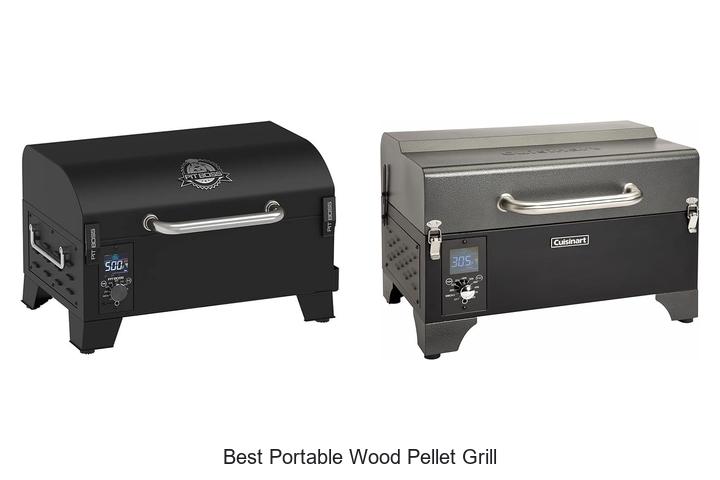
Pellet grills are the ideal choice for cooking pork loin because they offer consistent temperature control, which is vital for tender, evenly cooked meat. When selecting your pork loin, focus on a well-trimmed cut with good marbling to guarantee flavor and juiciness.
Pellet grills excel at maintaining steady heat, so you can cook your pork slowly without fluctuations that could dry it out or cause uneven cooking. Regular grill maintenance is essential; clean the grates before and after use to prevent sticking and ensure even heat distribution.
Keeping your pellet grill in top shape allows it to operate efficiently, giving you precise temperature control throughout the cooking process. This consistency helps you avoid overcooking or undercooking your pork loin.
With proper pork loin selection and diligent grill maintenance, your pellet grill becomes a reliable tool for crafting perfectly cooked, flavorful pork every time.
How to Select the Perfect Pork Loin for Grilling
When you’re picking out a pork loin for grilling, the first thing to keep in mind is the quality of the meat. You want something fresh and good-looking, so look for a bright pink color and a firm texture—that’s a good sign it’s tender and juicy.
And don’t forget about the size! Choose a piece that fits your grill and your meal plan. This way, cooking will be easier, and serving up delicious grilled pork won’t be a hassle.
Ideal Meat Quality
Choosing the right pork loin is key to getting tender, flavorful grilled meat. When picking your cut, focus on tenderness and overall quality. Look for even marbling, which helps keep the meat moist and juicy while grilling.
Avoid cuts that look dry or overly lean, as they can turn tough. A good pork loin should feel firm but not hard, with a texture that’s just right. High-quality meat will have a firm feel without too much fat.
Think about these factors when selecting your pork loin:
| Aspect | What to Check | Why It Matters |
|---|---|---|
| Marbling | Small streaks of fat evenly dispersed | Keeps meat tender and moist |
| Color | Light pink with slight sheen | Shows freshness |
| Firmness | Firm but not hard | Indicates quality and freshness |
| Surface | Smooth, without blemishes | Good handling and freshness |
| Fat Cap | Even thickness without excess fat | Adds flavor without making it overly fatty |
Freshness and Color
Selecting a fresh pork loin starts with checking its color and overall look. Look for a pinkish hue with a slight shine, which means it’s fresh. Avoid pork that looks grayish or dull, as that’s a sign it’s not fresh.
Take a look at the marbling—those thin streaks of fat inside the muscle. Good marbling adds flavor and tenderness. When the fat is well-distributed, it helps your pork stay juicy and flavorful during cooking.
The right pork loin should feel firm and moist, but not slimy or swimming in liquid. Fresh meat responds better to grilling, holding up well without drying out. Choosing a cut with bright color and nice marbling sets you up for a successful, tasty cook.
Proper Size Selection
Picking the right size pork loin is key for even cooking and easy portions. A smaller cut cooks faster and stays tender, while a larger one needs more time and attention.
Choose a size that fits your grilling session and how many people you’re serving. Also, think about thickness—thinner loins tend to cook more evenly.
| Size | Suitable for |
|---|---|
| 2-3 pounds | Quick, manageable grilling |
| 4-5 pounds | Larger gatherings, meal prep |
| 6+ pounds | Big parties, extended cooking |
Getting the right size helps you use the best cooking techniques. It ensures a juicy, tender pork loin without overdoing or undercooking.
Proper size selection makes the process easier and guarantees a tender, flavorful result.
Getting Your Pellet Grill Ready for Pork Loin
Have you prepped your pellet grill properly to make certain your pork loin turns out perfectly? Before cooking, verify your grill is clean and well-maintained. Proper grill maintenance, like cleaning out ash and wiping down surfaces, prevents unwanted flavors and promotes even heat distribution.
This sets the stage for maximum flavor infusion, allowing the smoke and seasoning to penetrate the meat effectively. Next, check your pellets—using high-quality wood guarantees a consistent smoke that boosts the pork’s natural flavors.
Preheat your grill to the right temperature, typically around 225-250°F, to promote slow, even cooking. Make sure the temperature probe is accurate for precise control.
Best Seasoning and Marinating Tips for Juicy Results
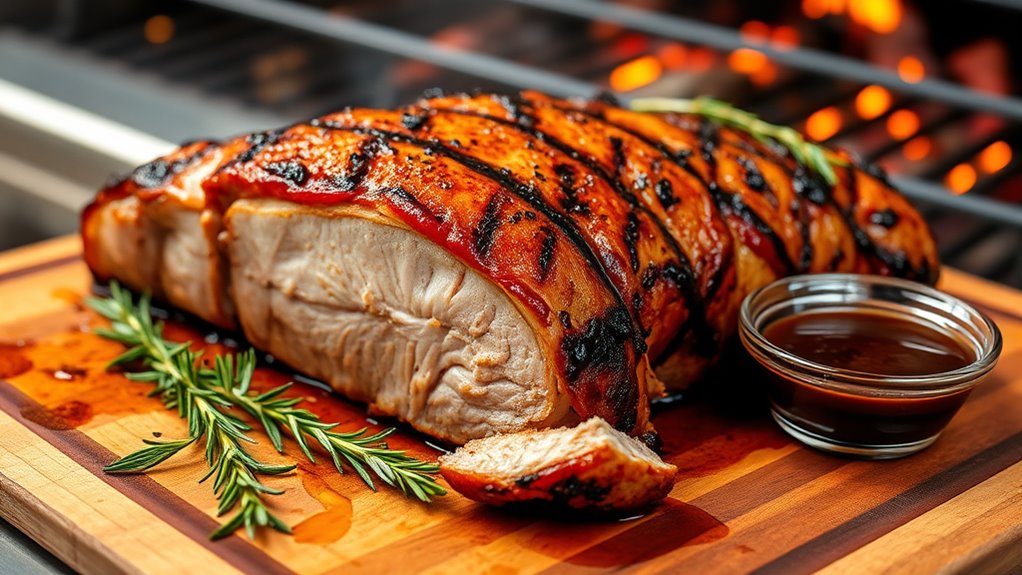
To get juicy, flavorful pork loin on your pellet grill, the right seasoning and marinating are key. Start with a blend like paprika, garlic powder, onion powder, salt, and pepper. These spices boost flavor without overpowering the meat.
Marinating helps tenderize and add moisture. Try soaking the pork in a mix of apple cider vinegar, olive oil, and herbs for at least 2 hours. For deeper flavor, marinate overnight.
Here are some seasoning blends and marinating ideas to try:
| Seasoning Blends | Marinating Techniques |
|---|---|
| Paprika, garlic, onion, salt, pepper | Apple cider vinegar, olive oil, herbs |
| Cumin, chili powder, thyme | Lemon juice, soy sauce |
| Brown sugar, mustard, sage | Yogurt-based marinade |
| Italian herbs, rosemary | Beer or wine marinade |
Following these tips will help keep your pork juicy and full of flavor after grilling.
How to Set the Right Temperature and Smoke Level
To get that perfect pork loin, you want to set your grill temperature somewhere between 225°F and 250°F. This range helps the meat cook steadily and evenly.
When it comes to smoke, just adjust the level to match what you’re craving—whether you like a light smoky flavor or something more pronounced. You can do this using your grill’s controls or smoke output settings.
And don’t forget to keep an eye on everything with reliable thermometers or monitoring tools. That way, you can make sure your pork stays tender, juicy, and full of flavor from start to finish.
Ideal Temperature Range
Setting the right temperature for your pork loin on a pellet grill is key to getting tender, juicy results. The ideal cooking temperature range is between 225°F and 250°F.
This low and slow approach helps the meat cook evenly, breaking down connective tissues for maximum tenderness. Keeping the temperature steady ensures your pork stays moist without drying out.
Use a reliable meat thermometer to check the internal temperature, aiming for about 145°F for safe, perfectly cooked pork loin. Cooking within this range helps you get the best tenderness and flavor.
Remember, consistent temperature control is crucial to avoid overcooking or undercooking. Adjust your grill settings as needed to keep things on track.
With these tips, your pork loin will turn out juicy, flavorful, and perfectly cooked every time.
Smoke Intensity Control
Controlling smoke intensity is key to infusing your pork loin with flavor without overpowering its natural taste. When you set the right smoke level, it helps the smoke penetrate the meat better and boosts its flavor without making it bitter or too smoky.
A lower smoke setting, around 225°F, gives gentle smoke that seeps into the meat. This promotes flavor infusion while keeping the pork juicy. If you want a stronger smoky flavor, you can slightly increase the smoke output.
Just be careful not to use too much smoke, as it can lead to bitterness. Use your pellet grill’s smoke control features to fine-tune the amount of smoke produced. The goal is to find a balanced smoke level that complements the pork’s natural flavors without overwhelming them.
Monitoring Tools Usage
Using monitoring tools effectively is key to getting that perfect cook on your pellet grill. You’ll want to keep a close eye on the temperature to make sure your pork loin stays juicy and tender.
Use a reliable digital thermometer to check the internal temperature, adjusting your grill’s settings as needed. Setting the right smoke level enhances flavor without overpowering the meat’s natural taste.
For different cooking styles, like low-and-slow or hot-and-fast, monitoring tools help you stay precise. By regularly checking your grill’s temp and smoke output, you can avoid under- or overcooking.
This control lets you experiment with flavors confidently, knowing your pork loin will cook evenly and develop a delicious crust. Proper monitoring turns an ordinary cook into a perfectly executed meal.
Tips for Achieving Even Cooking and Maintaining Juiciness
To achieve even cooking and keep your pork loin juicy, it’s important to keep an eye on your grill’s temperature and maintain a steady heat throughout. Proper techniques help heat penetrate evenly, so you avoid dry spots or overcooking. Choosing the right flavor pairings also boosts moisture and taste.
Use a two-zone fire setup to balance direct and indirect heat. This promotes even cooking without drying out the meat. Rotate the pork loin regularly so all sides get equal heat exposure.
Halfway through, wrapping the loin in foil or butcher paper helps lock in moisture and keeps it juicy. Pair your pork with flavors like apple, garlic, or herbs—they complement the meat and help retain moisture.
How to Monitor Pork Loin’s Internal Temperature
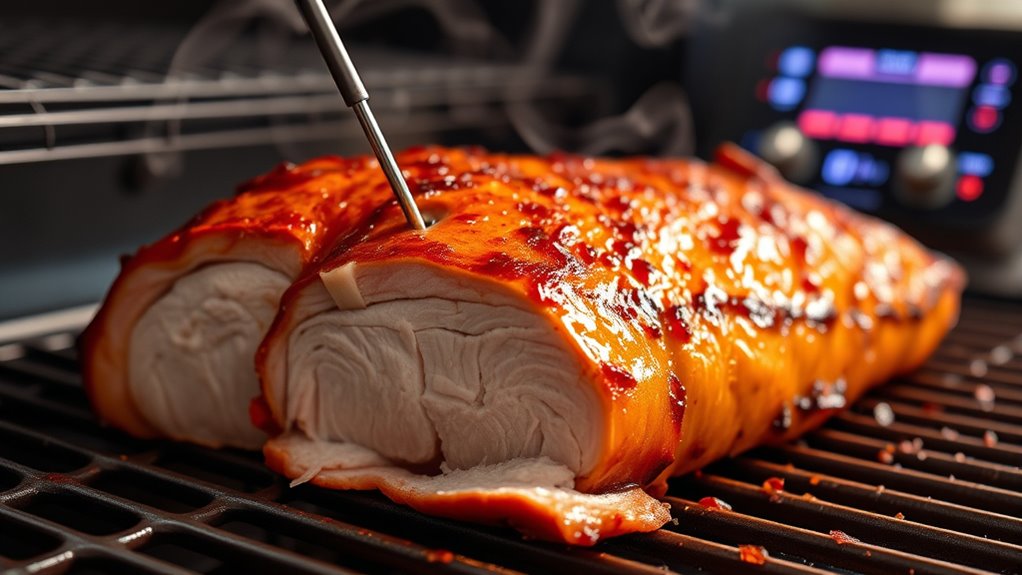
To make sure your pork loin cooks just right, grab a good thermometer and keep an eye on its internal temperature. It’s pretty simple—just check it often so you don’t end up overcooking or undercooking. When it hits the right temperature, you’ll know your pork will turn out juicy and tender every time.
Use a Reliable Thermometer
A reliable thermometer is key to cooking pork loin perfectly on your pellet grill. It helps you hit the right internal temperature without overcooking.
When using it, insert the probe into the thickest part of the loin, avoiding bone and fat for the most accurate reading. Keep an eye on the temperature to monitor doneness.
This is especially helpful when applying marinade techniques that boost flavor. Adjust your cooking time based on the thermometer’s feedback.
Make sure the pork reaches a safe 145°F while staying juicy and tender. A good thermometer takes the guesswork out of grilling, ensuring perfect results every time.
Plus, it helps you know exactly when your pork is ready, so you can focus on perfecting your marinade techniques and flavor pairings.
Check Temperature Frequently
How often should you check the temperature of your pork loin on a pellet grill? You want to keep an eye on it enough to avoid overcooking or undercooking.
Check your pork every 20-30 minutes, especially during the last hour of grilling. Regular temperature checks help you use the best techniques and keep the meat tender and juicy.
Use a reliable probe thermometer inserted into the thickest part of the meat, avoiding any bones. Remember, resting the meat after cooking is crucial for flavor and final texture.
Here’s a quick reminder:
| Check Frequency | Best Practice | Reason |
|---|---|---|
| Every 20-30 mins | During last hour | Prevents overcooking |
| Every 10-15 mins | When nearing target | Achieves precise control |
| Constant monitoring | During final stages | Ensures perfect doneness |
Monitoring the temperature is key to getting that perfect pork loin.
Target Internal Temperature
Monitoring the internal temperature of your pork loin is essential for perfect doneness. Using precise techniques helps prevent overcooking or undercooking, which can impact flavor and tenderness.
To get it just right, insert a reliable meat thermometer into the thickest part of the loin, avoiding bone or fat. Keep an eye on the temperature as it approaches 145°F, the safe and ideal point for pork.
Remove the loin from the grill when it reaches 5°F below your target temperature. This allows carryover cooking to finish the job, ensuring juicy, flavorful results.
Proper temperature control is key to mastering your pellet grill and creating a perfectly cooked pork loin every time.
Rest and Slice Your Pork Loin for Maximum Juiciness
Once your pork loin reaches the perfect internal temperature, it’s important to let it rest before slicing. Resting helps the juices redistribute throughout the meat, making it juicier.
Allow the pork to rest to lock in juices and ensure maximum tenderness.
Cover the pork loosely with aluminum foil to keep it warm without trapping too much steam, which can affect the crust. Let it rest for at least 10-15 minutes so the fibers can relax and hold onto moisture.
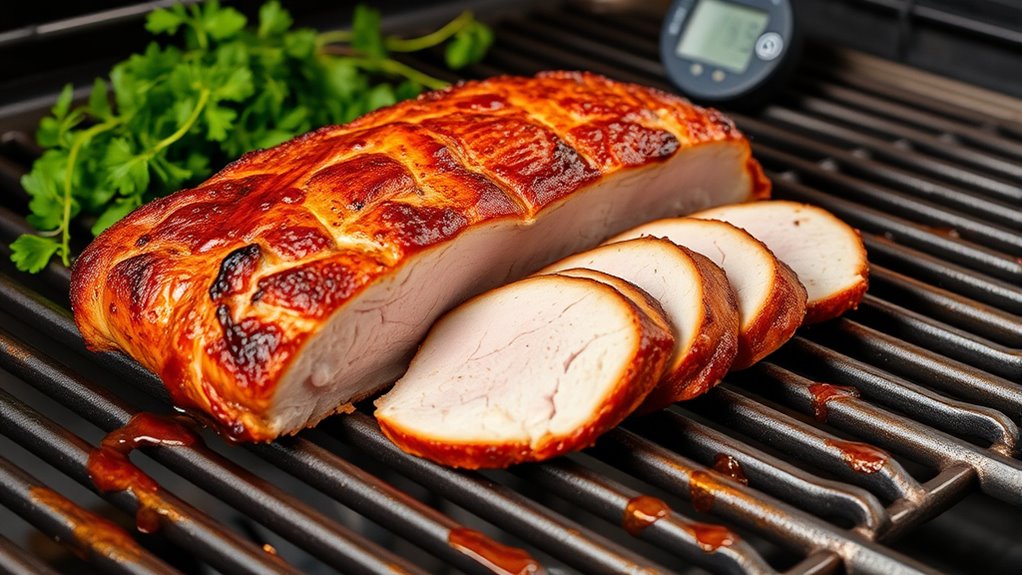
When you’re ready to slice, use a sharp knife and cut against the grain. This makes the meat more tender and easier to chew. Start from the thick end and work your way across evenly.
Proper resting and slicing are key to keeping the meat tender and flavorful. Don’t rush this step — patience pays off with a juicy, perfectly cooked pork loin ready to serve.
Adding Glazes and Sauces to Elevate Your Pork Loin
Adding glazes and sauces is an easy way to boost the flavor and look of your pork loin. Using fruit glazes or spice rubs can turn a good roast into a meal you’ll remember.
To get the most flavor, follow these simple steps:
- Apply a fruit glaze, like apple or cherry, during the last 10–15 minutes of cooking. This creates a shiny, tasty coating that pairs well with the pork’s richness.
- Use spice rubs before grilling to add depth and complexity. A mix of paprika, cumin, and brown sugar works great to enhance the natural flavors.
- Finish with a drizzle of your favorite sauce—barbecue, mustard, or a tangy fruit-based one—to add moisture and a vibrant finish.
Experiment with different combinations to find what you love. Glazes and sauces really make your pork loin more appealing and full of flavor.
Troubleshooting Common Issues When Cooking Pork Loin on a Pellet Grill
Even with careful planning, you might run into issues when cooking pork loin on a pellet grill, but most problems can be fixed quickly with a little troubleshooting. If your pork isn’t cooking evenly, check your techniques—make sure your grill temperature stays steady and consistent.
Use a meat thermometer to prevent under- or overcooking. If your pork turns out dry, it’s probably overcooked; aim for an internal temperature of 145°F. For better flavor, avoid bland seasonings that can make the meat dull. Spice blends and marinades help boost moisture and taste.
Use a meat thermometer and aim for 145°F for juicy, flavorful pork loin.
If your pork isn’t as tender as you’d like, try wrapping it in foil partway through cooking or using a water pan to keep humidity high. Finally, if the smoke flavor isn’t strong enough, increase your pellet smoke setting or add a handful of wood chips.
These simple adjustments will help ensure your pork loin turns out juicy, flavorful, and perfectly cooked.
Frequently Asked Questions
How Long Does It Typically Take to Cook Pork Loin on a Pellet Grill?
It usually takes about 1.5 to 2 hours to cook pork loin on a pellet grill, depending on how thick it is.
Aim for an internal temperature of 145°F to keep it safe, juicy, and flavorful.
Use a meat thermometer to keep track of the temperature, and start checking around the 1.5-hour mark.
Keep the grill steady at around 225-250°F for even cooking and tender pork.
Can I Cook Frozen Pork Loin on a Pellet Grill?
Yes, you can cook frozen pork loin on a pellet grill, but you need to use the right techniques and be patient. Starting with a lower grill temperature helps ensure even cooking.
Keep in mind, you’ll need to extend the cooking time since it’s frozen. It’s really important to use a meat thermometer to check if it’s cooked through. Always cook from frozen to keep it safe, but be prepared for a longer cook time.
What Wood Pellet Flavors Are Best for Pork Loin?
For pork loin, apple or cherry wood pellets are your best bet because they offer a mild smoke flavor that complements the meat’s natural sweetness. These flavors create a balanced pairing without overpowering the pork.
If you prefer a richer taste, hickory provides a stronger smoke intensity, adding depth. Ultimately, choose a wood pellet flavor that matches your desired smoke level and enhances the pork’s flavor.
Should I Cover the Pork Loin During Grilling?
You should cover the pork loin during grilling for even cooking and moisture retention. Using a lid or foil helps keep the temperature steady and prevents the meat from drying out.
While some people like open grilling for that smoky crust, covering it with good grilling accessories ensures the pork stays tender and juicy.
Keep an eye on the temperature, aiming for about 145°F. Use a thermometer to check the progress so you get perfect results every time.
How Do I Prevent the Pork Loin From Drying Out?
To prevent your pork loin from drying out, use marinade techniques to keep it moist and flavorful. Marinate the meat for a few hours before grilling, which helps retain juiciness.
After cooking, follow resting practices by letting the pork rest for about 10 minutes. This allows juices to redistribute, ensuring every bite remains tender and moist.
Cover loosely with foil during resting for ideal results.
Conclusion
Master the art of cooking pork loin on a pellet grill by choosing quality meat, seasoning it well, controlling the temperature, and monitoring internal heat. Rest it to lock in juices, add glazes or sauces for extra flavor, and troubleshoot any issues with confidence.
With these steps, you’ll guarantee every bite is tender, juicy, and perfectly cooked. Turn your grilling skills into a delicious success story, and enjoy pork loin that’s as flavorful as it is effortless. Cooking pork loin on a pellet grill has never been easier or more satisfying.