How Long to Smoke Salmon at 225 on a Pellet Grill
Many people struggle with getting perfectly smoked salmon on their pellet grills, and you’re not alone. It can be tricky to nail that ideal texture and flavor without overcooking or underdoing it. But with the right tips, you’ll be well on your way to delicious, smoky salmon every time.
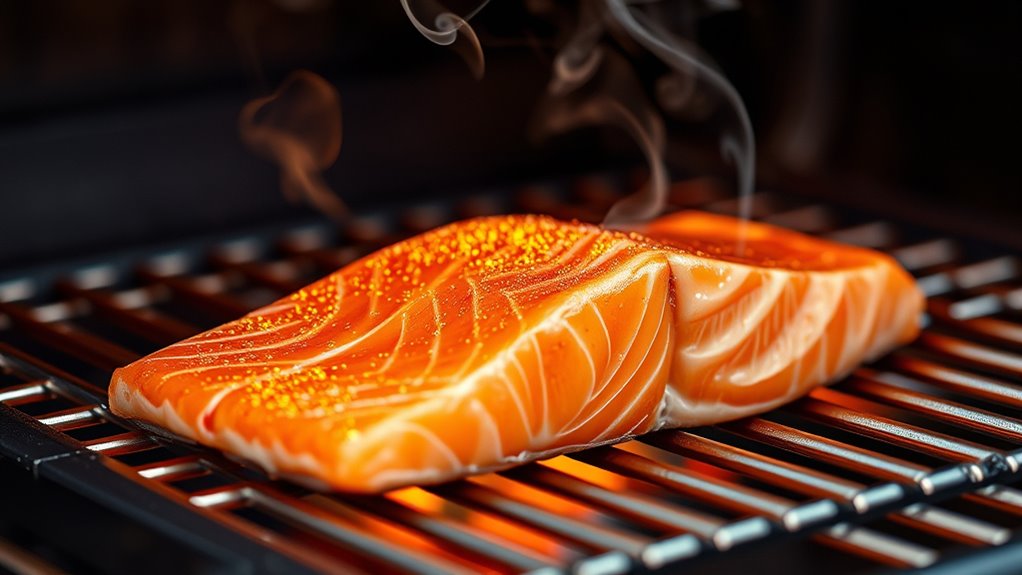
You should smoke your salmon at 225°F for about 1.5 to 2 hours. Thicker fillets may need closer to two hours, while thinner cuts cook faster—often under an hour.
Keep an eye on the internal temperature, aiming for 145°F for perfect doneness.
Using the right wood, like alder or apple, enhances the flavor and makes a big difference in your smoked salmon.
For more tips on perfect smoking techniques, keep exploring how to get the best results.
Key Takeaways
- Smoke salmon at 225°F for about 1.5 to 2 hours, but keep an eye on the thickness since that can change the timing.
- Use an internal temperature of 145°F to know when it’s perfectly done.
- Thicker fillets will need a bit more time, so check the temperature early to avoid overcooking.
- Keep the temperature steady throughout to let the smoke penetrate properly and cook the salmon evenly.
- Look for an opaque, flaky texture and a moist appearance to confirm it’s ready to eat.
How Does Smoking Salmon at 225°F Affect Its Flavor and Texture?
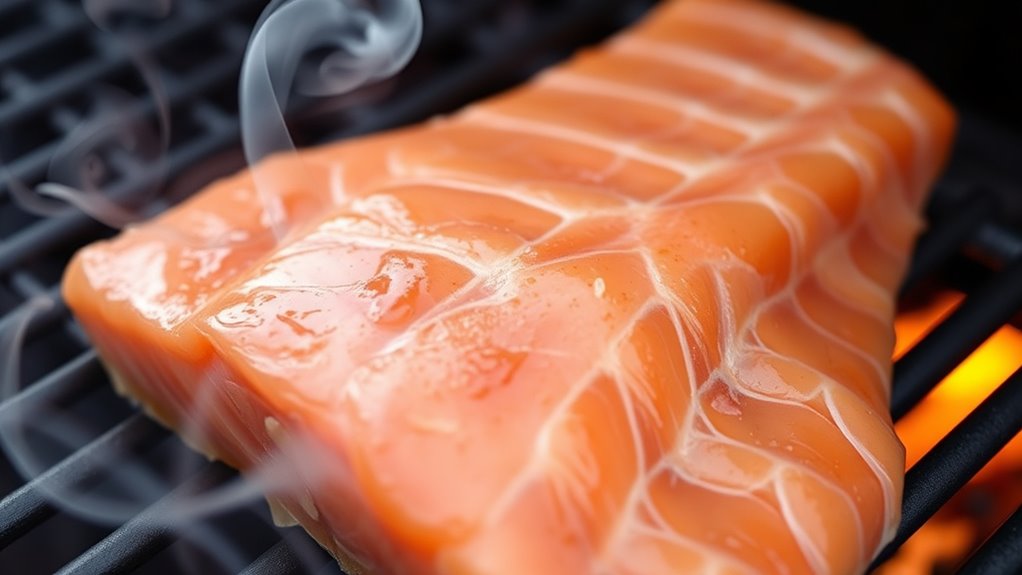
Smoking salmon at 225°F boosts its flavor by adding a smoky richness that complements the fish’s natural taste. This process enhances the overall flavor, giving your salmon a deep, savory character that other cooking methods can’t quite match.
Smoking salmon at 225°F adds smoky richness and deepens its natural, savory flavor.
As the smoke seeps into the flesh, it creates a layered taste experience, balancing the fish’s gentle sweetness with bold smoky notes. The slow, steady heat also changes the texture—making the fish tender yet firm, staying moist while developing a slightly flaky texture.
This gentle cooking helps preserve the salmon’s natural oils, resulting in a juicy, flavorful bite. The combination of enhanced flavor and improved texture makes smoking at this temperature perfect for a well-balanced dish.
You’ll notice the smoky aroma lingering, elevating the whole eating experience and making your salmon truly special.
How Do You Prepare Salmon for Smoking?
Preparing salmon for smoking starts with choosing fresh, high-quality fish and handling it properly to get the best flavor and texture.
Begin by rinsing the fillet under cold water and patting it dry with paper towels.
To enhance the flavor, you can use a marinade, which adds moisture and infuses taste. Marinate for at least 30 minutes or up to a few hours, depending on your preference.
Before smoking, remove the salmon from the marinade and let it air dry slightly. This helps develop a better smoke ring.
Next, apply your seasonings like salt, pepper, garlic, or herbs, making sure to coat all sides evenly.
Seasoning enhances the natural flavors and creates a delicious crust.
With good marinade and seasoning, your salmon will turn out flavorful, tender, and ready for the smoking process.
What Is the Ideal Smoking Time for Salmon at 225°F?
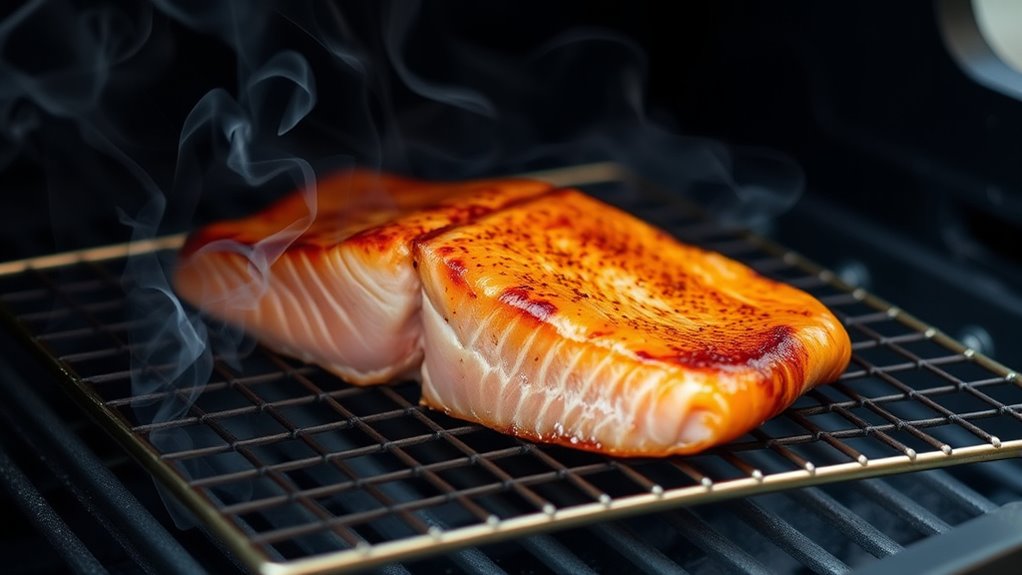
When smoking salmon at 225°F, the ideal time is usually between 1.5 to 2 hours. However, it can vary depending on the size and thickness of your fillet.
During this process, focus on infusing flavor by letting the smoke penetrate deeply. Keeping the temperature steady is crucial—too high and you risk overcooking, too low and the smoke won’t develop the right flavor.
Check the internal temperature of the salmon; it should reach about 145°F for safe eating. Many people prefer to pull it a bit earlier for more moisture and tenderness.
Watch the color and texture—your salmon should be opaque and flaky when done. That timing helps balance smoky flavor with proper doneness.
What Factors Influence How Long You Should Smoke Salmon?
Several key factors can influence how long you should smoke salmon, so it’s important to adapt your process rather than rely on fixed times. First, consider the salmon sourcing—wild-caught or farmed salmon can vary in fat content, which affects smoke time.
Second, flavor pairing matters. Stronger seasonings or glazes might require slightly different smoking durations to develop the perfect taste. Third, the thickness of your fillet influences cooking time; thicker cuts need more time to reach ideal doneness.
Fourth, your pellet grill’s consistency and temperature fluctuations can impact smoke duration, so keep a close eye on your grill. Remember, a well-sourced salmon with rich flavor pairing will often smoke faster or slower depending on its freshness and fat content.
Adjust your smoking time based on these factors to ensure your salmon is perfectly smoked, tender, and flavorful without over- or under-cooking.
How Can You Tell When Your Smoked Salmon Is Perfectly Done?
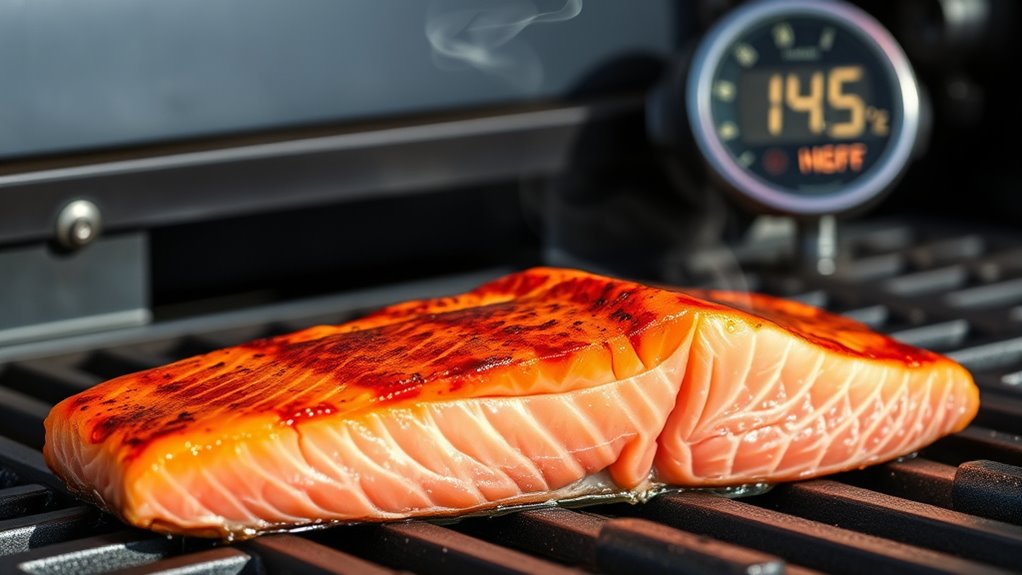
Knowing the perfect moment your smoked salmon is done can be tricky, but there are clear signs to look for. First, check the internal temperature—aim for 145°F (63°C)—using a meat thermometer. When it hits this point, your fish is safely cooked and tender.
Check for 145°F internal temp and a flaky, opaque texture to ensure perfect smoked salmon doneness.
Another indicator is the color: the salmon should have a slightly opaque appearance and flake easily with a fork. Keep in mind, marinate flavors will intensify during smoking, so taste testing a small piece can help confirm if it’s ready.
For presentation tips, look for a moist, shiny surface that glistens, indicating proper moisture retention. Overcooking can dry out the fish, while undercooking leaves it too translucent and fragile.
Trust these signs, and your smoked salmon will be perfectly done, flavorful, and ready to serve. Proper timing and observation are key to achieving that ideal balance of texture and taste.
What Are Tips for Tender, Flaky Smoked Salmon?
Achieving tender, flaky smoked salmon depends on a combination of proper preparation and cooking technique. To improve this, focus on these tips:
- Use the right seasoning techniques. Lightly brine or apply a dry rub to lock in moisture and add flavor without overpowering the fish’s delicate texture.
- Choose complementary flavor pairing. Pair your salmon with herbs like dill or thyme, and add citrus accents to brighten the dish.
- Mind the temperature. Keep it steady at 225°F to prevent overcooking, which can cause the salmon to become dry and flaky.
- Rest the salmon after smoking. Let it sit for a few minutes to allow juices to redistribute, ensuring tenderness and that flaky consistency.
What Mistakes Can Change Smoking Time?
Mistakes during the smoking process can significantly change how long it takes to cook your salmon, often leading to it being overcooked or undercooked. One common mistake is using the wrong seasoning; too much salt or sugar can influence how quickly the fish cooks.
Stick to simple, balanced seasonings to avoid uneven cooking. Another mistake is ignoring pellet quality; low-quality pellets produce inconsistent heat and smoke, which can unexpectedly extend or shorten cooking times.
Use simple seasonings and high-quality pellets for consistent, even smoking and optimal salmon tenderness.
Using poor-quality pellets also affects smoke flavor and makes temperature control harder, so it’s tougher to predict how long your salmon needs. Plus, opening the grill too often releases heat, disrupting the cooking process and making timing less reliable.
Be consistent with your temperature and avoid over-seasoning. By paying attention to pellet quality and keeping seasonings simple, you’ll help your salmon cook evenly and reach perfect tenderness without surprises.
How Does Salmon Thickness Affect Smoking Duration?
When you’re smoking salmon, the thickness really makes a difference. Thicker cuts take longer to reach that perfect, flaky texture, so you’ll want to give them extra time in the smoker. On the other hand, if your salmon fillets are thinner, they’ll cook up pretty quickly, so they’re ready to go sooner.
It’s a good idea to keep an eye on how thick your salmon is so you can tweak the smoking time accordingly. That way, you’ll get that just-right, deliciously smoked salmon every time!
Thicker Salmon Requires More Time
The thickness of your salmon directly impacts how long it needs to smoke at 225°F, as thicker cuts take more time to reach the desired internal temperature. Heavier salmon fillets or steaks require longer smoking durations to cook evenly and thoroughly.
To gauge this, consider these factors:
- Salmon thickness – thicker pieces need extra time.
- Initial temperature – colder fish takes longer.
- Desired doneness – the more well-done you want, the longer you smoke.
- Grill consistency – steady temperature ensures predictable smoking duration.
In general, plan for about 30 to 40 minutes per inch of salmon thickness. Adjust your smoking time accordingly to guarantee perfectly cooked, tender salmon.
Thinner Salmon Cooks Faster
Since thinner salmon fillets have less mass, they cook much faster when smoked at 225°F. This means your smoking time could be notably shorter—sometimes under an hour—so keep a close eye to prevent overcooking.
A good salmon marinade not only adds flavor but also helps with even moisture distribution, which boosts flavor infusion. Thinner cuts absorb marinade quickly, so a brief soak is usually enough.
When smoking, check the internal temperature early, aiming for around 145°F. Because of their size, these fillets are perfect for quick meals or when you want a delicate, flaky texture.
Adjust your smoking time accordingly, knowing that less thickness means faster cook times. Thinner salmon is a convenient, flavorful choice.
Which Wood Pellets Are Best for Smoking Salmon?
Choosing the right wood pellets can really make a difference in the flavor of your smoked salmon. When picking pellets, go for varieties that enhance salmon’s delicate taste without overpowering it.
Here are some top options to consider:
- Apple – Adds a subtle, sweet aroma that boosts salmon’s natural flavor.
- Cherry – Provides a mildly sweet, fruity flavor that pairs beautifully with fish.
- Alder – A classic for salmon, offering a light, smoky profile that helps preserve nutrition.
- Maple – Imparts gentle sweetness, balancing out the richness of the fish.
These woods work well with smoking setups that let you control temperature precisely. This helps ensure your salmon is smoked perfectly.
How Should You Store and Serve Your Smoked Salmon?
Proper storage and serving techniques guarantee your smoked salmon stays fresh, flavorful, and safe to enjoy. To keep it safe, store your salmon in an airtight container or tightly wrapped in plastic wrap in the refrigerator, ideally within two hours of smoking.
Consume it within 3-4 days for the best freshness. If you want to store it longer, freeze it and use within 2-3 months. When you’re ready to serve, let it reach room temperature for better flavor and easier slicing.
Here’s a quick reference:
| Storage Method | Duration | Tips |
|---|---|---|
| Refrigerator | 3-4 days | Keep airtight |
| Freezer | 2-3 months | Wrap tightly, label |
| Vacuum-sealed | Up to 6 months | Maintain freshness |
Following these steps will help your smoked salmon stay delicious and safe, preserving its natural flavors and preventing any food safety issues.
Frequently Asked Questions
Can I Smoke Salmon at Temperatures Other Than 225°F?
Yes, you can smoke salmon at temperatures other than 225°F.
Higher temps, like 275°F, will cook the salmon faster but might reduce the smoky flavor and tenderness.
Lower temperatures tend to give you a richer smoky flavor and keep the salmon moister.
Different temperatures let you customize the texture and taste to your liking.
Just remember, changing the temperature affects the whole process.
Keep a close eye on your salmon to get the flavor and doneness just right.
How Do I Prevent Over-Smoking My Salmon?
To prevent over-smoking your salmon, start slow by seasoning sparingly and setting the smoker to a modest temperature. Keep an eye on smoke production and avoid too much smoke buildup that could overpower the delicate flavor of the salmon.
Use a mild wood, like alder or fruitwood, to limit how deeply the smoke penetrates. This helps keep the flavor balanced and prevents it from becoming too strong.
Periodically check for a nice, smoky aroma. You want the salmon to smell fresh and flavorful without being overwhelmed by smoke.
Is It Necessary to Brine Salmon Before Smoking?
Brining salmon before smoking isn’t necessary, but it’s highly recommended for flavor and moisture.
A salt-based brine helps lock in juiciness and adds depth to the taste.
If you skip brining, your salmon might turn out drier and less flavorful.
For the best results, try a simple brine—this will improve both the texture and flavor.
Your smoked salmon will turn out truly delicious.
What’s the Best Way to Reheat Smoked Salmon?
You gently reheat smoked salmon to preserve its delicate flavor infusion and smoke penetration. Place it in a preheated oven at 275°F, covered loosely with foil, and heat for about 10-15 minutes.
This method keeps the salmon moist and flavorful, preventing overcooking. Imagine the aroma slowly rising as the salmon warms, ensuring each bite retains that rich, smoky taste you love without losing its tender texture.
How Long Can Smoked Salmon Be Stored Safely?
You can store smoked salmon safely for up to 3 to 4 days in the refrigerator, making sure it stays at or below 40°F.
To keep it fresh, use airtight containers or wrap it tightly with plastic wrap or foil.
For longer storage, you can freeze it. Properly wrapped, smoked salmon can last up to 2-3 months in the freezer.
Always follow these storage tips to prevent spoilage and enjoy your salmon at its best.
Conclusion
Think of smoking salmon at 225°F like guiding a delicate boat across a calm lake. Patience and attention to detail help you reach your destination—perfectly smoked fish.
Rushing or rushing through the process risks sinking your efforts. By understanding the factors and timing, you’ll navigate smoothly to a flavorful, tender result.
For salmon at 225°F, it generally takes about 1 to 1.5 hours per pound to smoke. Keep an eye on the internal temperature, aiming for about 140°F for a perfect finish.
Remember, every piece is different, so trust your senses and check often. Welcome the journey, trust your instincts, and enjoy the rewarding experience of crafting your own culinary masterpiece.