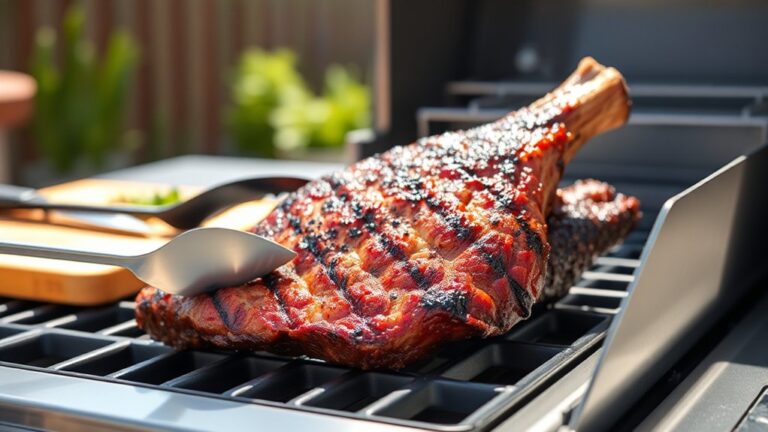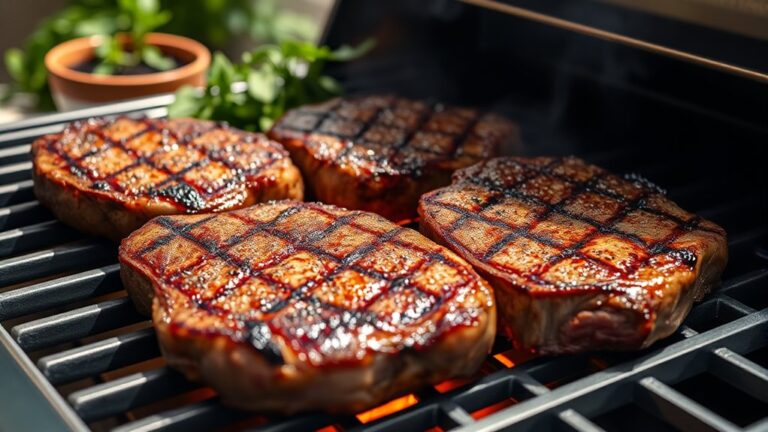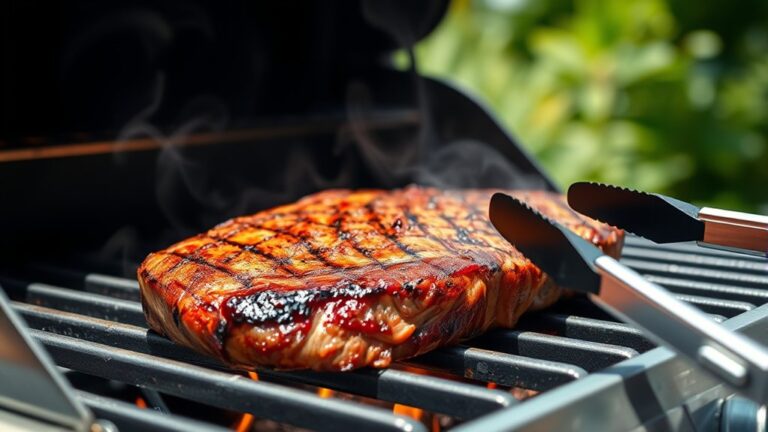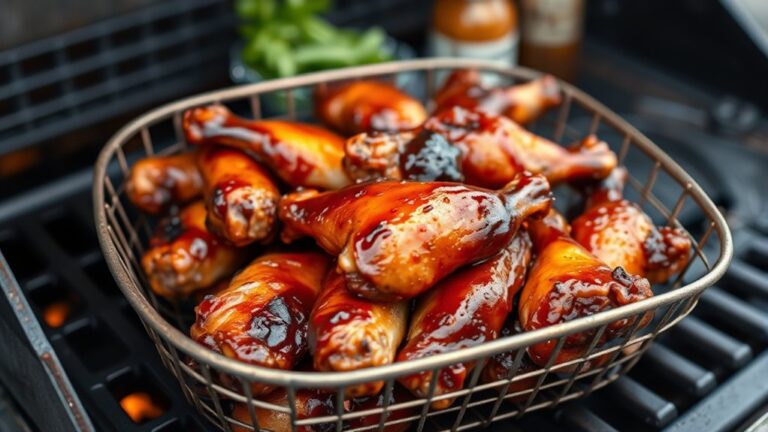
The Ultimate Guide to How Long to Grill Chicken on a Gas Grill
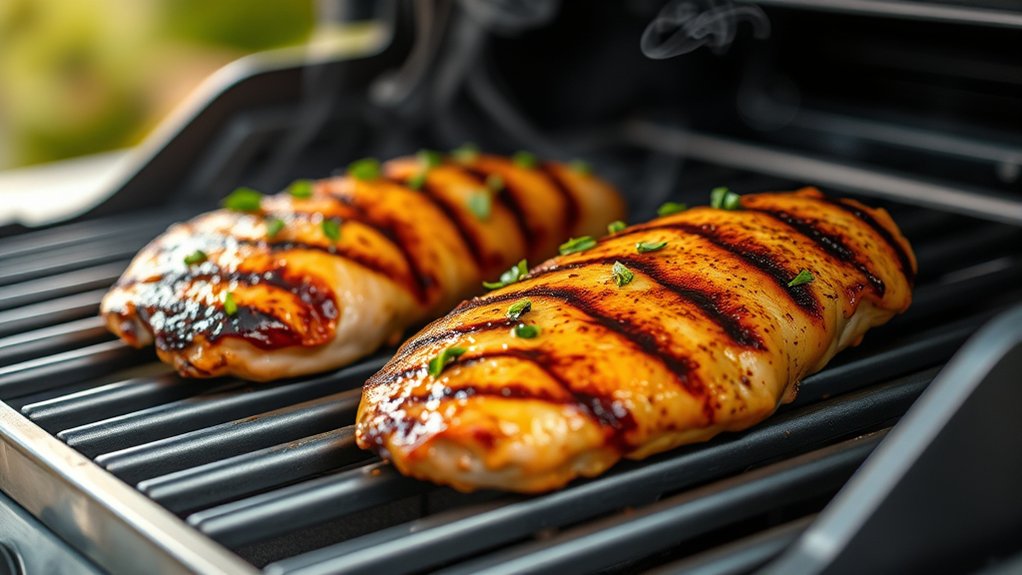
Grilling chicken on a gas grill can be tricky, especially when you want that perfect balance of juicy, flavorful meat and crispy skin. Many people struggle to get the timing just right, often ending up with dry or undercooked chicken. You’re not alone—finding that sweet spot takes some practice.
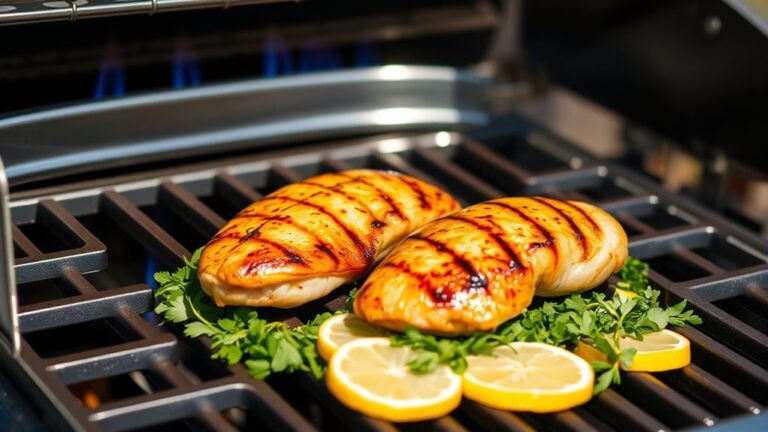
To grill chicken perfectly on a gas grill, you should cook chicken breasts for about 6-8 minutes per side at 375-400°F, aiming for an internal temperature of 165°F.
Thighs and drumsticks usually take 10-15 minutes per side over medium heat, and a whole chicken can take around 1 to 1.5 hours with steady heat and proper prep.
Keeping an eye on internal temps and adjusting your method guarantees juicy, flavorful results. Learning these tips will help you become a grill master in no time.
Key Takeaways
- Grill boneless chicken breasts at 375-400°F for 6-8 minutes per side until the internal temperature hits 165°F.
- Cook thighs and drumsticks over medium heat, about 375°F, for 10-15 minutes, turning frequently.
- Use a meat thermometer to check that the chicken reaches 165°F for both safety and juiciness.
- Let the cooked chicken rest for 5 minutes to keep it moist before serving.
- Keep a two-zone heat setup to avoid flare-ups and ensure even cooking.
How to Prepare Your Chicken for Grilling
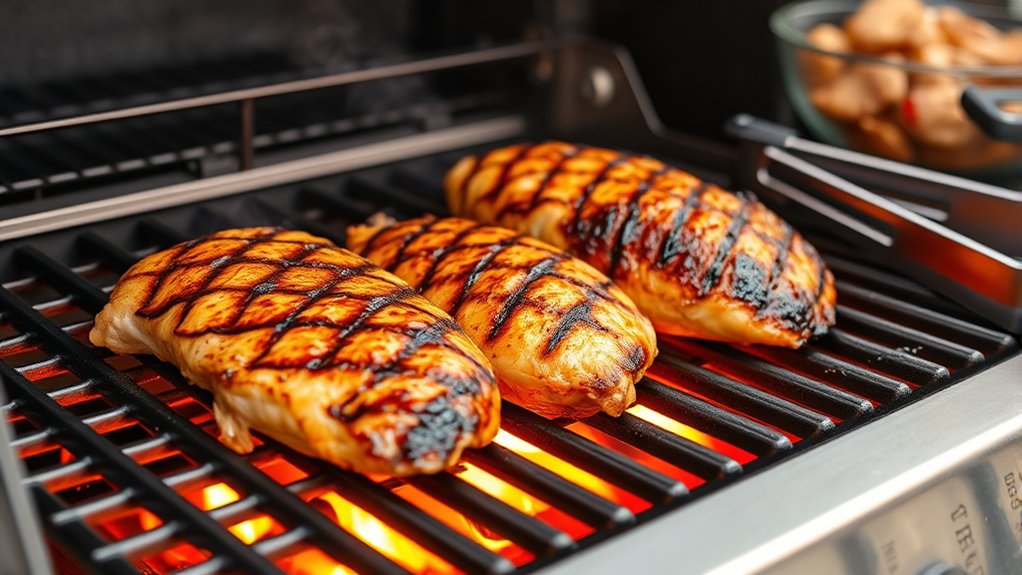
Before you start grilling, it’s essential to properly prepare your chicken to ensure it cooks evenly and stays flavorful. Start with marinade techniques to boost taste and tenderness. Marinate your chicken for at least 30 minutes or up to overnight in a mixture of oil, acid (like lemon juice or vinegar), and seasonings.
This not only enhances flavor but also helps keep the meat moist during grilling. When marinating, use a resealable plastic bag or a covered container, and store it in the refrigerator. Always follow storage tips to prevent bacteria growth; keep raw chicken separate from other foods and use it within 1-2 days of purchase.
Before grilling, remove excess marinade to avoid flare-ups, and pat the chicken dry for better searing. Proper preparation through marinade techniques and correct storage tips guarantees your chicken tastes delicious and cooks safely on your gas grill.
The Best Chicken Cuts for Grilling & How Long They Take
Picking the right chicken cuts can really make or break your grilling game. Different cuts cook at different speeds, so it’s handy to know roughly how long each one takes. That way, you can avoid ending up with undercooked or dry chicken. Let’s dive into the best options and how long they usually need on your gas grill.
Ideal Chicken Cuts for Grilling
When it comes to grilling chicken, choosing the right cuts can really make a difference in flavor and texture. For juicy results, go for boneless breasts, thighs, or drumsticks. These cuts respond well to marinating, which boosts flavor and tenderness.
Using grilling accessories like skewers or grill baskets can make cooking smaller or uneven pieces easier. The table below highlights the best cuts and their characteristics:
| Cut | Best Preparation | Cooking Tip |
|---|---|---|
| Chicken breasts | Marinate for moisture | Cook over medium heat to prevent drying out |
| Thighs | Marinate or dry rub | Use indirect heat for even cooking |
| Drumsticks | Brine or marinate | Grill with skin side down first |
| Wings | Marinate or dry rub | Use high heat for crispiness |
| Boneless, Skinless Cutlets | Quick marinade | Avoid overcooking to keep tender |
Cooking Times for Each Cut
Cooking times for chicken vary depending on the cut and the heat level of your grill, so it’s essential to keep a close eye to prevent undercooking or drying out the meat.
For boneless breasts, aim for 6-8 minutes per side on medium heat, ensuring even flavor infusion.
Thicker cuts like thighs or drumsticks take about 10-15 minutes, depending on size, and benefit from marinade techniques that improve juiciness and taste.
Bone-in pieces generally need longer, around 20-30 minutes, so turn them frequently for even cooking.
Using a meat thermometer helps confirm doneness.
How Long to Grill Chicken Breasts on a Gas Grill
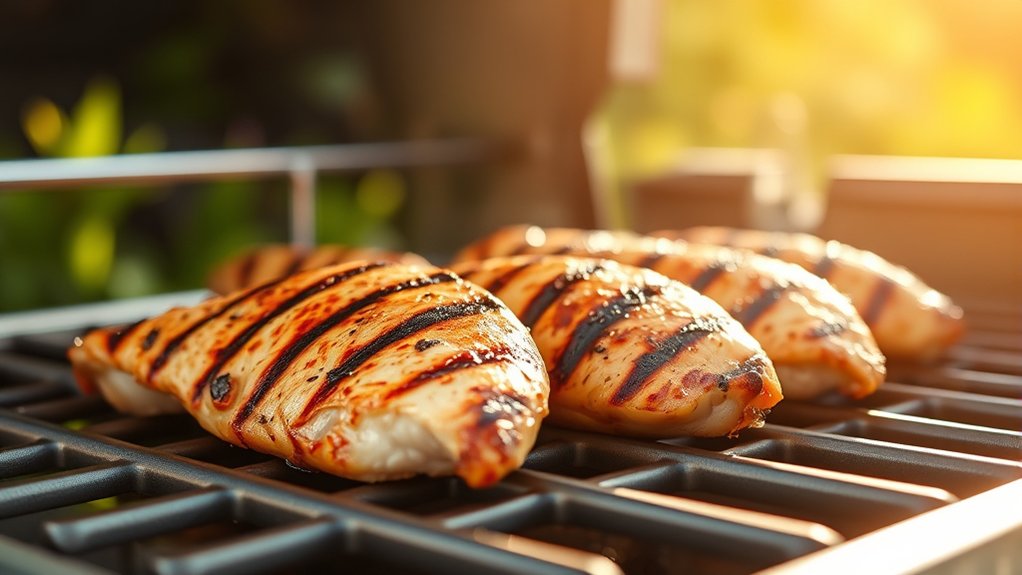
To grill chicken breasts just right, it’s all about hitting the right temperature and knowing when they’re done. Honestly, the easiest way is to use a meat thermometer — that way, you can be sure they’re cooked through without overdoing it. If you don’t have one, you can also check the juices or give the chicken a gentle squeeze; if it feels firm and the juices run clear, you’re good to go.
Once they’re cooked, don’t forget to let the chicken rest for a few minutes before slicing into it. This little step helps keep all those juicy flavors locked in, making your grilled chicken super tasty and tender.
Ideal Cooking Temperatures
Achieving perfectly grilled chicken breasts depends on reaching the right internal temperature, which is usually 165°F (74°C). To keep the meat juicy and flavorful, aim for a consistent grill temperature of around 375-400°F.
Using marinade techniques or spice rubs can boost flavor without changing the cooking time too much, but don’t rely only on how it looks.
Here’s a quick guide:
| Temperature | Effect on Chicken | Ideal Use |
|---|---|---|
| 165°F | Safe, juicy | Always aim here |
| 170°F | Slight dryness | Overcooked risk |
| 155°F | Undercooked | Unsafe to eat |
Keep the heat steady and watch the temperature closely for the best results.
Determining Doneness Method
Monitoring the grilling time is key to making sure your chicken breasts reach the perfect doneness without drying out. To get it just right, use a meat thermometer inserted into the thickest part—aim for 165°F (74°C). Visual cues like clear juices and firm texture also help you tell when it’s done.
Incorporate marinade techniques or spice rubs beforehand to boost flavor and keep moisture locked in during grilling. These tricks make your chicken tastier and juicier.
Here are some helpful tips: Use a digital thermometer for accurate readings. Check for juices that run clear when pierced. Avoid flipping the chicken too often, as that can dry it out. Rest the chicken briefly after grilling to keep it juicy.
These simple methods take the guesswork out of grilling, so every time you get tender, flavorful chicken.
Resting and Serving Tips
Once you’ve removed the chicken from the grill, letting it rest is essential to lock in juices and guarantee maximum flavor. Rest the chicken for about 5 minutes, tented loosely with foil if you like.
This step allows the juices to redistribute, resulting in tender, flavorful meat. During this time, consider your marinade options—resting helps preserve the marinade’s flavor, making every bite tastier.
After resting, serve the chicken promptly for the best experience. If you’re not eating immediately, store leftovers in an airtight container, ensuring it cools quickly before refrigeration.
Proper chicken storage keeps it safe and maintains its moistness. Resting and proper storage improve your grilling results, making every meal satisfying and delicious.
Timing Tips for Grilling Chicken Thighs and Drumsticks
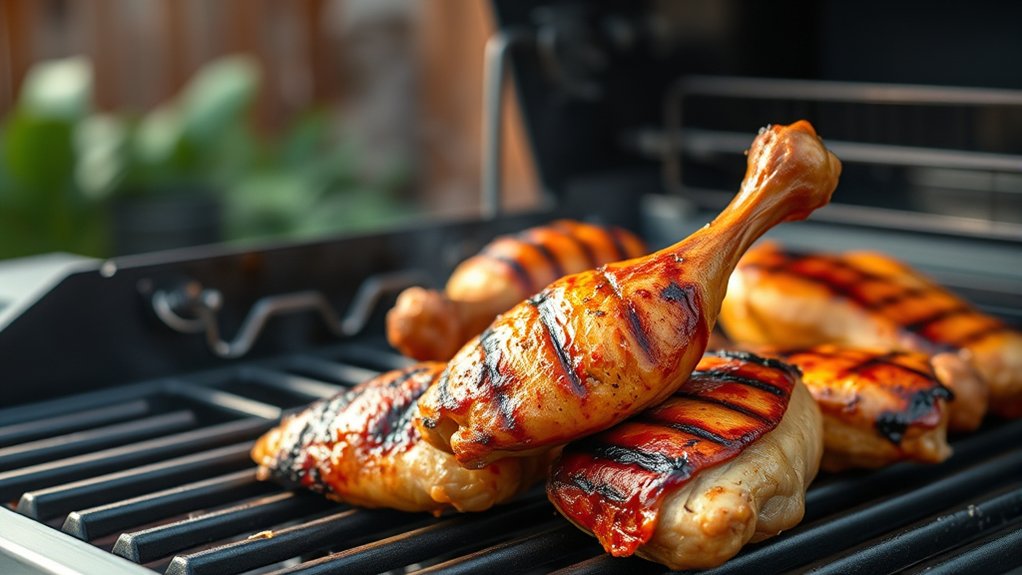
To guarantee perfectly cooked chicken thighs and drumsticks, timing is key when grilling. You want to make sure they reach an internal temperature of 165°F without overcooking. Start by marinating the chicken using different marinade techniques to boost flavor and tenderness.
Seasoning options like dry rubs or herbs add layers of taste, but be careful because too much seasoning can burn quickly. Keep these tips in mind: grill thighs and drumsticks over medium heat, around 375°F.
Turn the chicken every 5-7 minutes to promote even cooking. Use a meat thermometer to check for doneness, aiming for an internal temperature of 165°F. Once done, let the chicken rest for about 5 minutes to lock in the juices.
How to Grill a Whole Chicken on a Gas Grill
Grilling a whole chicken? It’s actually pretty straightforward if you know the right steps. First off, you want to prep your chicken properly. Give it a good rinse and pat it dry, then season it evenly all over—whether you like it simple with just salt and pepper or something more flavorful with herbs and spices.
Now, when it comes to the grill, keeping the temperature just right is key. You’ll want to manage your burners carefully so the heat stays steady. This helps the chicken cook all the way through without the skin getting burnt or overly crispy. Just keep an eye on the heat, and don’t be afraid to adjust the burners as needed. With a little patience, you’ll end up with juicy, perfectly grilled chicken that everyone will love.
Preparing the Chicken Properly
Before you start grilling, it’s important to prepare your whole chicken properly so it cooks evenly and stays flavorful. First, remove any giblets and pat the chicken dry.
Next, think about your marinade or seasoning options to give it extra flavor. You can keep it simple with herbs, go for a citrus marinade, or use a spice blend to match your taste.
Brining the chicken beforehand helps keep it moist while grilling. Trussing the bird ensures even cooking and makes it easier to handle.
Finally, apply your chosen marinade or seasoning evenly and let it sit for at least 30 minutes. This step locks in flavor and gets the chicken ready for a juicy, delicious grilled result.
Proper prep is key to a perfectly cooked, flavorful whole chicken.
Managing Grill Temperature
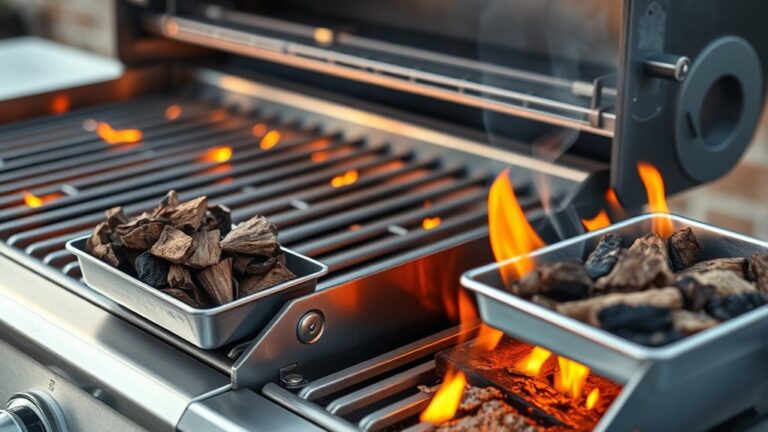
Controlling the grill temperature is key to cooking a whole chicken evenly without burning the outside. Use a two-zone setup on your gas grill—hot on one side, cooler on the other—to keep the heat steady.
Adjust the burners to stay around 350°F to 375°F. While you’re managing the heat, think about your marinade options beforehand; a good marinade prevents flare-ups and adds flavor.
It’s worth investing in grill accessories like a thermometer probe to check the internal temperature accurately. This way, you can avoid overcooking or undercooking the chicken.
Keep the lid closed as much as possible to trap heat and ensure even cooking. Proper temperature control makes the chicken juicy, tender, and with crispy skin, so your grilled whole chicken turns out perfect.
How to Know When Your Grilled Chicken Is Fully Cooked Safely
Ensuring your grilled chicken is fully cooked is key for both safety and taste. You don’t want to undercook it, which can cause foodborne illnesses, or overcook it, which makes the meat dry.
Use a meat thermometer to check the internal temperature. Make sure it reaches 165°F (75°C) at the thickest part of the chicken. This is the most reliable way to tell if it’s done.
You can also look for clear juices running from the thickest part. If they’re clear, your chicken is likely cooked through. Gently press on the meat—it should feel firm but not hard.
Tips for Keeping Your Grilled Chicken Juicy and Flavorful
To keep your grilled chicken juicy and flavorful, start with a good marinade or brine to infuse moisture and taste. Marinade techniques, like using oil, acid, and spices, help tenderize the meat and lock in flavor.
Experiment with spice blends that complement your chicken, such as paprika, garlic powder, or cumin, to boost flavor without drying out the meat. Using herbs and spices can make all the difference.
| Moisture Lock | Flavor Boost | Tenderization |
|---|---|---|
| Use oil-based marinades | Mix herbs and spices | Salt brines for extra juiciness |
| Marinate for at least 30 mins | Add citrus or vinegar | Acid helps break down fibers |
| Cover and refrigerate | Incorporate honey or brown sugar | Salt enhances moisture retention |
These tips ensure your chicken stays succulent and bursting with flavor from the first bite to the last.
Adjusting Cooking Times for Different Gas Grill Temperatures
Adjusting cooking times based on your gas grill’s temperature guarantees your chicken comes out perfectly cooked every time. If your grill runs hotter or cooler than standard, you’ll need to tweak your cooking duration.
Adjust cooking times based on grill temperature for perfectly cooked, juicy chicken every time.
For higher temperatures, reduce the grilling time to prevent charring and drying out. Conversely, lower temperatures require longer cooking to ensure thorough doneness.
Keep in mind that marinade variations can affect cooking time; sugary marinades may caramelize faster, so watch closely. Using the right grilling accessories, like a meat thermometer, helps you monitor internal temperatures accurately.
Consider indirect grilling for thicker cuts at lower temps to maintain moisture. Remember, the key is to adapt based on your grill’s heat, avoiding guesswork.
As you become more familiar with your grill’s behavior, you’ll master timing adjustments effortlessly, ensuring juicy, flavorful chicken every time.
Common Mistakes to Avoid When Grilling Chicken on Gas
One common mistake when grilling chicken on a gas grill is not properly preheating it, which can cause uneven cooking and sticking. Before placing your chicken on the grates, make sure the grill reaches the right temperature.
Neglecting this step can lead to sticking, tearing the meat, and uneven doneness. Another mistake is misusing marinade techniques; marinating too long or not enough can affect flavor and moisture.
Always marinate chicken within recommended times to avoid overpowering the meat or creating a mess on the grill. Furthermore, neglecting grill accessories can hinder your grilling success.
Using a good-quality grill brush helps prevent sticking and makes cleaning easier. Consider investing in a meat thermometer to keep track of internal temperatures and avoid overcooking.
Properly preheat your grill, apply marinade techniques thoughtfully, and use the right grill accessories for a smoother, more successful grilling experience.
Troubleshooting: What to Do If Your Chicken Is Undercooked or Overdone
Even with careful preheating and proper marinating, sometimes your chicken still turns out undercooked or overdone. When that happens, don’t panic. For undercooked chicken, use a meat thermometer to check the internal temperature—aim for 165°F. If it’s not there yet, move it to a cooler part of the grill and cover with a lid, letting it finish cooking evenly.
Overdone chicken can become dry, so resist the urge to cut into it right away. Instead, let it rest to keep the moisture in.
Here are some tips to troubleshoot:
- Use a grill thermometer for accurate doneness.
- Wrap overcooked chicken in foil to rehydrate with a bit of marinade or broth.
- Adjust the grill heat to prevent further overcooking or undercooking.
- Keep an eye on cooking times to avoid future mishaps.
These steps will help you rescue your chicken and sharpen your grilling skills.
Frequently Asked Questions
Can I Grill Chicken Directly From the Fridge?
Yes, you can grill chicken straight from the fridge, but it’s better to let it sit out for about 15-20 minutes to avoid uneven cooking. Cold chicken can lower the grill temperature control, making it harder to get a proper sear.
Also, if your chicken has marinade flavorings, bringing it closer to room temperature helps them absorb better. This way, you’ll achieve juicy, flavorful chicken with a perfect grill mark.
How Do I Prevent Chicken From Sticking to the Grill?
To prevent chicken from sticking, start with a clean grill and preheat it to around medium-high. This helps create a good sear and reduces sticking.
Lightly oil the grill grates or brush the chicken with a marinade that contains oil. This creates a non-stick surface and helps keep the chicken moist.
Using marinade techniques that include oil not only prevents sticking but also adds flavor and juiciness. Always let the chicken rest a few minutes after grilling to let the juices settle.
What Marinade Options Work Best for Grilled Chicken?
For flavorful grilled chicken, try marinades with classic flavor combos like lemon and herbs or soy sauce and honey. These bring out great tastes without overwhelming the meat.
Use marinade techniques like marinating for at least 30 minutes to develop deep flavors. Just be careful not to over-marinade, as that can make the chicken mushy.
Adding garlic, spices, or citrus can really boost the flavor. These ingredients help keep the chicken moist and give it delicious layers of taste.
Should I Cover the Grill While Cooking Chicken?
Think of your grill as a stage, and the lid as the curtain that keeps the spotlight on your chicken. You should cover the grill while cooking chicken to trap heat and guarantee even cooking.
Keep the grill lid up for searing or checking doneness, but close it to maintain a steady cooking temperature and prevent flare-ups.
This technique helps achieve juicy, perfectly cooked chicken every time.
How Long Should I Rest Grilled Chicken Before Serving?
You should rest grilled chicken for about 5 to 10 minutes before serving. This gives the juices a chance to redistribute throughout the meat, making it juicy and flavorful.
If you cut into it right away, those tasty juices will escape, and your chicken might end up dry. Keep the chicken loosely covered with foil during this resting time to stay warm.
Taking a little extra time to rest your chicken really pays off. It makes the meat more tender and each bite way more delicious.
Conclusion
So, after all that, it turns out grilling chicken isn’t rocket science — just timing and patience. Ironically, the more you learn about perfect grill temps and cuts, the easier it becomes to avoid dry, overcooked chicken.
So go ahead, master those grill marks, and prove that cooking chicken to perfection is truly a simple, delicious art. Just remember: even the best grill masters can’t cheat the clock!