7 Steps to Cook Beef Tenderloin Perfectly on a Pellet Grill
Cooking a beef tenderloin to perfection can feel intimidating, especially if you’re new to pellet grills. Many people struggle with getting the right flavor, texture, and don’t want to mess up such a special cut of meat. Don’t worry—you’re not alone, and with a few simple steps, you’ll be serving up juicy, flavorful tenderloin every time.
To cook beef tenderloin perfectly on a pellet grill, start by trimming excess fat and bringing it to room temperature. Season generously or marinate for added flavor. Choose mild woods like apple or cherry for subtle smoky notes.
Set your grill to 225-250°F and preheat, then sear at 450-500°F for a nice crust. Cook low and slow, monitor the internal temperature, and rest the meat before carving. If you keep going, you’ll master every step for juicy, flavorful results.
Key Takeaways
- Prepare and season the tenderloin with salt, pepper, and optional marinades or dry rubs to boost the flavor.
- Choose mild wood pellets like oak or cherry to add a gentle smoke without overpowering the meat.
- Preheat your pellet grill to 225°F–250°F for a low-and-slow cook, then crank it up to 450°F–500°F to sear and create a crust.
- Cook the beef until it’s just a bit below your desired doneness, then let it rest for 10-15 minutes to let the juices settle.
- Slice against the grain with a sharp knife for tender, juicy slices.
How Do I Prepare My Beef Tenderloin for Grilling?
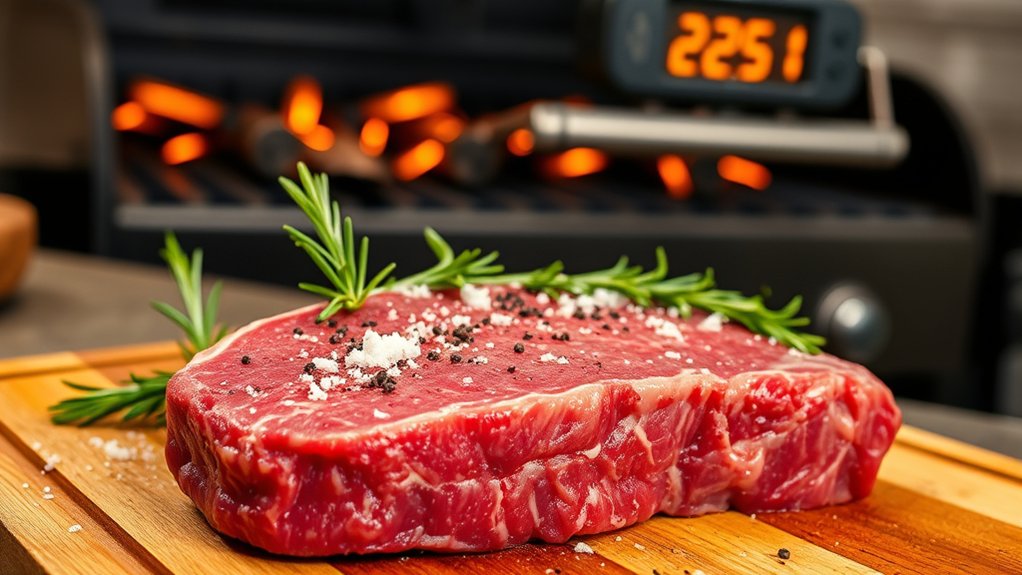
Before grilling, you need to properly prepare your beef tenderloin to guarantee it cooks evenly and stays tender. Start by trimming any excess fat and silverskin, which can prevent even cooking and affect meat tenderness.
Properly trimming and preparing your beef tenderloin ensures even cooking and tender, flavorful results.
Let the tenderloin sit at room temperature for about 30 minutes; this helps ensure consistent cooking times. Season it generously with salt and pepper, or your preferred spices, to boost flavor.
For added moisture and flavor, consider marinating the beef or applying a dry rub ahead of time. Proper preparation helps regulate cooking times, preventing overcooking or undercooking the meat.
Keep in mind, the right preparation directly impacts meat tenderness, making each bite juicy and tender. By taking these steps, you set the stage for a perfectly cooked beef tenderloin that remains tender and flavorful throughout the grilling process.
Which Pellets Should I Use for Beef Tenderloin?
Choosing the right pellets can really change the flavor of your beef tenderloin, so it’s worth thinking about what kind to use. For a good balance, woods like oak or hickory are popular choices because they give off a smoky flavor that pairs nicely with the meat.
Just remember, the type of pellets you pick will influence how your beef tastes, so go for one that enhances the flavor without taking over. It’s all about finding that sweet spot where the wood adds a nice smoky touch without overpowering the tenderloin.
Ideal Wood Types
For beef tenderloin, choosing the right wood pellets can enhance its rich flavor without overpowering its delicate profile. Go for mild woods like oak, apple, or cherry, which pair well with the meat’s tenderness and add subtle smoky notes.
These woods are perfect for sous vide preparations, helping the beef stay tender and flavorful. When grilling, steer clear of heavy woods like mesquite or hickory, as they can dominate the dish.
Using the right pellets also helps elevate your plating techniques. They allow the natural elegance of the beef to shine through. Keep the smoke subtle by maintaining a steady, moderate temperature.
This way, your beef remains moist and tender, ready for a refined presentation that highlights its quality without distraction.
Flavor Impact Considerations
Selecting the right wood pellets can really influence the flavor of your beef tenderloin. It’s important to think about how different woods complement the meat’s natural richness.
For a mild, smoky profile, fruit woods like cherry or apple are great, especially if you’re using marinades that add sweetness. They give a subtle, fruity smokiness that pairs nicely.
If you want deeper, more robust flavors, hickory or oak are excellent choices. They boost the beef’s savory qualities and create a more intense smoky taste.
You can also try flavor infusion techniques like marinating the tenderloin beforehand or applying a rub. These methods help the smoke work with your marinade to build a layered flavor profile.
In the end, your pellet choice should match your desired flavor outcome—whether that’s a gentle smokiness or a bold, smoky punch.
What Temperature Should I Set My Pellet Grill?
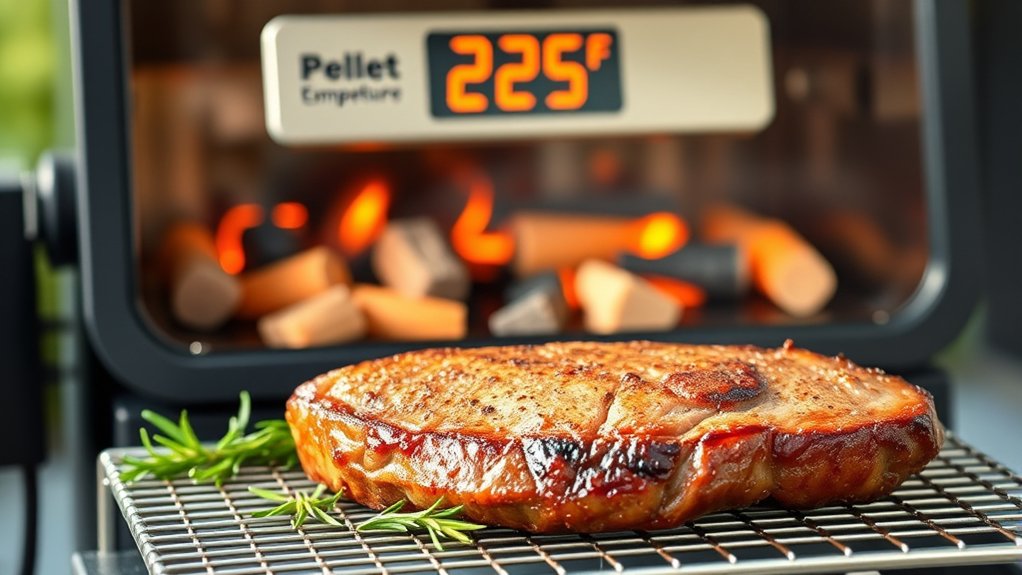
Wondering what temperature to set your pellet grill for perfect beef tenderloin? For tender, juicy results, aim for a grill temperature between 225°F and 250°F. This low-and-slow approach helps the beef cook evenly and develop rich flavors.
Use a quality meat thermometer to monitor the internal temperature accurately. This is crucial for grilling safety and making sure you don’t overcook or undercook your beef. Keeping the temperature consistent is key, so check your grill’s settings and pellet supply regularly.
If your grill has a smoker setting, it can add extra flavor without raising the temperature. Always prioritize safety by avoiding flare-ups and making sure your grill is on a stable surface. Setting the right temperature will give you a perfectly cooked beef tenderloin with a tender, flavorful interior and a beautiful crust on the outside.
How Do I Season and Marinate for Maximum Flavor?
To get the most flavor out of your beef tenderloin, it’s all about choosing the right spice blends. Think garlic, black pepper, and rosemary—they work really well together and bring out the best in the meat. Don’t be afraid to get creative and try different combinations to see what you like best!
Now, when it comes to marinating, it’s a game changer. Marinating helps tenderize the meat and soak it up with extra flavor. But here’s the thing—timing is everything. Let it sit long enough to really absorb those flavors, usually at least a few hours or overnight if you can. Just remember, the longer it marinate, the more flavorful it will be. Play around with different techniques and timing to find what works perfectly with your grilling style.
Optimal Spice Blends
The key to maximizing flavor in your beef tenderloin is using the right spice blends and marinades. Focus on balanced spice combinations that enhance the meat’s natural richness.
Classic options include garlic powder, black pepper, and paprika for a smoky kick. Or try rosemary, thyme, and cumin for earthy notes.
When seasoning, apply your spice blend evenly across the meat’s surface so every inch is coated. Consider a dry rub that sits for at least 30 minutes to absorb flavors deeply.
Avoid overcomplicating things; simple is often better. The goal is to complement the beef’s natural flavor without overpowering it.
Well-chosen spice blends make your tenderloin more flavorful and memorable.
Marinating Techniques
While spice blends add great flavor, marinating takes your beef tenderloin to the next level by infusing it with deeper, more complex tastes. To maximize flavor, consider a marinade with acids, herbs, and oils, and let it sit for at least a few hours or overnight.
For an even more tender result, try sous vide marinating—vacuum-sealing your beef with marinade and gently cooking it before grilling. This technique guarantees even absorption of flavors and tenderizes the meat.
When grilling on your pellet grill, a good marinade also helps develop a beautiful smoke ring, adding visual appeal. Proper marinating strengthens the beef’s juiciness, flavor, and presentation, making every bite more satisfying.
How to Sear and Cook Beef Tenderloin on a Pellet Grill
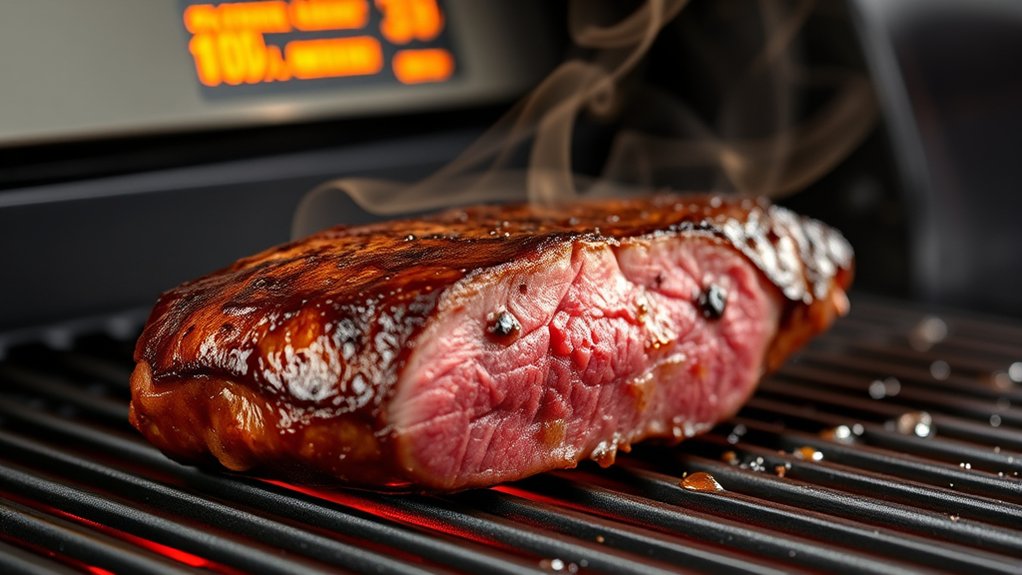
Searing and cooking beef tenderloin on a pellet grill starts with preheating the grill to a high temperature, usually around 450°F to 500°F. This ensures a good sear, locking in juices and creating a flavorful crust.
Once the grill is hot, place the tenderloin directly on the grates. Sear each side for about 2-3 minutes, using basting techniques to keep the meat moist and flavorful.
While searing, you can baste with a mixture of oil, herbs, or marinade to boost flavor and tenderness. After searing, lower the grill temperature to 375°F and cook to your preferred doneness, turning occasionally for even cooking.
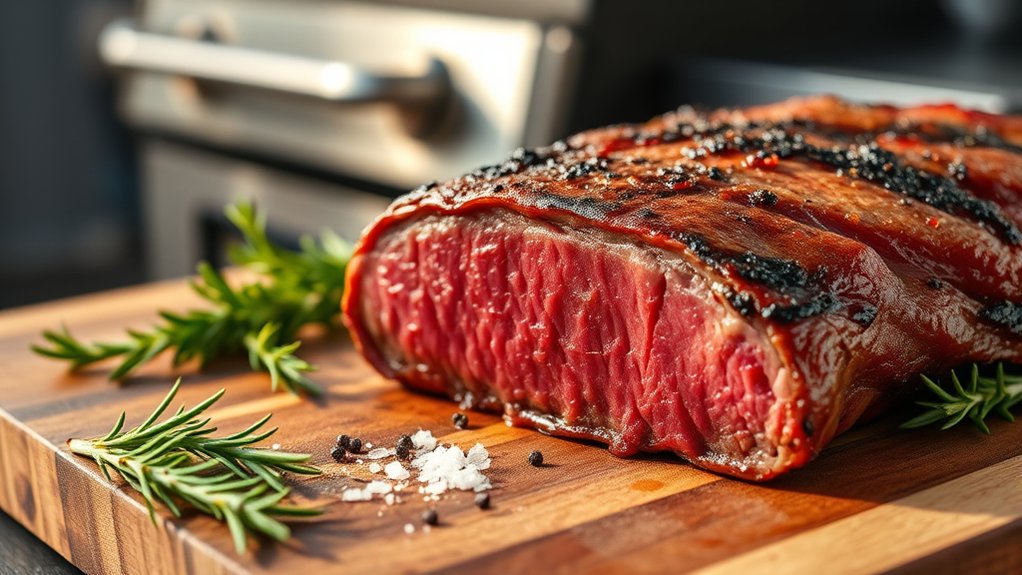
For a nice presentation, slice the tenderloin against the grain and arrange it neatly on a platter. Remember, proper searing not only enhances flavor but also makes your beef tenderloin look appealing and more enjoyable to eat.
How to Tell When Your Beef Tenderloin Is Perfect?
Wondering how to know when your beef tenderloin is perfectly cooked? The key is using a reliable meat thermometer to monitor the temperature.
For medium-rare, aim for an internal temperature of 130°F to 135°F; for medium, 140°F to 145°F. As the tenderloin gets close, you’ll notice it becomes more tender and juicy.
Check the thermometer in the thickest part of the meat, avoiding contact with bone or fat for an accurate reading. Remember, tenderness increases as the temperature rises, but overcooking can make it dry and tough.
Take the tenderloin off the grill slightly below your target temperature because it will keep cooking while resting. This way, you’ll get a perfectly cooked, tender, and flavorful beef tenderloin with the right balance of juiciness and texture.
How to Rest and Carve Your Beef Tenderloin for Maximum Juiciness
Once you’ve taken the beef tenderloin off the grill, the next step is to let it rest. This helps the juices redistribute, making the meat extra juicy and flavorful. Cover it loosely with foil and let it sit for about 10-15 minutes.
During this time, avoid cutting into the tenderloin. Cutting too early releases those precious juices that keep the meat moist and tender. When you’re ready to carve, use a sharp knife and follow a proper technique—slice against the grain for the best tenderness.
Here are some tips to make the process even better: Rest the meat at room temperature, not in a hot or cold place. Use a carving fork to hold the tenderloin steady for safer, cleaner cuts. And when you slice, do it with smooth, even strokes to get uniform pieces.
Mastering these resting and carving techniques will ensure you always serve a juicy, tender beef tenderloin.
Frequently Asked Questions
How Long Does It Take to Cook Beef Tenderloin on a Pellet Grill?
It usually takes about 45 minutes to 1 hour to cook beef tenderloin on a pellet grill, depending on how you like it done.
Set your grill to a temperature of around 225-250°F for best results.
You can add extra flavor by marinating the beef beforehand.
Cook until the internal temperature reaches 125°F for a perfect medium-rare.
Keep a meat thermometer nearby to make sure you don’t overcook it.
This way, you’ll get a juicy, tender tenderloin every time.
Can I Cook a Frozen Beef Tenderloin on a Pellet Grill?
Cooking a frozen beef tenderloin on a pellet grill isn’t ideal, since you’ll lose about 85% of the flavor without proper thawing. It’s best to thaw it first using the refrigerator or cold water methods.
Thawing helps the meat cook evenly and allows the flavors to infuse better. Grilling from frozen can lead to uneven doneness and dryness.
For the best results, make sure to thaw your tenderloin thoroughly. This way, you’ll get juicy, flavorful meat with that perfect crust you’re aiming for.
What’s the Best Way to Store Leftovers After Grilling?
To store leftovers safely, start by cooling the beef tenderloin quickly after grilling. Then, transfer it to airtight containers to keep it fresh.
Make sure to refrigerate within two hours of cooking to follow food safety rules. Use proper storage techniques like wrapping the meat tightly or using vacuum-sealed bags to prevent contamination and spoilage.
You should aim to eat leftovers within 3-4 days. If you want to store them longer, freeze the meat, but keep an eye on maintaining quality and safety.
How Do I Prevent My Beef Tenderloin From Drying Out?
You can prevent your beef tenderloin from drying out by using marinating techniques that add moisture and flavor, like a simple olive oil, garlic, and herb marinade.
Also, choose seasoning options that improve juiciness, such as salt, pepper, and paprika.
Be sure to avoid overcooking. Use a meat thermometer to reach the perfect internal temperature.
Rest the meat before slicing to keep the juices locked in, ensuring tender, moist results.
Can I Smoke Beef Tenderloin at a Lower Temperature for Longer?
Yes, you can smoke beef tenderloin at a lower temperature for longer. Low-temperature smoking lets you cook slowly and evenly, which helps keep the meat juicy and boosts the flavor.
Just keep an eye on the internal temperature so you don’t overcook it. This method gives you tender, flavorful meat with a smoky aroma, making for a juicy, perfectly cooked tenderloin every time.
Conclusion
Think of your beef tenderloin as a hidden treasure buried beneath a layer of seasoned earth. When you follow these steps, you’re unearthing the succulent gem within, revealing its juicy, tender core.
With patience and care, each cut becomes a sparkling jewel, shining with flavor. So, accept the journey, trust your grill, and enjoy uncovering the perfect bite. Your culinary treasure awaits, gleaming and ready to delight—especially when you master cooking beef tenderloin on a pellet grill.