10 Steps to Cook Prime Rib on a Pellet Grill
Many home chefs dream of perfectly cooked prime rib but often feel overwhelmed by the process. You’re not alone—getting that ideal crust, tender interior, and rosy center can be tricky.
Luckily, with a pellet grill, you can simplify the process and achieve restaurant-quality results right in your backyard.
To cook prime rib on a pellet grill, start by choosing a high-quality, well-marbled roast and let it sit at room temperature.
Season it generously with your favorite herbs and spices, then preheat your grill to 225°F–250°F.
Place the meat on the grill, use a meat thermometer to monitor internal temperature, and cook until your preferred doneness.
Rest the roast before slicing against the grain.
For detailed tips on troubleshooting and presentation, continue exploring this step-by-step guide.
Key Takeaways
- Select a high-quality, well-marbled prime rib and bring it to room temperature before seasoning.
- Preheat the pellet grill to 225°F–250°F, using quality wood pellets for consistent heat and smoke.
- Season the meat generously with salt, pepper, and herbs, then pat dry for a nice crust.
- Cook until the internal temperature reaches your preferred doneness, then rest for 15–20 minutes.
- Slice against the grain, serve with garnishes or sauces, and clean the grill for future use.
Prepare Your Prime Rib for Grilling
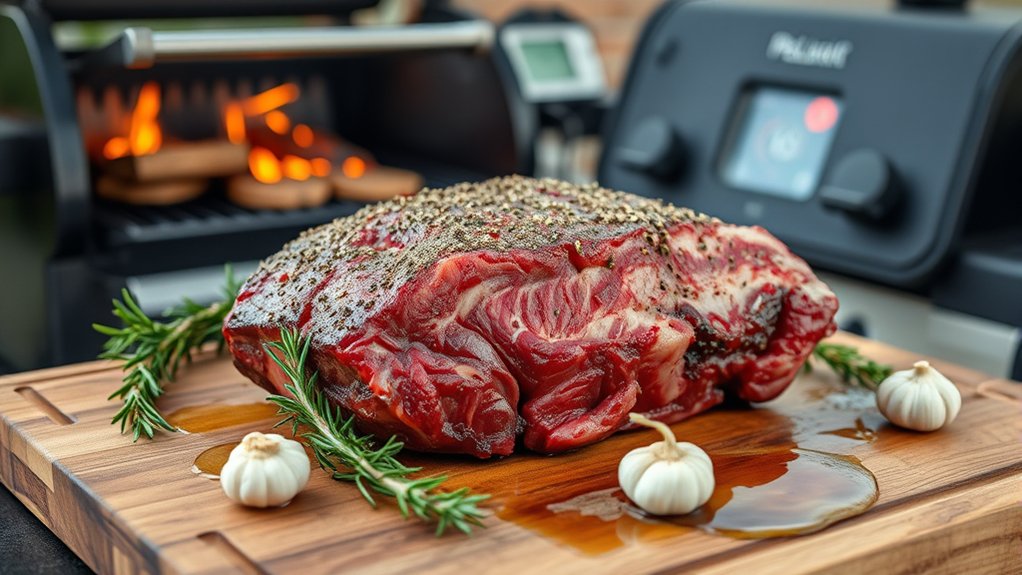
Have you ever wondered how to get your prime rib perfectly prepared before grilling? The secret is in choosing the right meat and prepping it properly.
Start by picking a high-quality cut with good marbling—this makes it flavorful and tender. Look for a fresh, bright red color and firm texture when selecting your meat.
Choose a fresh, bright red prime rib with good marbling for tender, flavorful results.
Once you have your prime rib, let it sit at room temperature for about an hour. This helps it cook more evenly. Pat it dry with paper towels to remove excess moisture.
Generously season your meat with salt, pepper, and your favorite herbs or spices. You can apply a dry rub or marinade if you like, but keeping it simple lets the meat’s natural flavor shine.
Good preparation is key to a juicy, flavorful prime rib. It sets the stage for a successful grilling experience that everyone will enjoy.
Choose the Best Pellet Grill Settings for Prime Rib
Selecting the right pellet grill settings is key to cooking a perfect prime rib. You want to control the temperature for even cooking and enhance flavor with the right settings.
Typically, set your grill to around 225°F (107°C) for a slow, even cook that keeps the meat tender and juicy. Using a proper smoke level adds depth without overpowering the flavor.
| Setting Parameter | Recommended Range | Purpose |
|---|---|---|
| Temperature | 225°F – 250°F | Ensures even cooking and tenderness |
| Smoke Intensity | Low to Medium | Adds flavor improvements |
| Cook Time | 2.5 – 3 hours | Achieves perfect internal doneness |
| Resting Period | 15–20 minutes | Allows juices to redistribute |
Adjust these settings based on how you like your prime rib and the flavor profile you want.
This way, you get a balanced combination of proper cooking techniques and flavor enhancements.
Season and Rub Your Prime Rib for Flavor
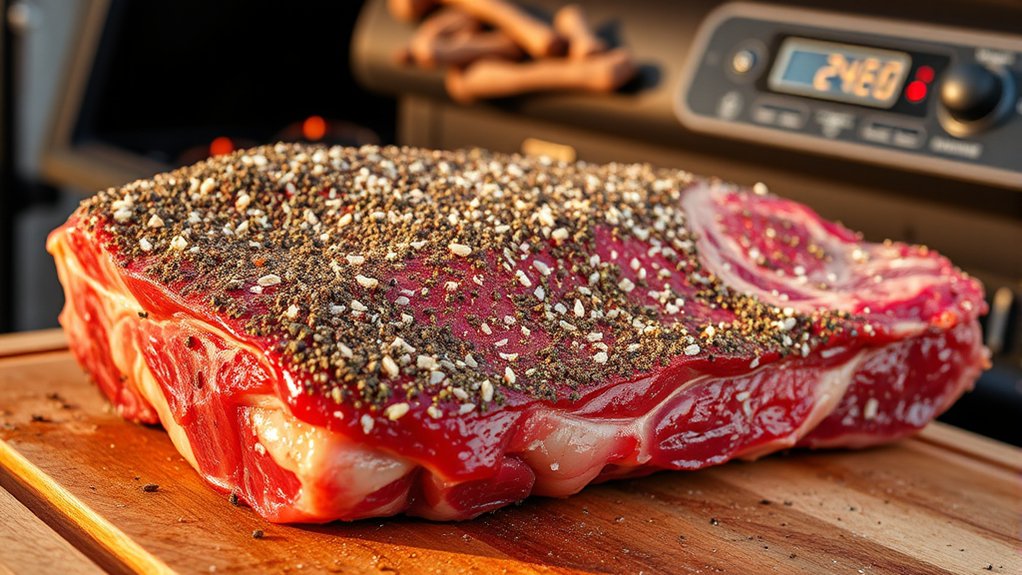
Once you’ve set your pellet grill to the right temperature, it’s time to focus on seasoning your prime rib to build a flavorful crust. Proper seasoning amplifies the meat’s natural flavors and guarantees a delicious exterior. Start with a high-quality seasoning blend or create your own with salt, pepper, garlic powder, and herbs.
Season your prime rib with a flavorful blend of salt, pepper, garlic, and herbs for a perfect crust.
For effective rub application, follow these steps:
- Pat the prime rib dry with paper towels to help the rub adhere better.
- Generously apply your chosen seasoning blend, pressing it into the meat to ensure it sticks.
- Cover the entire surface evenly, making sure to coat all sides for maximum flavor.
Set Your Pellet Grill to the Right Temperature
To get those perfect results, you really want to set your pellet grill to the right temperature. It might seem simple, but using a good, accurate thermometer makes all the difference. It helps you keep an eye on the temperature and make sure it stays steady.
That way, your prime rib cooks evenly and hits just the right level of doneness. It’s all about that consistent heat — and a reliable thermometer is your best friend for achieving it.
Optimal Temperature Settings
Achieving the perfect prime rib on your pellet grill starts with setting the right temperature. To get tender, juicy meat, set your grill to around 225°F to 250°F for low and slow cooking. This range helps the meat cook evenly and develop rich flavors.
Here are some key steps: First, choose your marinade options. A simple herb and garlic marinade boosts flavor without overpowering the meat. Next, maintain consistent heat by using a reliable thermometer to keep the temperature steady throughout cooking.
Finally, plan your side dish pairing. Roasted vegetables or mashed potatoes complement the prime rib’s richness and round out your meal. Getting these details right guarantees a flavorful, perfectly cooked prime rib every time.
Using a Thermometer
How can you guarantee your prime rib cooks evenly and reaches the perfect doneness? The key is using a thermometer. Proper cooking techniques involve monitoring the internal temperature instead of relying solely on time.
Insert a reliable meat thermometer into the thickest part of the roast to track its progress. This helps prevent overcooking or undercooking so your prime rib hits your desired doneness—whether that’s rare, medium, or well-done.
Accurate temperature readings also improve flavor because you avoid drying out the meat. During cooking, check the temperature periodically and adjust your pellet grill’s settings if needed.
Once it’s done, rest the meat after removing it from the grill to let the juices settle. Using a thermometer is the most precise way to achieve the perfect prime rib with great flavor.
Use a Meat Thermometer to Check for Perfect Doneness
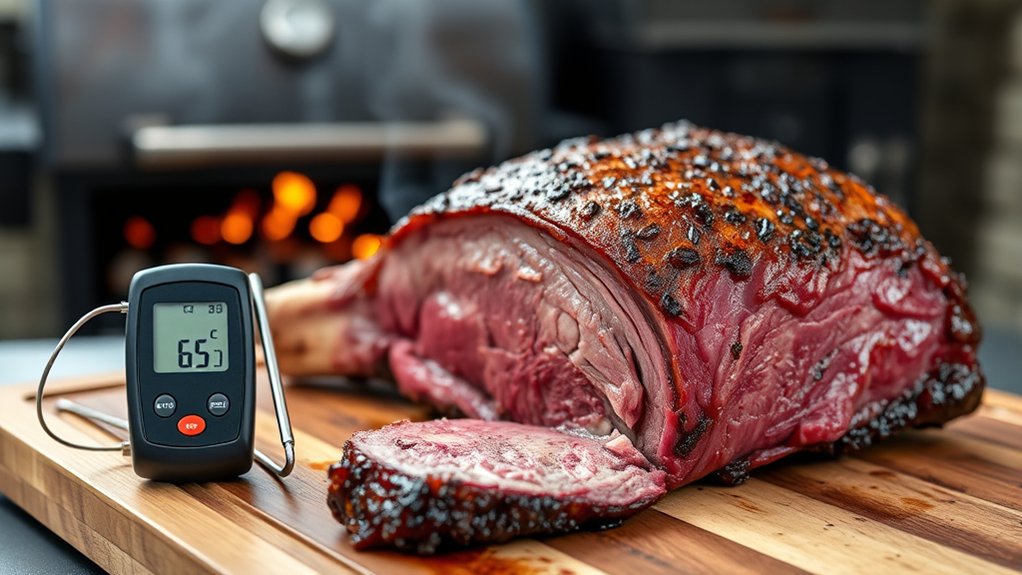
Using a meat thermometer is a great way to make sure you get an accurate temperature reading. That way, your prime rib turns out just the way you want it. Knowing the right doneness targets helps you pull it out at the perfect moment, so it’s always juicy and tender. Just make sure you place the thermometer correctly—that way, you’ll avoid false readings and get consistent, delicious results every time.
Accurate Temperature Reading
To guarantee your prime rib turns out perfectly, you need to rely on an accurate meat thermometer. Proper temperature readings are essential for precise cooking techniques and better flavor.
Here’s how to verify its accuracy:
- Insert the thermometer correctly: Place it in the thickest part of the roast, avoiding bone or fat.
- Use a high-quality digital thermometer: Choose one with quick response times for reliable readings.
- Check multiple times: Continuously monitor as the prime rib approaches the target temperature to prevent overcooking.
Ideal Doneness Targets
Once you’ve set your thermometer correctly and monitored the temperature closely, it’s important to know the specific internal temperatures that indicate your prime rib has reached your preferred level of doneness. This helps ensure your meat stays tender and juicy, maximizing flavor.
Use these temperature targets as a guide:
| Doneness Level | Internal Temperature (°F) | Description |
|---|---|---|
| Rare | 120-125 | Juicy, red center |
| Medium Rare | 130-135 | Warm, pink center |
| Medium | 140-145 | Slightly pink, firm texture |
Adjust your cooking techniques accordingly to hit these marks precisely, ensuring your prime rib is cooked perfectly to your taste.
Proper Thermometer Placement
Proper thermometer placement is key to getting an accurate reading of your prime rib’s doneness. To make sure you’re on the right track, follow these simple steps:
- Insert the meat thermometer into the thickest part of the roast, avoiding bone or fat, which can throw off the temperature.
- Choose the right spot based on your pellet types—some burn hotter, so keep a close eye on the readings.
- Keep the thermometer probe steady and make sure it’s inserted deep enough for an accurate measurement.
Regular grill maintenance helps keep temperatures consistent, making your thermometer readings more reliable. Remember, an accurate reading helps prevent over- or under-cooking your prime rib, leading to a perfect result. Proper placement and good grill care are the secrets to reaching your ideal doneness every time.
Develop a Delicious Crust With Smoking Techniques
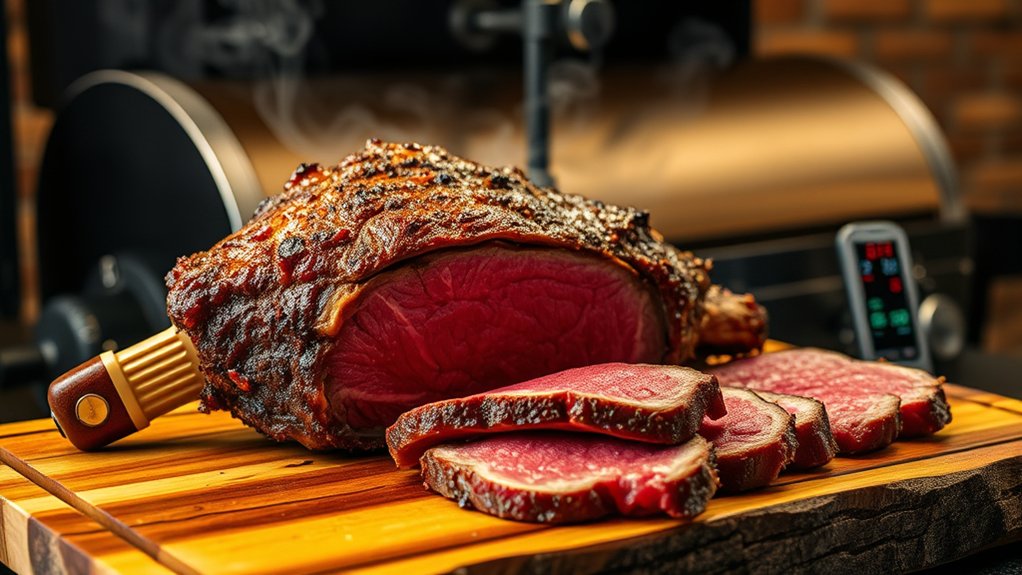
Creating a flavorful crust on your prime rib starts with mastering smoking techniques that build rich, smoky layers. To do this, focus on controlled smoke infusion to develop that perfect crust.
Begin by preheating your pellet grill with a quality wood pellet that complements beef, like hickory or oak. When you start smoking, keep the temperature low to promote slow, even smoke absorption.
This gentle smoke infuses the meat with deep flavors without overpowering it. To improve crust formation, consider adding a light coat of oil or a dry rub before placing the prime rib on the grill.
This helps the smoke adhere better and creates a more appealing crust. Keep the lid closed as much as possible to maintain consistent smoke and temperature levels.
The combination of proper smoke infusion and steady heat encourages crust development. This ensures your prime rib has a savory, smoky exterior that pairs perfectly with its tender interior.
Rest and Slice Your Prime Rib for Juicy Results
Let your prime rib rest for at least 15 minutes before slicing. This step is super important because it helps lock in all those delicious juices, making your meat all the more tender and flavorful.
When you’re ready to carve, grab a sharp knife and slice against the grain. Doing this ensures each bite is juicy and tender, just the way you want it. Trust me, taking the time to rest and slice properly really makes a difference in keeping all that tasty goodness intact!
Rest Time Importance
Once your prime rib comes off the pellet grill, letting it rest is key for juicy, flavorful results. Resting helps the juices spread evenly, so they don’t spill out when you slice.
During this time, the meat keeps cooking a little more, which is a great chance to think about your marinade options to boost flavor. Proper resting also helps you manage timing, making sure your meat hits the perfect doneness.
To get the most out of resting:
- Let the prime rib sit, uncovered, for 15-20 minutes.
- Use a meat thermometer to check the internal temperature.
- Slice only after resting to lock in the juices and keep it tender and flavorful.
Proper Slicing Technique
To guarantee your prime rib stays juicy and tender, it’s essential to slice it properly after resting. Use sharp slicing tools like a carving knife or electric slicer for clean, even cuts.
Position the prime rib on a cutting board and let it rest for at least 15 minutes to lock in the juices. When slicing, cut against the grain to maximize tenderness and improve presentation.
Aim for slices about 1/2 inch thick for a beautiful display and easy serving. Keep your slices uniform so each piece looks appealing and is easy to eat.
Proper slicing not only preserves the meat’s juiciness but also boosts the overall presentation, making your prime rib the star of the meal.
Juiciness Preservation
Resting your prime rib after cooking is key to locking in its juices and making it tender and flavorful. When you let it sit, the juices spread out evenly throughout the meat, so they don’t spill out when slicing.
To keep it juicy, rest the prime rib for at least 15-20 minutes, tented loosely with foil to keep the heat in. Then, slice against the grain to stay tender and avoid dryness.
Serve the meat right after slicing to enjoy it at its freshest, full of flavor and moisture.
Troubleshoot Common Prime Rib Grilling Problems
Even experienced grillers can run into problems when cooking prime rib on a pellet grill, but many common issues have simple solutions. If your prime rib turns out dry, try adjusting your marinade options; a marinade with oil and acids can help lock in moisture.
Overcooking is another frequent problem. Use a reliable meat thermometer and monitor the internal temperature closely to prevent this.
If the crust isn’t browning properly, increase the grill’s temperature slightly during the searing phase. For uneven cooking, rotate the roast periodically or reposition it on the grill.
When it’s done, proper garnishing techniques like adding fresh herbs or a drizzle of au jus can enhance the presentation and flavor.
Serve and Present Your Prime Rib Impressively
Once you’ve cooked your prime rib to perfection, how you serve and present it can really elevate the meal. To impress your guests, start with these simple presentation tips:
- Rest and carve: Let the meat rest for at least 15 minutes, then carve against the grain for tender slices. Arrange the slices neatly on a serving platter.
- Garnish thoughtfully: Use fresh herbs like rosemary or thyme and colorful vegetables, such as roasted carrots or Brussels sprouts, to add visual appeal.
- Serve with style: Consider warming your platter or plates beforehand, and offer your favorite sauces or au jus on the side for extra flavor.
For serving, aim for a warm, inviting table setting. Keep it simple yet elegant, making the prime rib the star of the meal. A well-presented dish truly makes the dining experience special.
Clean and Maintain Your Pellet Grill After Cooking
After you’ve carefully carved and presented your prime rib, it’s a good idea to clean your pellet grill to keep it in top shape for future cooks. Start by removing used grill accessories like grates and drippings trays, setting them aside for cleaning.
Use a grill brush and a damp cloth to scrub away grease and residue from the interior surfaces. Check and clear the pellet hopper and burn pot to prevent any blockages. Wiping down the exterior with a soft cloth will keep your grill looking new.
Regular maintenance also means inspecting and replacing any worn or damaged parts. Keeping your pellet grill clean not only extends its lifespan but also helps ensure better flavor and consistent results.
Make it a habit to clean your grill after each use, and store your cleaning supplies properly. That way, your next cleanup will be quick and easy.
Frequently Asked Questions
How Long Should I Let My Prime Rib Rest Before Carving?
You should let your prime rib rest for about 15 to 20 minutes before carving. Resting helps the juices redistribute, so your meat stays tender and flavorful.
During this time, loosely tent the meat with foil to keep it warm. When you’re ready to carve, use a sharp knife and follow the grain for clean, even slices.
Proper resting and carving make a big difference in enjoying a juicy, perfect prime rib.
Can I Use Wood Pellets Other Than Traditional Hardwood for Smoking?
You can absolutely use alternative wood types for pellet flavoring; think outside the box, just like “variety is the spice of life.” Non-traditional options like fruit woods or Alder can add unique flavors to your prime rib.
These woods produce different smoke profiles, enhancing your grilling experience. Just make sure the pellets are food-grade and suitable for smoking, and don’t be afraid to experiment to find the perfect flavor combination for your taste.
What’s the Best Way to Store Leftovers Safely?
To store leftovers safely, focus on food safety and proper storage techniques. First, cool the prime rib within two hours after cooking, then transfer it to airtight containers.
Keep it refrigerated at 40°F (4°C) or below, and try to eat it within three to four days. For longer storage, freeze it.
Using proper storage methods helps prevent bacterial growth and keeps your leftovers fresh and safe to enjoy later.
How Do I Adjust Cooking Times for Different Rib Sizes?
You should adjust cooking times based on the meat thickness and your desired doneness. For thicker cuts, increase the cooking time, and for thinner ones, reduce it.
Keep the cooking temperature consistent, around 225°F to 275°F, to ensure even cooking throughout. Use a meat thermometer to check the internal temperature.
This way, you can reach your preferred doneness without overcooking. By following these tips, you’ll get a perfectly cooked prime rib regardless of its size.
Is It Necessary to Remove the Fat Cap Before Grilling?
You don’t need to remove the fat cap before grilling; it actually helps keep the meat moist and adds flavor. Some seasoning techniques involve scoring or trimming the fat, but leaving it intact allows the fat to baste the meat naturally.
If you prefer a leaner look or want more control over seasoning, you can remove some fat. But overall, it’s not necessary for a juicy, flavorful prime rib on your pellet grill.
Conclusion
Now that you know the 10 steps to perfect prime rib on your pellet grill, you’re ready to create a culinary masterpiece. With some prep, precision, and patience, you’ll end up with a juicy, flavorful prime rib that impresses.
Savor the sizzle, serve with style, and enjoy your smoky, savory success. Remember, practice makes perfect—so keep grilling, refining, and relishing your prime rib results.