How Long to Smoke Chicken Wings on a Pellet Grill?
Many barbecue enthusiasts know the struggle of getting chicken wings just right—juicy, tender, and packed with flavor. If you’ve ever found yourself disappointed after hours of smoking, you’re not alone. Perfectly smoked wings can seem tricky, but with the right tips, you’ll be on your way to wing perfection.
To smoke chicken wings on a pellet grill, set the temperature between 225°F to 250°F.
Cook smaller wings for about 1.5 to 2 hours, while larger ones may take up to 2.5 hours.
Use a meat thermometer to guarantee they reach an internal temperature of 165°F.
Keep an eye on your chosen wood pellets for flavor, and bear in mind that proper prep and timing are key for juicy, tender results.
Find out more tips to perfect your smoked wings.
Key Takeaways
- Smoke chicken wings at 225°F to 250°F for 1.5 to 2.5 hours, depending on their size.
- Smaller wings (3-4 oz) usually take about 1.5 to 2 hours, while larger ones might need up to 2.5 hours.
- Use a meat thermometer to make sure the internal temperature hits 165°F for safety.
- Keep the grill temperature steady and check often to avoid overcooking or drying out the wings.
- For extra crispiness, bump the heat up to 375°F for a few minutes at the end.
How Long Should You Smoke Chicken Wings for Perfect Results?
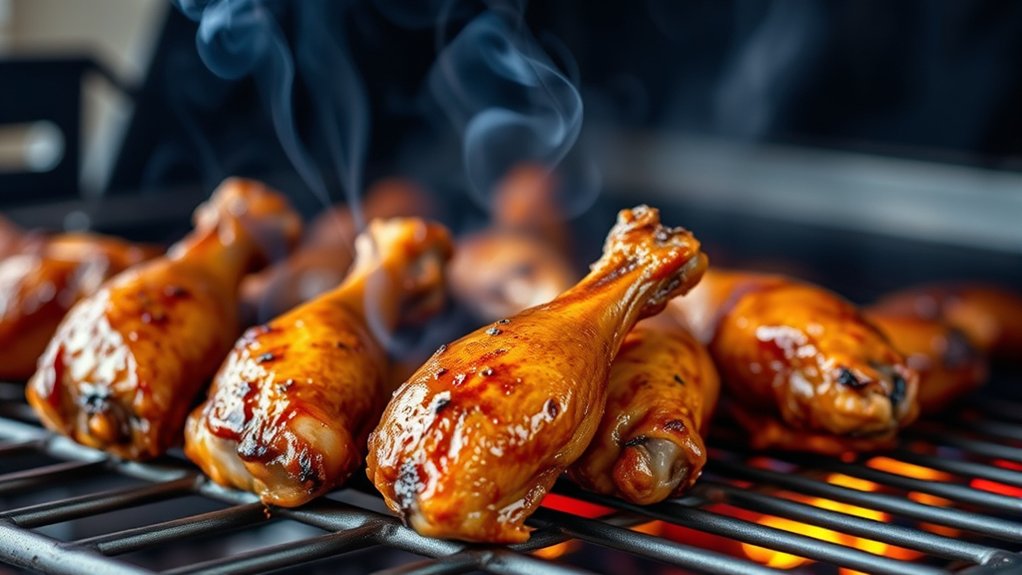
To achieve perfectly smoked chicken wings, you want to cook them long enough for the meat to reach the right internal temperature while building a flavorful bark. The cooking time varies depending on wing size and marinade choices.
Smaller wings, around 3-4 ounces each, usually take about 1.5 to 2 hours, while larger ones may need up to 2.5 hours. Marinades can also affect cooking time; sugary or acidic marinades can tenderize the meat and slightly shorten the cooking process.
To ensure safety and great flavor, aim for an internal temperature of 165°F (74°C). Keep in mind that thicker, bone-in wings might take longer than boneless ones.
Check the internal temperature regularly with a reliable meat thermometer. Don’t rush—patience and attention to wing size and marinade type will help you get juicy, tender, and flavorful smoked chicken wings every time.
What’s the Best Temperature to Smoke Chicken Wings?
Achieving perfectly smoked chicken wings depends on keeping the right temperature during cooking. The best temperature range is between 225°F and 250°F.
This range helps you get the most flavor and smoke penetration, resulting in tender, flavorful wings with a smoky aroma. Lower temps slow down cooking and boost smoke flavor, while higher temps speed things up but may make the wings less tender.
Here’s a simple temperature guide:
| Temperature (°F) | Effect on Smoke Penetration | Resulting Texture |
|---|---|---|
| 225 | Deep smoke penetration | Juicy, tender |
| 235 | Moderate smoke infusion | Slightly firmer |
| 250 | Faster cooking, less smoke | More firm |
| Above 250 | Less smoke absorption | Dryer, tougher |
Stick to the 225–250°F range for wings that are flavorful, well-smoked, and have the perfect texture.
How Do You Prepare Chicken Wings for Smoking?
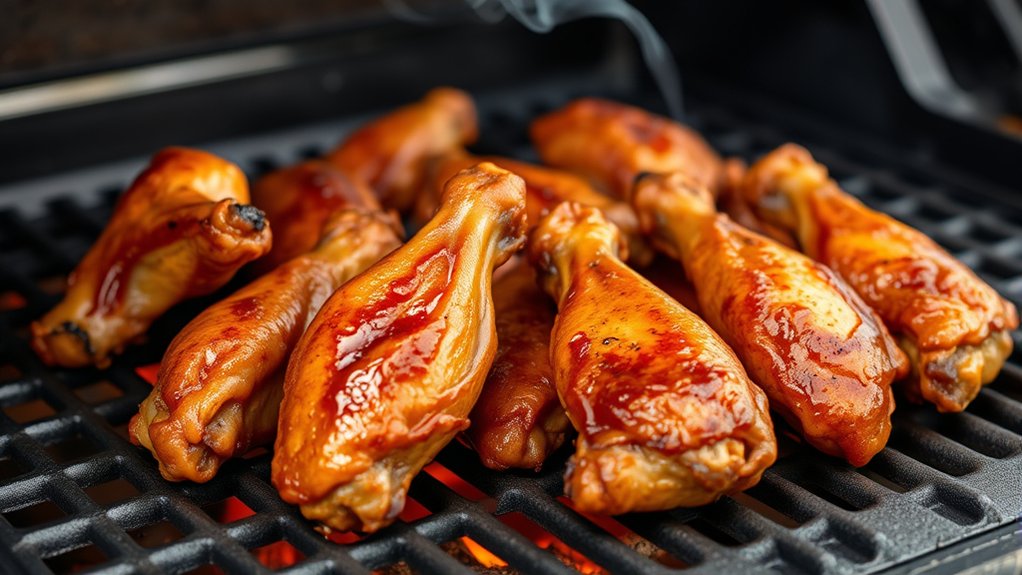
Before you start smoking, it’s important to prepare your chicken wings properly to ensure they’re flavorful and tender. Begin by rinsing the wings and patting them dry.
Next, decide whether you want to marinate or season them directly. A simple marinade with soy sauce, honey, garlic, and lemon can add lots of flavor. Let the wings marinate for at least 30 minutes, or a few hours if you have the time.
If you prefer dry seasoning, apply your favorite spice rub evenly over the wings. Proper storage is key—keep raw wings refrigerated until you’re ready to prepare them, and store leftovers in an airtight container in the fridge.
Before smoking, make sure the wings are at room temperature for even cooking. Whether you’re marinating or seasoning, taking the time to prep your wings helps bring out the best flavor and keeps them tender and juicy on your pellet grill.
Step-by-Step: How to Smoke Chicken Wings on a Pellet Grill
Once your wings are prepped and seasoned, it’s time to start smoking them on your pellet grill. First, preheat your grill to around 225°F to keep the temperature steady for slow cooking.
Arrange the wings on the grill grates, leaving some space between each piece so the smoke circulates evenly. For extra flavor, you might marinate them beforehand with options like buffalo, honey mustard, or citrus-based marinades.
Smoke the wings for about 1.5 to 2 hours, keeping the temperature consistent. During this time, you can baste them with your favorite sauce, like classic buffalo, smoky barbecue, or a tangy glaze, to boost the flavor.
Keep an eye on the smoke level because too much smoke can overpower the wings. Use wood pellets like hickory or apple for a balanced, delicious taste.
Once they’re done, remove the wings and let them rest briefly before serving. Pair them with your preferred sauce and enjoy!
How Do You Know When Chicken Wings Are Done?
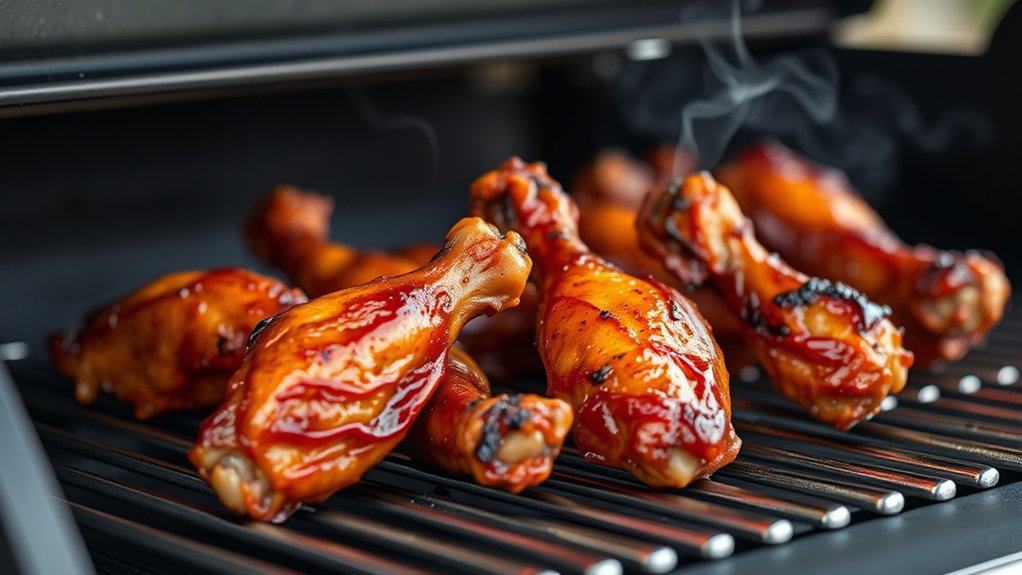
You’ll know your chicken wings are done when they hit an internal temperature of 165°F. That’s the safe zone, so it’s a good idea to use a meat thermometer to check.
Besides that, look for some visual clues—clear juices running out and a nice, crispy exterior usually mean they’re ready. When the wings are firm and have a golden-brown color, you can pretty much count on them being cooked through and ready to enjoy!
Internal Temperature Guidelines
Knowing when chicken wings are truly cooked is important for both safety and flavor. The main indicator is the internal temperature.
No matter how you marinate or how big your wings are, aim for an internal temperature of 165°F (74°C). Use a reliable meat thermometer inserted into the thickest part of the wing, avoiding the bone.
Larger wings or those with thicker meat may need a slightly higher temperature or longer cooking time to be safe. Marinades can add flavor but don’t change the temperature target.
Once your wings reach 165°F, they’re safe to eat and should be juicy and tender. Always double-check multiple wings for consistency, especially if they’re unevenly sized.
Visual and Texture Cues
In addition to checking the internal temperature, you can tell if your chicken wings are done by looking at their appearance and texture. Proper marinating can give the skin a golden-brown, crispy look that shows they’re almost ready.
Look for a slight crispness on the surface and some puffiness, which means the skin has rendered its fat. When you touch them, they should feel firm but bounce back a bit, indicating they are cooked through.
Presentation ideas like tossing wings in sauce or garnishing with herbs can also give clues. Well-cooked wings often have a shiny, appetizing finish.
Use these visual and tactile cues along with temperature readings to make sure your wings are juicy, perfectly cooked, and ready to serve.
Juices Run Clear
When chicken wings are fully cooked, their juices run clear instead of pink or bloody. This is a key sign you’ve achieved safe, juicy wings. To be certain, use a meat thermometer to check for an internal temperature of 165°F.
When the juices run clear, it’s also a good time to think about sauce options and serving ideas. You might toss the wings in buffalo sauce, honey BBQ, or a tangy Asian glaze.
| Sauce Options | Serving Suggestions |
|---|---|
| Buffalo, Ranch | Serve with celery sticks |
| Honey BBQ | Pair with coleslaw |
| Asian glaze | Accompany with steamed rice |
This way, your wings are cooked perfectly and ready to look appealing.
How to Achieve Crispy Skin on Smoked Chicken Wings
Want to get that perfectly crispy skin on your smoked chicken wings? The first step is to make sure you dry them really well with paper towels. Removing the excess moisture helps the skin crisp up better when cooking.
Next, keep your pellet grill at a nice high temperature, somewhere around 375°F to 400°F. This heat helps render the fat and gives the skin that delicious crunch you’re after.
Proper Drying Techniques
Achieving crispy skin on smoked chicken wings starts with proper drying techniques. Before cooking, use marinade techniques that draw out excess moisture, helping the skin crisp up better. Pat the wings thoroughly with paper towels to remove surface moisture, ensuring skin drying is effective.
For even better results, consider refrigerating the wings uncovered for an hour or two. This promotes skin drying and helps moisture evaporate. Avoid marinating with overly watery sauces, as they can add unnecessary moisture.
Proper skin drying creates a drier surface, which is essential for crispiness after smoking. Remember, the drier the skin, the less steam forms during cooking, resulting in a crisp, golden exterior. Focus on skin drying to maximize that perfect, crispy finish.
Optimal Cooking Temperatures
Maintaining the right cooking temperature is key for crispy smoked chicken wings. Keep your pellet grill between 225°F and 250°F to render fat properly and crisp the skin without overcooking the meat.
For an extra crunch, bump the temperature up to 375°F during the last few minutes. This helps get that perfect crispy exterior you’re after.
When adding sauce, do it after smoking to prevent sogginess. Tossing wings in a light glaze can add flavor without sacrificing crunch.
Once cooked, store leftovers in an airtight container in the fridge. The skin might soften, but you can crisp it up again in a hot oven.
Staying in control of the temperature ensures juicy meat, crispy skin, and delicious sauce options every time.
Which Wood Pellets Are Best for Smoking Chicken Wings?
Choosing the right wood pellets can make a big difference in the flavor of your smoked chicken wings. For a great pairing, try pellets like apple, cherry, or maple, which add a mild, sweet smokiness that works well with chicken.
Apple pellets give a subtle sweetness and fruity aroma, perfect if you want a lighter flavor. Cherry offers a slightly bolder sweetness and adds a beautiful color, making your wings look even more appealing.
Maple pellets provide a rich, sweet undertone that complements savory seasonings nicely. When picking pellets, focus on quality and consistency to ensure even smoke production.
Avoid blends with fillers or artificial flavorings, as these can muddle the flavor. Your choice ultimately depends on your taste—whether you like a delicate fruitiness or a richer sweetness.
Experimenting with different woods is a great way to find your favorite flavor profile for perfectly smoked chicken wings.
Common Mistakes That Can Ruin Your Smoked Wings
One mistake a lot of people make is overcooking their wings. When that happens, they end up dry and tough, which nobody wants. Another thing to watch out for is not seasoning them enough. If you skip the seasoning, your wings can turn out bland and pretty boring. So, just being aware of these common slip-ups can really help you keep your smoked wings juicy and full of flavor.
Overcooking and Dryness
Even a small mistake like overcooking your chicken wings can turn a juicy, flavorful meal into a dry, tough disappointment. To prevent this, keep a close eye on the internal temperature—aim for 165°F.
Overcooking can also ruin your sauce pairing, making wings less appealing and harder to enjoy. Proper wing storage is essential; leftovers should be cooled quickly and stored in airtight containers to keep moisture in.
When reheating, do so gently to avoid drying out the meat even more. Remember, sauce should enhance but not hide the texture. If wings are dry, even the best sauce can’t save them.
Neglecting Proper Seasoning
Neglecting proper seasoning can easily turn your smoked wings into a bland, forgettable dish. Seasoning neglect is a common mistake that hampers flavor amplification. Without enough seasoning, the natural taste of the chicken gets lost, leaving you with dull, unimpressive wings.
To avoid this, apply a generous layer of dry rub or marinade before smoking. This not only boosts flavor but also helps create a delicious crust. Don’t underestimate the power of seasoning—it’s essential for making your smoked wings stand out.
Even simple spices like salt, pepper, garlic powder, and paprika can make a big difference. Remember, properly seasoned wings will have a more complex, appealing taste, ensuring they’re flavorful and memorable every time you fire up your pellet grill.
How Does Wing Size Affect Smoking Time and Results?
The size of your chicken wings directly influences how long they need to smoke, with larger wings taking noticeably more time to reach the desired internal temperature. Smaller wings cook faster, often in about 30-40 minutes, while larger ones may need 45-50 minutes or more.
This variation affects smoking consistency, so you should adjust your timing accordingly. If you’re smoking a mix of wing sizes, use a reliable meat thermometer to guarantee all pieces reach 165°F internally.
Consistently monitoring temperature helps prevent under- or overcooking, especially when wing sizes vary. Keep in mind that bigger wings might require slightly lower heat to avoid burning the exterior before the interior is fully cooked.
Properly accounting for wing size ensures even cooking, better flavor, and a more predictable smoking process. Adjust your smoking time based on wing size to achieve ideal results every time.
Tips for Adding Flavor and Keeping Wings Juicy
Adding flavor and keeping your wings juicy starts with choosing the right marinade or seasoning. A good marinade not only boosts taste but also helps retain moisture during smoking.
Experiment with sauce variations like buffalo, honey garlic, or spicy barbecue to diversify flavors. Applying a dry rub can also add depth without drying out the meat.
To lock in juiciness, avoid overcooking and consider brining wings beforehand. Once smoked, proper wing storage is essential; store leftovers in an airtight container in the fridge and reheat gently to preserve moisture.
You can also toss leftover wings in a fresh sauce before serving again. When adding sauce, do so during the final minutes of smoking or after to prevent burning the sugars.
These tips guarantee your chicken wings stay flavorful, tender, and juicy from start to finish.
Frequently Asked Questions
Can I Smoke Chicken Wings Without Marinating Them First?
Yes, you can smoke chicken wings without marinating them first. While a marinade can boost flavor and add moisture, it’s not essential.
To enhance flavor without marinating, just season your wings generously with dry rubs or spice blends before smoking.
This method still gives you tasty, flavorful wings, and if you want, you can always add a marinade later for extra flavor.
How Long Can Smoked Chicken Wings Be Stored Safely?
You can enjoy your smoked chicken wings for up to four days if you store them safely. Keep them refrigerated at or below 40°F, and be mindful of how long they stay in there.
After four days, the risk of spoilage goes up, so it’s best to eat them sooner rather than later. Proper storage helps keep your wings safe and flavorful, so every bite is just as good as the first.
Are There Vegan or Vegetarian Alternatives to Smoked Chicken Wings?
Yes, you can find vegan alternatives and vegetarian options to smoked chicken wings. Popular choices include cauliflower wings, tofu wings, or seitan-based options, all flavored with smoky spices to mimic the taste.
You can prepare these on a pellet grill too, adding a smoky aroma. These alternatives offer a delicious, plant-based twist, making them great for sharing at gatherings or satisfying your craving for smoky, flavorful bites without animal products.
What Are Some Common Side Dishes to Serve With Smoked Wings?
You’re about to enhance your smoked wings with perfect side dishes. Think vibrant coleslaw, crispy fries, or tangy pickles—these complement your smoky, flavorful wings beautifully.
When it comes to sauce pairings, classic ranch, blue cheese, or a spicy buffalo dip work wonders. Present your wings with a touch of flair—arranged neatly on a platter with colorful sides.
This makes every bite irresistible and your wing feast unforgettable.
How Do Different Spice Rubs Affect Smoking Time and Flavor?
Different spice rubs influence both smoking time and flavor. Spice combinations with sugar or salt can boost flavor infusion, giving a richer taste. Some spices might also slightly extend cooking time by forming a crust that slows heat penetration.
You should experiment with various rubs to find the perfect balance, adjusting smoking duration as needed. Remember, the right spice blend enhances your wings’ flavor without messing with the smoking process.
Conclusion
Now that you know how to perfect your smoked chicken wings, you’re all set to impress at your next cookout. Stick to the guidelines, keep an eye on the clock, and don’t be afraid to experiment with different flavors.
Remember, patience is a virtue. Good things come to those who wait. With a little practice, your grill will become a culinary playground.
You’ll be serving up wings that are as juicy and flavorful as a summer day is long. Perfectly smoked chicken wings on a pellet grill are sure to wow everyone!