How to Grill Steak on a Pellet Grill for Perfect Temp
Cooking the perfect steak on a pellet grill can feel tricky, especially if you’re not sure about the right temperature or timing. You’re not alone—many people struggle with getting that ideal sear and juicy interior every time.
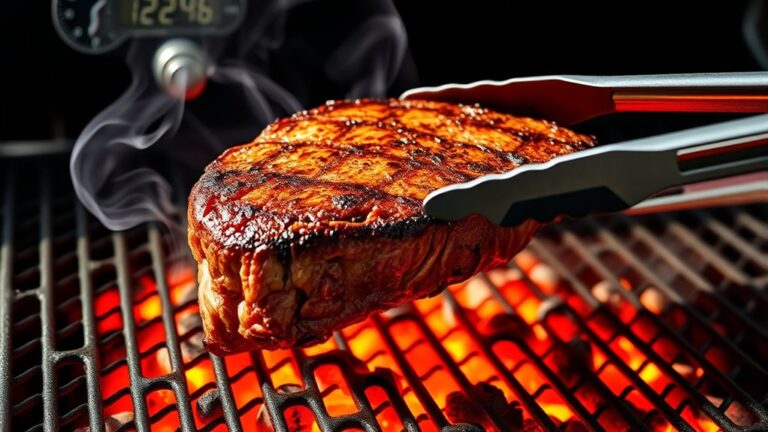
To grill the perfect steak on a pellet grill, start by preheating to around 450°F for searing. Season your steak generously and pat dry before placing it on a hot grill. Flip once or twice for even marks, and use a digital thermometer to monitor internal temperature.
Aim for your desired doneness, then let the steak rest for 5-10 minutes before serving. For more tips on perfecting your technique, keep exploring the details.
Key Takeaways
- Preheat your pellet grill to around 450°F for that perfect high-temperature sear.
- Keep a digital meat thermometer handy to check the internal temperature while grilling.
- Sear the steak directly over high heat for 1-2 minutes on each side until it gets a nice brown crust.
- Flip and rotate the steak halfway through cooking to make sure it heats evenly.
- Once it’s at your preferred doneness, take it off and let it rest for 5-10 minutes before slicing and serving.
Why Pellet Grills Are Perfect for Cooking Steaks
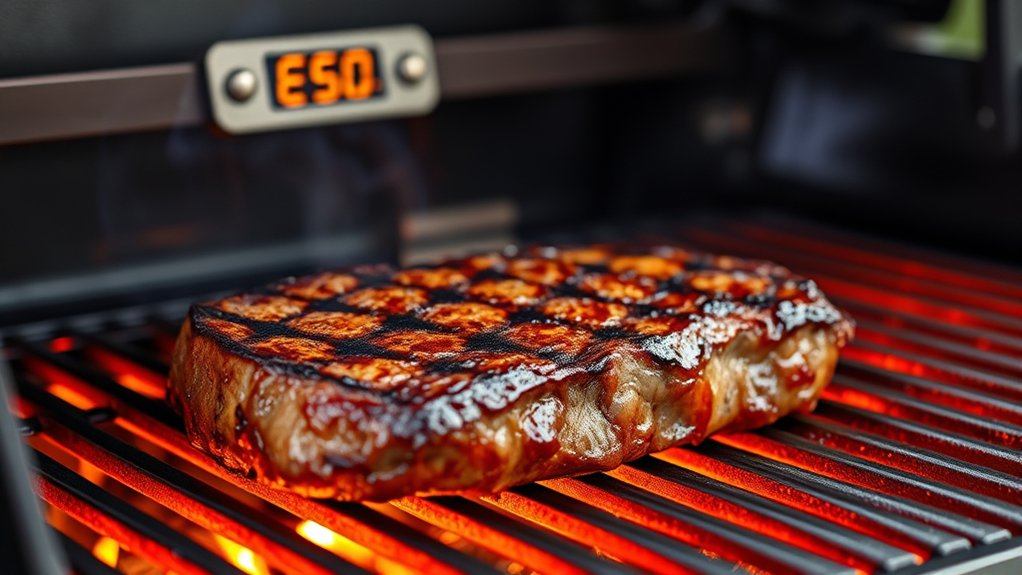
Pellet grills are perfect for cooking steaks because they give you precise temperature control and consistent heat. This is key for getting that perfect sear and the right level of doneness.
Their steady heat distribution ensures your steak cooks evenly, so you won’t have hot spots that can ruin the meat. Plus, they’re super easy to use—you just set the temperature and forget about constant monitoring.
Regular grill maintenance keeps your pellet grill running smoothly, helping it maintain consistent heat and last longer. Because pellet grills use wood pellets, they also add a rich smoky flavor to your steaks, boosting the taste without extra effort.
This combo of precise control, ease of use, and smoky flavor makes pellet grills a top pick for steak lovers. With proper maintenance, you can enjoy perfectly cooked steaks every time, making grilling more fun and rewarding.
Choosing the Best Steak Cuts for Your Pellet Grill
Choosing the right steak cuts can make a big difference in how your pellet grill performs and how delicious your meal turns out. When picking your steaks, focus on marbling quality and cut thickness because these affect flavor and cook time.
Selecting the right steak cuts enhances flavor, juiciness, and even cooking on your pellet grill.
Consider these options:
- Ribeye – Known for high marbling, it offers rich flavor and tenderness, making it perfect for pellet grilling.
- New York Strip – Has moderate marbling and a firmer texture, great for those who prefer a leaner cut.
- Filet Mignon – Very lean with minimal marbling, best for quick, high-heat cooking because of its thinner cut.
- T-bone – Combines tenderloin and strip steak, with balanced marbling and thickness for versatile grilling.
Choosing cuts with the right thickness ensures even cooking, while good marbling boosts juiciness and flavor. Tailor your selection based on your taste and grilling style.
How to Set Up Your Pellet Grill for Perfect Steak Cooking
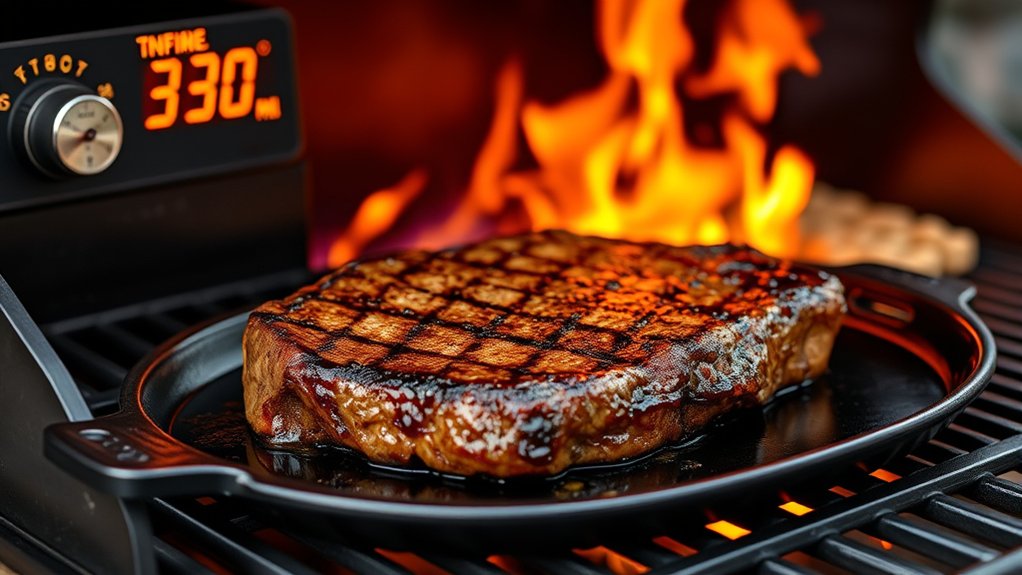
To get perfectly cooked steaks on your pellet grill, you need to set it up correctly from the start. First, pick the right pellet grill—whether it’s a small portable one or a larger backyard model—and make sure it’s clean and well-maintained. Keeping your grill in good shape helps prevent flare-ups and uneven cooking.
Next, preheat your grill to the right temperature, usually around 450°F for searing. Use the control panel to set this precisely so your steak gets that perfect sear.
Here’s a quick visual to help you set up:
| Pellet Grill Type | Recommended Temp | Maintenance Tip |
|---|---|---|
| Small/Portable | 450°F | Clean grates after use |
| Large/Backyard | 450°F | Check auger and firepot |
| Hybrid Models | 450°F | Regularly inspect pellets |
Getting these basics right will make sure your steak cooks evenly and hits the perfect temperature every time.
Seasoning Your Steak for Maximum Flavor
Want to make your steak burst with flavor? The key is to start by highlighting its natural taste with some simple seasonings. Don’t be shy—generously sprinkle salt over both sides of the meat. It’s amazing how just a bit of salt can make all the difference in bringing out the richness.
Now, once you’ve got the salt down, think about adding some complementary spices. A little black pepper, garlic powder, or even a touch of paprika can add layers of flavor without overpowering the steak. The goal is to make sure every bite is savory, well-balanced, and totally delicious.
Enhancing Natural Flavors
Enhancing natural flavors starts with proper seasoning, which amplifies the meat’s inherent richness without overpowering it. To elevate your steak, consider using marinade recipes that complement the beef’s natural taste.
These marinades can include ingredients like garlic, soy sauce, herbs, and acids to tenderize and flavor the meat. Using quality grilling accessories such as a meat thermometer helps you achieve perfect doneness without losing flavor through overcooking.
Here are four ways to enhance natural flavors:
- Apply a light coat of high-quality salt to improve the meat’s natural taste.
- Use fresh herbs and spices to add subtle complexity.
- Incorporate marinades that penetrate deeply for added moisture and flavor.
- Avoid over-seasoning to preserve the steak’s inherent richness.
Optimal Seasoning Techniques
Building on the idea of amplifying natural flavors, applying the right seasoning techniques is key to maximizing your steak’s taste. Start by choosing a marinade that complements the meat’s richness—simple olive oil and garlic work well, or try a tangy balsamic marinade for extra depth.
Alternatively, opt for carefully crafted spice blends like paprika, black pepper, and cayenne for a bold kick. Don’t be afraid to experiment with dry rubs or seasoning salts; these can form a flavorful crust when grilled.
Whichever method you choose, apply your seasoning evenly and let it sit for at least 30 minutes. Proper seasoning boosts the natural beef flavor and makes every bite packed with savory goodness.
How to Achieve a Great Sear on Your Pellet Grill
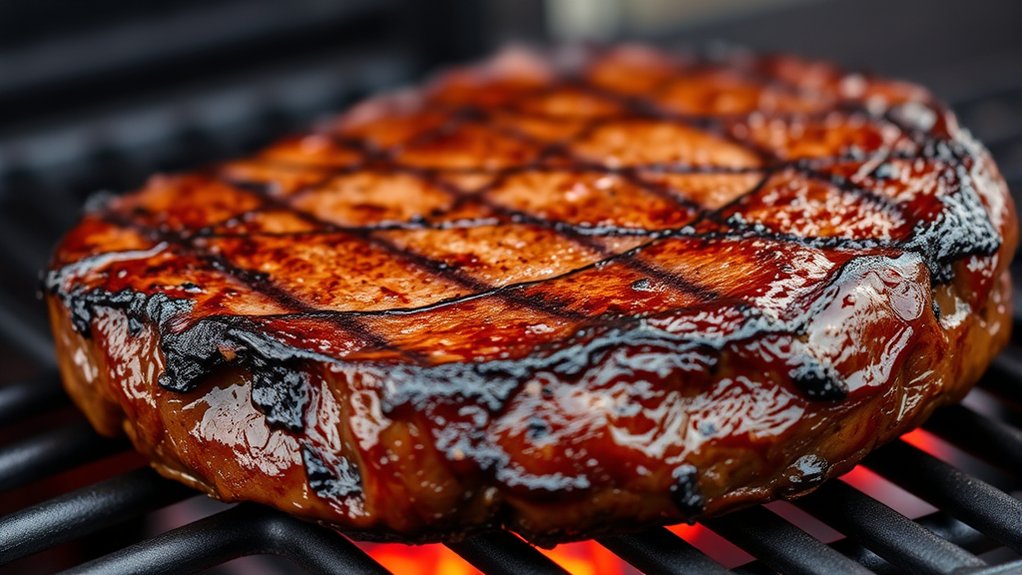
Achieving a great sear on your pellet grill means turning up the heat and focusing on direct contact with the hot surface. Start by preheating your grill to its highest setting, making sure the surface hits at least 500°F.
To get the best sear, consider using accessories like a cast iron skillet or a grilling grate to concentrate the heat and create good contact points. Applying marinades beforehand with acids and oils can help tenderize the meat and boost flavor while promoting a better sear.
Pat your steak dry with paper towels before placing it on the grill—moisture can prevent proper browning. Limit flipping the meat to just once or twice to maximize contact time and develop a caramelized crust.
Monitoring Steak Temperature for Perfect Doneness
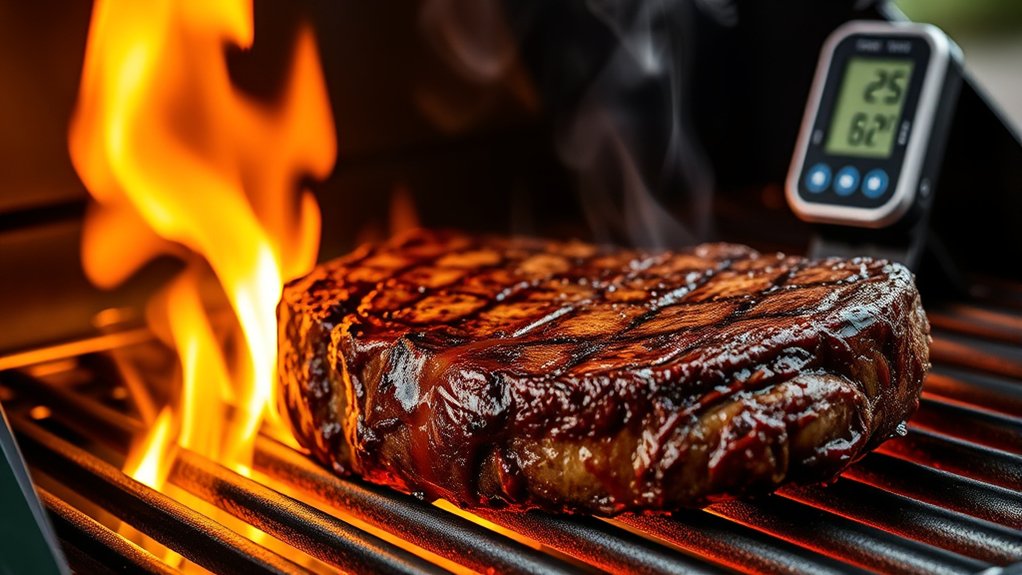
Once you’ve created a beautiful sear on your steak, the next step is to monitor its internal temperature closely. Using a reliable digital meat thermometer is essential; it’s the best grill accessory for precise readings. Insert the thermometer into the thickest part of the steak, avoiding bone or fat. This helps you gauge doneness accurately without overcooking.
While marinade techniques add flavor and tenderness, they don’t replace proper temperature monitoring. Keep a close eye on the thermometer as your steak approaches your desired doneness—rare, medium, or well-done. Remember, residual heat will keep cooking the steak even after you take it off the grill.
For the best results, remove the steak once it hits the target temperature, then let it rest. This allows the juices to redistribute evenly, making every bite flavorful. Monitoring temperature carefully guarantees perfectly cooked steak every time, making your grilling both precise and rewarding.
Tips for Flipping and Moving Your Steak for Even Cooking
To ensure your steak cooks evenly, it’s important to flip and move it strategically during grilling. Proper technique helps maintain consistent heat and prevents hot spots, making sure your steak is cooked safely.
Flipping and repositioning your steak ensures even cooking and safe grilling results.
Follow these tips:
- Use tongs or a spatula to flip the steak once it reaches your target temperature. This minimizes punctures that can leak juices.
- Rotate the steak 45 degrees halfway through each side’s cooking time. This creates attractive grill marks and helps distribute heat evenly.
- Keep the grill lid closed as much as possible. It maintains a steady temperature and reduces flare-ups, supporting safe cooking.
- Regularly clean and maintain your grill to prevent grease buildup. This stops uneven heating and flare-ups that can affect safety and the grill’s lifespan.
Why Resting Your Steak Matters and How to Do It Right
Resting your steak is super important because it helps lock in all those delicious juices and really boosts the flavor. If you skip this step, your steak might end up dry or tough, and nobody wants that. Plus, letting it rest ensures it hits the perfect temperature, making every bite just right.
Learning how to rest your steak the right way makes a big difference in how your final dish turns out. It’s a simple step, but it can totally elevate your steak game — so don’t skip it!
Enhances Juiciness and Flavor
After pulling your steak off the pellet grill, letting it rest allows the juices to redistribute throughout the meat, making sure every bite stays moist and flavorful. Resting boosts juiciness and enhances the natural flavors, so each mouthful feels more satisfying.
To get the most out of this, try using marinades that deepen the flavor while the steak rests, adding to the overall taste. Cover the steak loosely with foil to keep the heat in without trapping moisture.
Using quality grill accessories like a meat thermometer helps you monitor the internal temperature for perfect doneness. Aim for a resting period of at least 5 minutes, depending on how thick your steak is, so the juices settle evenly.
This simple step really boosts flavor, making sure your grilled steak stays juicy, tender, and full of flavor.
Prevents Meat Toughness
Because cutting into a steak immediately after grilling causes the juices to escape, the meat can become tough and dry. Resting the steak allows the meat tenderness to settle and the juices to redistribute evenly, preventing toughness.
When you let it sit, the fibers relax, making each bite more tender. Resting also helps preserve flavor infusions, keeping the flavors locked inside instead of spilling out.
Without this step, the steak can be chewy and less enjoyable. Giving your steak a few minutes to rest improves its overall texture and ensures a juicier, more flavorful bite.
This simple step makes a big difference in the quality of your grilled steak, elevating it to restaurant-quality tenderness.
Proper Temperature Resting
Knowing the right temperature to let your steak rest at guarantees you’ll get the juiciest, most flavorful result. Resting allows juices to redistribute, preventing them from spilling out when sliced.
To do it right, let your steak rest for 5-10 minutes, depending on thickness. Cover it loosely with foil to retain heat without trapping moisture.
Use a meat thermometer to ensure the internal temperature drops to about 5°F below your target temp. This helps you achieve perfect doneness without overcooking.
Consider marinating techniques beforehand to improve flavor and tenderness. This is especially helpful if you’re exploring alternative cooking methods like sous vide or oven finishing.
Troubleshooting Common Pellet Grill Steak Cooking Issues
Even with careful preparation, you might run into issues when cooking steak on a pellet grill. Common problems include uneven cooking, dryness, or inconsistent temperatures.
To fix uneven cooking, check your grill’s temperature calibration and make sure it heats evenly. Proper grill maintenance is key, so regularly clean the grates and remove ash buildup that can affect heat distribution.
If your steak turns out dry, try using marinade variations to add moisture and flavor. Also, avoid overcooking by closely monitoring the internal temperature of the meat.
Temperature spikes or drops can be frustrating, but using a reliable meat thermometer helps you keep the temperature just right. Make sure your grill lid seals properly to trap heat and maintain consistent cooking conditions.
Serving Suggestions and Final Tips for a Juicy, Flavorful Steak
To really enjoy your steak at its best, try pairing it with some tasty sides like grilled vegetables or a fresh salad. They’ll add that perfect balance and make your meal even more delicious.
Don’t forget to let your steak rest for a few minutes after cooking—that way, all those juicy flavors stay locked in when you cut into it. And if you want to give it an extra flavor boost, a little pat of butter, a squeeze of lemon, or your favorite seasoning can make all the difference.
Pair With Complementary Sides
Pairing your grilled steak with the right sides improves the overall flavor and creates a well-rounded meal. To *boost* meat tenderness, consider sides that complement your marinating techniques, like crisp vegetables or creamy mashed potatoes. Here are four sophisticated options:
- Roasted Brussels sprouts with balsamic glaze
- Garlic butter asparagus
- Herb-infused mashed sweet potatoes
- Classic Caesar salad with homemade dressing
Choosing sides that balance richness and freshness *raises* your steak experience. These options not only complement the smoky flavor from your pellet grill but also add texture and color to your plate. Keep in mind, well-prepared sides can highlight the tenderness and juiciness of your steak, making every bite flavorful and satisfying.
Rest Steak for Juiciness
Allowing your steak to rest after grilling is key to locking in its juices and making it tender. During this time, the muscle fibers reabsorb moisture, giving you a juicier bite.
For extra flavor, try marinades like garlic herb or balsamic glaze before grilling. Just make sure to choose quality steaks for the best results.
Rest time depends on the thickness of your steak—about 5 minutes for thinner cuts and up to 10 minutes for thicker ones. This helps redistribute the juices and keeps each bite flavorful and moist.
Slicing too soon can cause the juices to escape, making your steak drier. So, patience pays off for that perfect, juicy finish.
Serve your steak with sides like roasted vegetables or a fresh salad to make your meal even more appealing.
Add Flavor Enhancements
Once you’ve rested your steak to lock in those juices, the final step is to boost its flavor and presentation. To do this, consider these simple enhancements:
Choose from marinade options like balsamic, soy-ginger, or garlic herb to add extra depth and complexity.
Use quality grill accessories such as a cast iron skillet or flavor infuser for an even more smoky, rich flavor.
Finish by placing a pat of compound butter on top or sprinkling flaky sea salt for added richness and texture.
Serve with sides like grilled vegetables or a fresh herb salad to elevate the whole dining experience.
These easy steps help you create a juicy, flavorful steak that impresses every time, showing off your pellet grill skills.
Frequently Asked Questions
What Is the Ideal Pellet Wood Type for Steak Grilling?
For steak grilling, cherry or hickory pellets are ideal because their wood flavor enhances the meat’s richness without overpowering it. Your pellet choice should focus on these woods for a balanced, smoky taste that works well with the steak’s natural flavors.
Avoid softer woods like pine, which can produce unwanted resin and bitterness. Instead, stick with high-quality pellets to ensure consistent heat and the perfect amount of smoke for beautifully grilled steaks.
How Thick Should My Steak Be for Optimal Pellet Grill Results?
Think of your steak as a canvas—thickness really matters. For the best pellet grill results, aim for a steak that’s about 1.5 to 2 inches thick.
This size gives the heat from your pellet grill a chance to work its magic, creating a perfect sear on the outside while keeping the inside juicy.
Thinner steaks cook too quickly and can easily overcook, while thicker ones need more heat and time. Keep your pellet grill’s temperature steady for that flawless finish.
Can I Use a Marinade or Sauce While Grilling on a Pellet Grill?
Yes, you can use marinades or sauces while grilling on a pellet grill. Just keep in mind that some marinades, especially those that are sugary or acidic, can burn easily, so it’s best to avoid applying them too early.
Apply sauces during the last few minutes of grilling to prevent charring or burning. Use a brush or ladle carefully to get an even coat without overpowering the natural flavor of the meat.
This way, you boost the taste without risking flare-ups or uneven cooking. It’s all about timing and technique to get the best flavor outcome.
How Do I Prevent Flare-Ups During Pellet Grill Steak Cooking?
Flare-ups can turn your perfect steak into a smoky mess. To prevent them, understand what causes flare-ups like excess grease and fat dripping onto the heat source.
Use grease management techniques, like trimming excess fat and placing a drip pan, to keep drippings away from the flames.
Keep the grill lid closed and avoid flipping too often. This helps you control the heat and prevents those unwanted flare-ups, so your steak stays juicy and tender.
What Is the Best Way to Store Leftover Grilled Steak?
To store leftover grilled steak safely, let it cool to room temperature first, but don’t leave it out for more than two hours.
Put it in airtight containers to keep it fresh and prevent contamination.
For the best safety, refrigerate the steak promptly at or below 40°F.
If you plan to keep it longer, freezing is a good option.
Always reheat the steak to a safe internal temperature before eating.
Conclusion
Mastering steak on your pellet grill turns your backyard into a culinary stage. With patience and technique, you’ll unlock flavors that dance on your taste buds, proving that perfect grill marks are just the start.
Think of your grill as a trusty artist’s brush, painting each steak with precision and passion. Keep experimenting and stay attentive, and soon you’ll be creating juicy masterpieces that leave everyone asking for seconds.
Your grill isn’t just a tool. It’s your gateway to unforgettable bites, especially when you master grilling steak to the perfect temperature.