How Long Do You Smoke Turkey on a Pellet Grill?
Planning to smoke a turkey on your pellet grill? If you’ve ever wondered how long it takes to get it just right, you’re not alone. Many people struggle with timing and temperature, trying to get that perfect, juicy turkey without overdoing it.
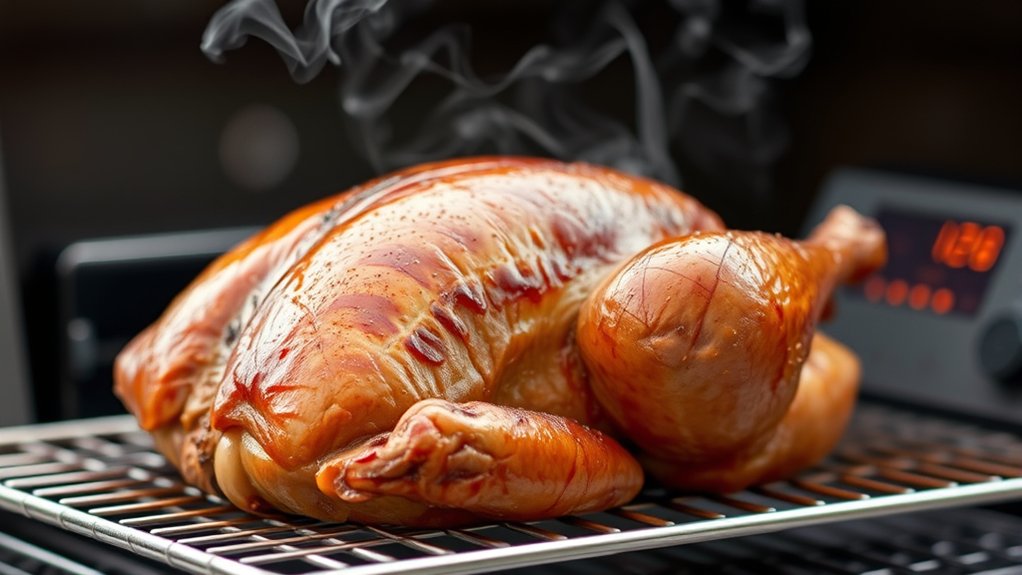
You should plan to smoke your turkey on a pellet grill for about 30 to 40 minutes per pound at 225°F. For example, a 12-pound turkey will take roughly 6 to 8 hours.
However, actual cooking time depends on the bird’s size, starting temperature, and grill conditions. Always check that your internal temperature hits 165°F in the breast.
To make sure your turkey is perfect, keep these tips in mind as you get started.
Key Takeaways
- Smoke at 225°F for about 30-40 minutes per pound of turkey.
- Use a meat thermometer to make sure the internal temperature hits 165°F in the breast.
- Let the turkey rest for 15-20 minutes after smoking so the juices can redistribute.
- Keep in mind, the cooking time might vary depending on your grill’s wattage and the size of the turkey; a higher wattage could mean less smoking time.
- For added flavor, try using wood like apple or hickory to get that nice smoke absorption.
How Long Should You Smoke a Turkey on a Pellet Grill?
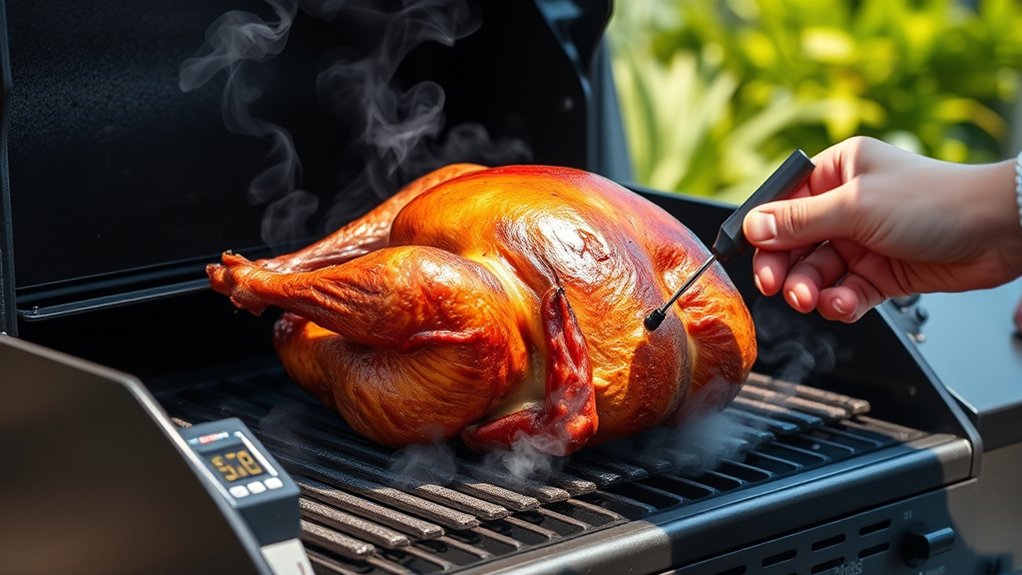
When smoking a turkey on a pellet grill, plan for about 30 to 40 minutes per pound. This gives the smoke enough time to infuse the meat and develop a rich flavor.
As you cook, you’ll see a pinkish smoke ring just beneath the surface. That’s a good sign of proper smoke absorption and flavor development.
Keep the temperature steady around 225°F to 250°F. Rushing the process can make the turkey less tender and reduce the smoky flavor.
Using quality pellets and maintaining consistent heat helps ensure even cooking and a great smoky taste.
Watch the internal temperature and aim for 165°F to make sure it’s safe and perfectly cooked.
With patience and the right technique, you’ll end up with a juicy, flavorful smoked turkey and a beautiful smoke ring.
Factors That Affect Your Turkey’s Smoking Time
Several factors can influence how long it takes to smoke your turkey, so it’s important to consider variables beyond just weight. Your seasoning techniques can impact cooking time; a heavily seasoned or wet marinade might add moisture, which can slightly prolong the process.
Moreover, grill maintenance plays a vital role. Clean, well-maintained grates and a properly calibrated pellet grill ensure consistent heat, which affects how quickly your turkey cooks. Temperature fluctuations caused by inconsistent pellet supply or dirty vents can also extend smoking time.
The turkey’s starting temperature matters too. A colder bird will take longer to reach the desired internal temperature. Finally, the type of wood pellets you use influences smoke production and heat, subtly affecting cooking speed.
Calculating Smoking Time Based on Turkey Size
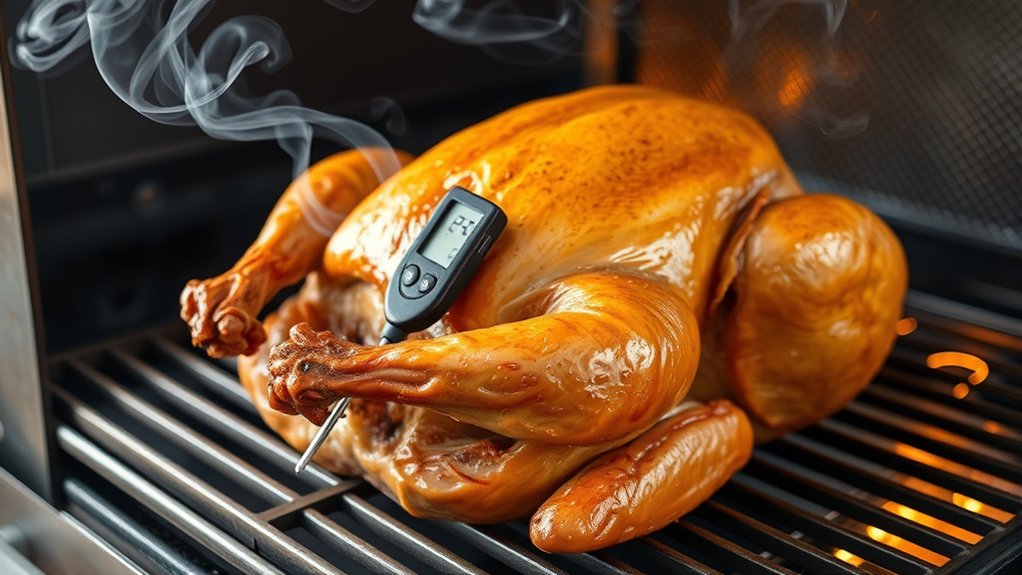
Understanding how long to smoke your turkey starts with calculating its approximate cooking time based on size. Typically, plan for about 30 to 40 minutes per pound at 225°F, but always verify for doneness with a meat thermometer.
For a 12-pound turkey, expect around 6 to 8 hours. Keep in mind that larger birds may need slightly more time, so monitor internal temperatures closely.
When considering flavor pairing, a longer smoking time allows the meat to absorb more smoky richness, enhancing its savory notes.
Presentation tips include carving the turkey carefully to showcase its juicy, tender interior. Arrange slices neatly on a platter for a beautiful display.
What’s the Best Temperature for Juicy Smoked Turkey?
Achieving juicy smoked turkey hinges on cooking it to the right internal temperature. For ideal flavor infusion and moistness, aim for an internal temperature of 165°F (74°C). This ensures the turkey is safely cooked while staying tender and juicy.
Cooking it too low may risk underdone meat, while higher temperatures can cause dryness. To improve presentation, let the turkey rest for 15–20 minutes after smoking. This helps juices redistribute evenly.
During this rest, you can brush on a glaze or sauce for added flavor. Using a reliable meat thermometer is essential to accurately monitor internal temperature. Remember, maintaining this temperature guarantees a flavorful, moist turkey.
It also helps you achieve a beautiful, appetizing presentation every time. Proper temperature control is key to maximizing both flavor and visual appeal in your smoked turkey.
How to Know When Your Turkey Is Done
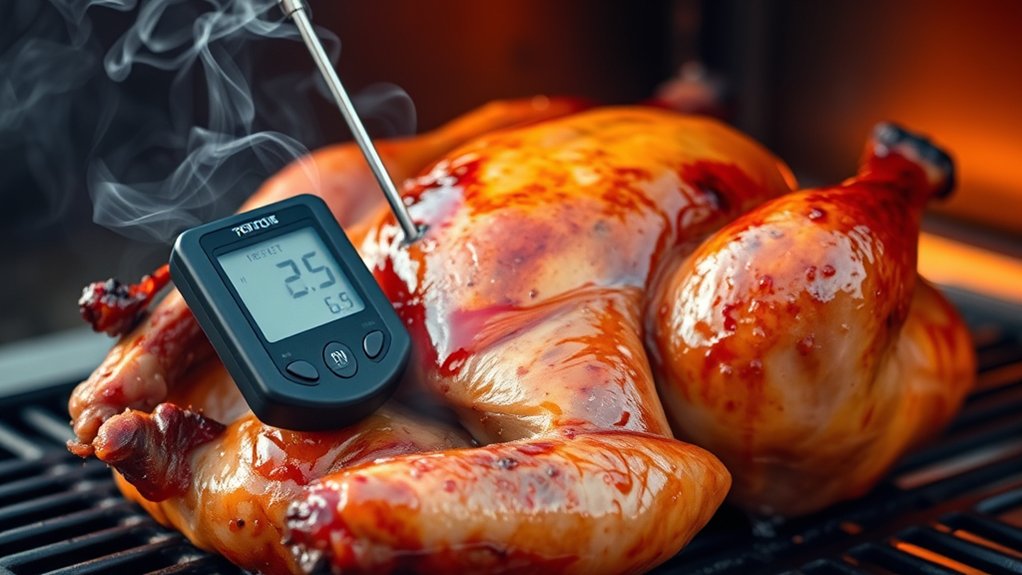
Knowing exactly when your turkey is done is key to avoiding undercooking or ending up with dry meat. To check if it’s ready, use visual clues and the internal temperature, especially if you don’t have a meat thermometer.
Look for clear juices and golden-brown, crispy skin as signs that your turkey is cooked through. For flavor, serve it with herbal stuffing or citrus-based sauces to enhance its natural taste.
When it’s time to carve, slice against the grain and arrange the pieces neatly on a platter to impress your guests. Use these signs to confidently judge doneness and focus on presentation to make your smoked turkey irresistible.
Using a Meat Thermometer for Perfect Results
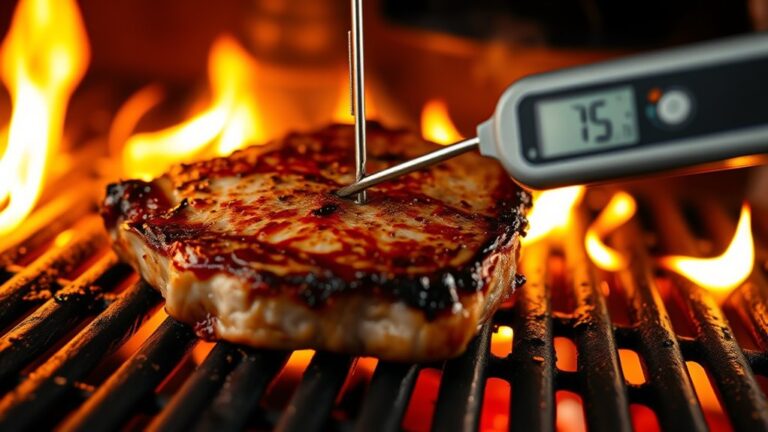
To get that perfect turkey, you’ve got to use your meat thermometer the right way. Just make sure you’re placing it in the right spot—stay clear of the bones and fat, because those can give you a false reading.
Keep an eye on the internal temperature, and try to avoid big fluctuations. That way, your turkey stays juicy and cooked just right, safe to eat and delicious!
Proper Thermometer Placement
Proper thermometer placement is essential for accurately monitoring the turkey’s internal temperature and ensuring perfect results. To do this, insert the probe into the thickest part of the breast or thigh, avoiding bone, as it can give false readings.
Proper placement helps you gauge the turkey’s progress and prevents overcooking. Consistent, accurate temperature readings allow you to adjust the smoke and heat accordingly for the best flavor.
Maintaining the correct internal temp also supports smoke ring formation, which is a sign of good smoking technique. Make sure the thermometer tip is fully inserted and stable for reliable readings.
Check the placement regularly during cooking to stay on target. Proper thermometer placement ensures your smoked turkey is moist, flavorful, and perfectly cooked every time.
Target Internal Temperatures
Have you checked the target internal temperatures for your smoked turkey? Using a meat thermometer is key to cooking it just right for safety and flavor.
For a juicy, tender turkey, aim for an internal temperature of 165°F (74°C) in the breast. If you like darker, more flavorful meat, the thigh should reach about 175°F (79°C).
These temperatures help prevent undercooking or overcooking, which can mess with the texture and taste. Relying on accurate readings lets you fine-tune your smoking process and get consistent results.
Keep in mind, different parts of the turkey may need slightly different temperatures to bring out the best flavors. Checking the internal temperature regularly ensures your smoked turkey turns out perfect every time.
Avoiding Temperature Fluctuations
Since temperature fluctuations can easily impact the doneness and safety of your smoked turkey, it’s important to keep an eye on it with a reliable meat thermometer. Staying steady with your temperature helps you get that perfect flavor and a nice smoke ring, both signs of a well-cooked bird.
Fluctuations can cause uneven cooking, which might lead to undercooked or dried-out meat. To prevent this, keep your pellet grill’s temperature as consistent as possible by using the digital controls and avoiding opening the lid too often.
A good meat thermometer allows you to check the internal temperature without guessing. This helps you reach the ideal doneness every time. Consistent heat also promotes even smoke absorption and a beautiful smoke ring, giving your turkey that irresistible smoky flavor and a professional look.
Common Mistakes That Change Your Smoking Time
One mistake people often make is not keeping a steady temperature, and that can really mess up your smoking time. If the temperature fluctuates, your turkey might end up taking longer or cooking too quickly.
Another thing to watch out for is using the wrong kind of wood. Different woods can affect how fast or slow your turkey cooks, so picking the right one is pretty important.
Just paying attention to these little details can make a big difference. It helps ensure your turkey cooks evenly and on time, so you get that perfect smoked flavor every time.
Inconsistent Temperature Control
Inconsistent temperature control is a common mistake that can significantly affect your smoking time on a pellet grill. Fluctuations in heat can mess up the smoke ring and slow down flavor infusion, leading to unevenly cooked turkey.
To keep the temperature steady, regularly check and clean your grill to prevent airflow problems. Use a reliable thermometer to monitor both the internal and grill temperatures.
Try not to open the lid too often because it causes temperature drops. Adjust the pellet feed carefully to maintain consistent heat throughout the process.
Following these steps helps ensure a steady temperature, which promotes even cooking and better smoke absorption. When the heat stays consistent, your turkey develops a rich smoke ring and deep flavor, making it tender and delicious.
Using Wrong Wood Type
Using the wrong type of wood can significantly impact your smoking time and the flavor of your turkey. Different woods burn at different rates and have unique flavor profiles, so picking the right one is key for great results.
For instance, fruit woods like apple or cherry give a mild, sweet flavor that enhances the turkey’s natural taste without overpowering it. Hardwoods like hickory or oak produce stronger, more robust smoke, which can speed up cooking if used too much.
Choosing an unsuitable wood not only affects the flavor but can also cause inconsistent smoke production. This leads to unpredictable smoking times and less control over the process. Always select woods that complement poultry and match your flavor preferences to get a perfectly smoked turkey.
Tips to Keep Your Turkey Moist and Tender
To keep your turkey moist and tender, focus on proper preparation and cooking techniques. Start with brining or marinating to boost flavor and help the meat retain moisture. You can also inject marinade directly into the meat for extra flavor.
For moist, tender turkey, focus on brining, marinating, and proper cooking techniques.
Use a reliable thermometer to monitor the internal temperature and prevent overcooking. Basting the turkey periodically with flavorful liquids will keep it juicy and tender. Applying a light coat of oil or butter can also give the surface a crispy, moist finish.
Incorporate presentation tips by carving the turkey properly to keep slices neat and appealing. Wrapping the turkey in foil halfway through cooking helps trap moisture and keeps it juicy.
Consider using a water pan in your pellet grill to add humidity, which helps prevent drying out. Keep the grill temperature steady to ensure even cooking and maintain moisture throughout.
Finally, let the turkey rest for at least 15 minutes before carving. This allows the juices to redistribute evenly, resulting in a more flavorful and moist turkey.
Why Resting Your Turkey Matters and How Long to Wait
After removing your turkey from the pellet grill, taking a moment to rest it helps the juices settle and spread throughout the meat. This step is key to keeping your turkey moist, especially if you’re going for that perfect holiday centerpiece.
Resting also enhances flavor, as the juices carry seasonings deeper into the meat. Usually, you want to let your turkey rest for about 20 to 30 minutes. During this time, the internal temperature stabilizes, making carving much easier and cleaner.
Skipping this step can lead to a dry, less flavorful turkey, which might disappoint your guests. Resting your turkey improves texture and makes sure every slice is juicy and tasty.
This little pause makes a big difference in how your turkey looks, tastes, and feels, tying into the tradition of serving beautiful, delicious dishes.
Adjusting Smoking Time for Different Pellet Grills
Since different pellet grills vary in design, wattage, and heat distribution, you’ll need to adjust your smoking time accordingly. Higher wattage grills tend to cook faster, so keep a close eye on your turkey to prevent overcooking.
Lower wattage models may need extra time to reach the perfect internal temperature, especially if you want a juicy, flavorful result. The type of pellets you use can also influence flavor—some woods like apple or cherry add sweetness, while hickory gives a smoky punch.
To make sure your presentation tips shine, avoid over-smoking, which can cause a bitter taste and dull appearance. Check your grill’s temperature regularly and use a reliable meat thermometer for precise timing.
Experimenting with different wood pellet blends can give your turkey unique flavors. Finally, remember to rest your turkey properly before slicing for the best presentation.
Frequently Asked Questions
Can I Smoke a Turkey Overnight on a Pellet Grill?
Yes, you can smoke a turkey overnight on a pellet grill. Just set your cooking temperature to around 225°F and keep it consistent throughout.
The smoking time depends on the size of your turkey, but generally, you’ll smoke it for about 30-40 minutes per pound. Keep the lid closed as much as possible to maintain the right temperature and smoke.
Make sure to use a meat thermometer to check for doneness. That way, you’ll get a perfectly smoked turkey without any guesswork.
How Does Humidity Affect Smoking Times?
Imagine the smoky aroma wrapping around your turkey as humidity dances in the air. Higher humidity keeps meat moisture locked in, slowing down cooking and smoke penetration. This means your bird will take longer to cook.
On the other hand, dry conditions dry out the meat faster. That allows smoke to penetrate more quickly, speeding up the process. So, keep an eye on the humidity levels when smoking.
Adjust your smoking time accordingly, knowing that humidity plays a vital role in balancing meat moisture. This helps ensure perfect, flavorful results every time.
Should I Brine My Turkey Before Smoking?
Yes, you should brine your turkey before smoking. Brining helps keep the meat moist and tender while boosting its flavor.
It allows the turkey to absorb moisture and seasonings, making the meat juicier and more flavorful. You can use a simple saltwater solution or add herbs and spices for extra taste.
Just remember to pat the turkey dry before smoking so you get a good bark and even cooking.
What’s the Best Wood Pellet Flavor for Turkey?
Did you know that applewood is one of the most popular choices for smoking turkey? For the best flavor, go with apple or cherry pellets, as they create subtle, sweet smoke that enhances the turkey’s natural taste.
When choosing pellets, focus on flavor combinations that complement poultry. Your goal is a mild, aromatic smoke, so pick a flavor that balances well with your seasoning and adds depth without overpowering.
Can I Smoke a Frozen Turkey on a Pellet Grill?
You can smoke a frozen turkey on a pellet grill, but it takes a bit longer and you need to be careful. Start by preheating your pellet grill, then place the frozen turkey directly on the grates.
Keep the temperature around 225°F to 250°F, and be patient—your turkey might need several hours to cook all the way through. Use a meat thermometer to check that it reaches 165°F in the thickest part before serving.
Conclusion
By understanding the factors that influence smoking time and following best practices, you can achieve a juicy, perfectly cooked turkey on your pellet grill.
Remember, using a thermometer guarantees accuracy, and resting the meat locks in moisture. Don’t worry if your turkey takes a bit longer; think of it as a small investment for tender, flavorful results.
With patience and attention, you’ll master smoking turkey on your pellet grill every time—your guests will thank you!