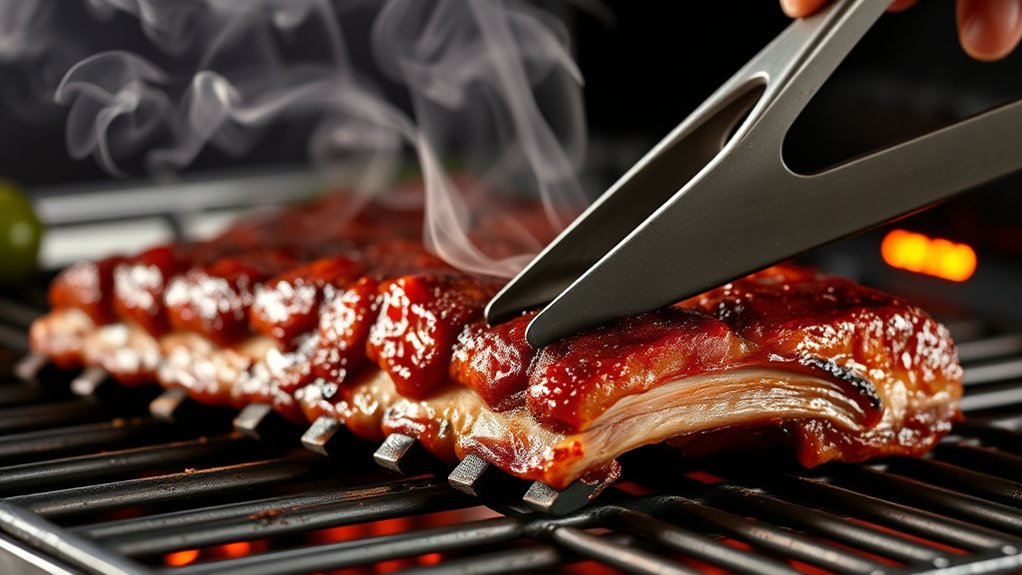
5 Simple Steps to Cook Pork Ribs on a Pellet Grill
Cooking the perfect pork ribs on a pellet grill can feel overwhelming, especially when you’re aiming for that tender, flavorful result. You’re not alone—many people struggle with getting the timing and seasoning just right. But don’t worry, with a few simple steps, you’ll be serving up delicious ribs that everyone will love.
To cook perfect pork ribs on a pellet grill, start by preparing and marinating your ribs for added flavor. Next, season with a dry rub and let the flavors soak in.
Preheat your grill to around 225°F and set the smoke level with mild wood like cherry or apple. Monitor the internal temperature as you cook for 4-6 hours, then rest the ribs properly to lock in moisture.
If you want detailed tips, there’s more to find out.
Key Takeaways
- Preheat your pellet grill to 225°F and prepare your ribs with a flavorful dry rub or marinade.
- Trim excess fat and silver skin, then apply the rub generously, letting it sit for at least 30 minutes.
- Maintain a steady temperature of 225°F and use mild wood like apple or cherry for that smoky flavor.
- Cook the ribs for 4 to 6 hours, occasionally spritzing with juice and keeping an eye on the internal temperature for that perfect tenderness.
- Rest the ribs for 10 to 15 minutes, then add your finishing glaze or sauce before slicing and serving.
How to Prepare Your Pellet Grill for Perfect Ribs
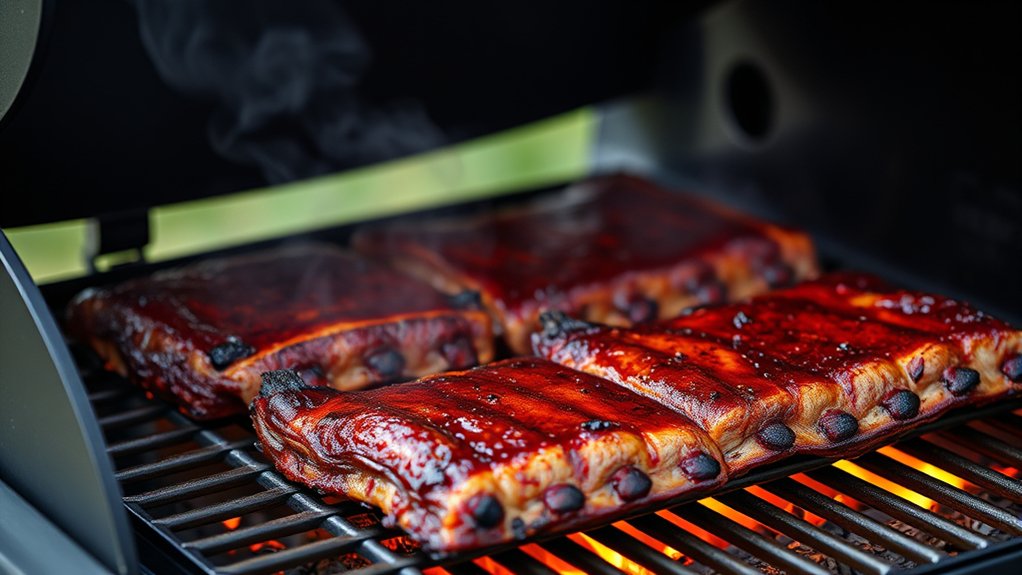
Before you start cooking, it’s crucial to properly prepare your pellet grill to guarantee tender, flavorful ribs. Begin by choosing the right rib cut, such as baby back or spare ribs, based on your preference and cooking time. Proper rib cut selection ensures ideal tenderness and flavor.
Next, consider your marinade options. Marinating your ribs beforehand can add depth and moisture. You might opt for a simple mixture of apple cider vinegar and spices or a more complex marinade with honey, soy, or citrus.
Once you’ve selected your marinade, apply it evenly and let the ribs sit for a few hours or overnight. Before placing the ribs on the grill, preheat your pellet grill to the desired temperature, usually around 225°F.
Clean the grates, then set the smoker to maintain consistent heat and smoke levels. Proper preparation of both your grill and ingredients sets the stage for perfectly cooked, flavorful ribs.
How to Season and Rub Your Pork Ribs for Maximum Flavor
To maximize the flavor of your pork ribs, it’s essential to start with a well-balanced seasoning and rub. A good rub enhances the meat’s natural flavor and complements your marinade recipes and sauce pairings.
A well-balanced rub enhances natural flavor and complements marinades and sauces for perfectly seasoned pork ribs.
First, create a dry rub with a mix of spices like paprika, garlic powder, and brown sugar. This combo provides a savory-sweet balance that’s perfect for grilling.
Second, apply the rub generously, ensuring every surface is covered, and let it sit for at least 30 minutes to absorb the flavors.
Lastly, consider adding a splash of apple cider vinegar or mustard to your marinade for tang and moisture. This step boosts tenderness and flavor depth.
Setting the Right Temp and Smoke for Tender Ribs
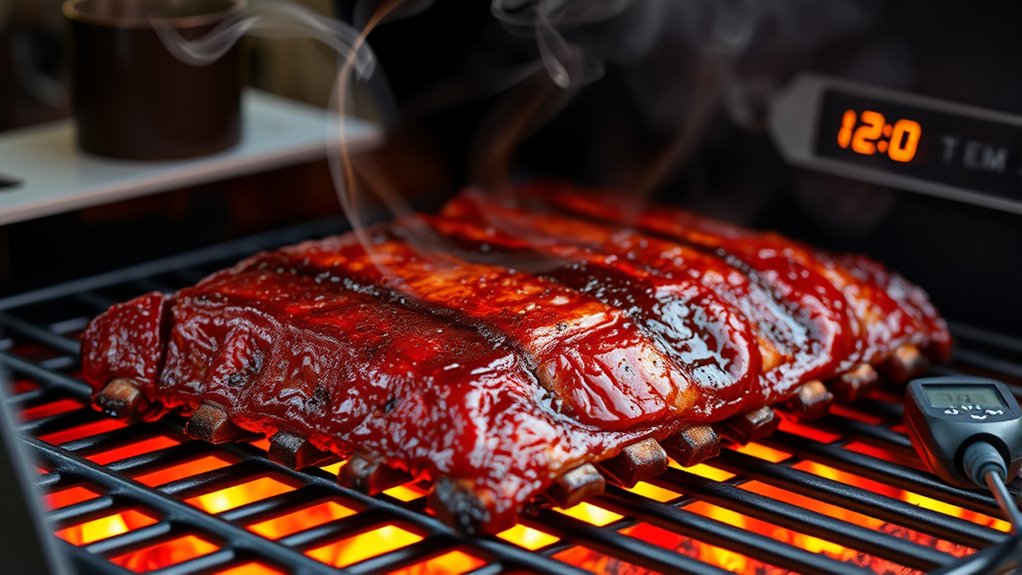
Achieving tender ribs on your pellet grill depends on setting the right temperature and smoke level from the start. Keep the grill at around 225°F (107°C) for slow, even cooking. This low and slow approach helps break down collagen, making the meat tender.
For smoke, opt for a mild wood like apple or cherry. Too much smoke can overpower the flavor, so use it sparingly. Properly trimming your ribs ensures even cooking and better smoke penetration. Remove excess fat and silver skin beforehand.
Marinades can add flavor and moisture, but don’t overdo it—over-marinating might interfere with the rub’s adhesion. Use the right temperature and smoke levels to set the stage for perfectly tender, flavorful ribs.
| Temperature Setting | Smoke Level |
|---|---|
| 225°F (107°C) | Light to moderate smoke |
| 250°F (121°C) | Slightly more smoke |
| 275°F (135°C) | Less smoke, quicker cook |
Monitoring and Cooking Ribs to Achieve Fall-Off-The-Bone Tenderness
Monitoring your ribs closely during cooking helps ensure they reach that perfect fall-off-the-bone tenderness. Keep an eye on the temperature and don’t rush things, since even small fluctuations can impact tenderness.
Use a meat thermometer to check for an internal temp of about 195°F to 203°F. During cooking, focus on these key points:
- Moisture Levels – Baste with marinade variations or spritz with apple juice to keep ribs moist and tender.
- Cooking Time – Ribs usually take 4-6 hours. Avoid opening the grill too often to maintain a steady heat.
- Ribs Storage – If you need to pause, store cooked ribs in an airtight container in the fridge. Reheat gently to avoid drying them out.
How to Rest and Finish Ribs for Optimal Flavor
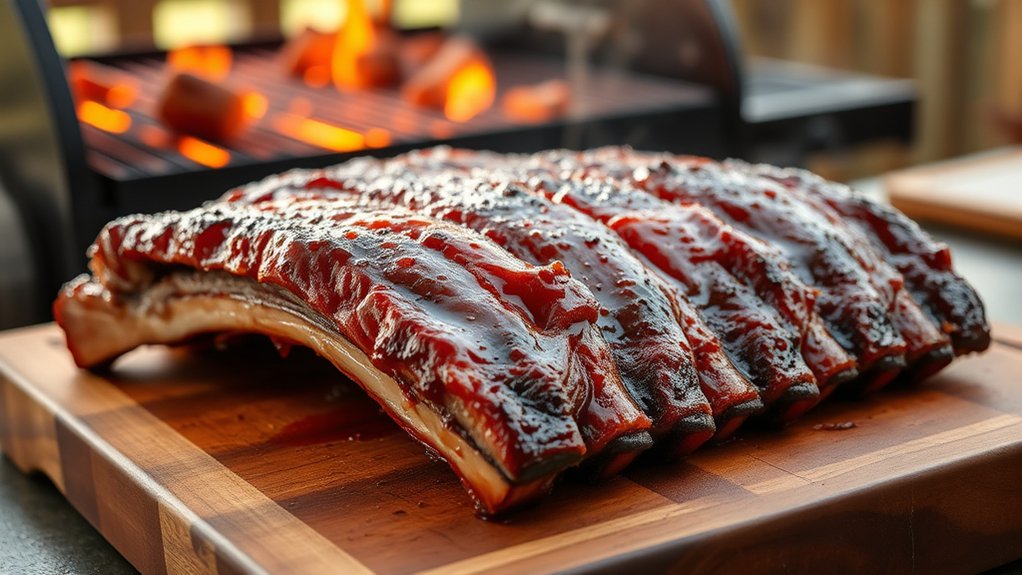
Once your ribs have reached the desired internal temperature, it’s important to let them rest before serving. Resting helps lock in juices, keeping the meat moist and flavorful.
Let ribs rest to lock in juices and enhance flavor before serving.
Wrap the ribs loosely in foil or place them on a cutting board, tented with foil, to retain heat without steaming. Resting for about 10-15 minutes allows the juices to redistribute evenly.
This process also lets residual heat finish cooking the ribs gently. Avoid cutting into them immediately, as that can cause juices to escape and reduce flavor.
For extra flavor, consider brushing the ribs with a light glaze or sauce during resting. This final touch makes every bite juicy, tender, and packed with smoky flavor.
Proper resting is a simple but essential step to elevate your ribs to restaurant-quality perfection.
Frequently Asked Questions
What Type of Wood Pellets Produce the Best Flavor for Pork Ribs?
You should choose hickory or apple wood pellets for the best pork rib flavor. Hickory gives a strong, smoky taste that goes really well with pork.
Apple wood adds a sweet, fruity aroma that also helps improve tenderness. When picking your pellets, go for high-quality options to ensure a consistent wood flavor and good pellet burn.
This way, you’ll give your pork ribs a rich, delicious smoky profile that takes your grilling to the next level.
How Often Should I Check the Pellet Level During Cooking?
Think of your pellet storage as a crucial reservoir feeding your grill’s fire. You should check the pellet level every hour to ensure your fire stays steady and your ribs cook evenly.
Regular monitoring during grilling is like tending a garden—prompt care keeps everything flourishing. It’s a simple way to catch any low pellets before they cause problems.
Refilling pellets before they run out helps prevent flare-ups and keeps the temperature steady. This way, you’ll achieve perfectly cooked, tender ribs every time.
Can I Cook Pork Ribs Directly on the Grill Grates Without Foil?
Yes, you can cook pork ribs directly on the grill grates without foil. Just apply your favorite ribs seasoning and marinade techniques beforehand to boost flavor and tenderness.
Keep the heat steady and watch the cooking time closely to avoid drying out the meat. Direct grilling will give you a crispy exterior, but it’s a good idea to keep the ribs moist.
You can do this by occasionally spritzing them or wrapping them if needed. This method results in flavorful, nicely textured ribs that are sure to impress.
What Are Common Mistakes to Avoid When Cooking Ribs on a Pellet Grill?
Don’t bite off more than you can chew by ignoring common pitfalls. Keep your pellet grill’s cooking temperature steady around 225°F to 250°F to prevent drying out your ribs.
Avoid under-seasoning or skipping the rub, because good ribs need flavor. Also, don’t forget to monitor your ribs’ doneness with a meat thermometer.
Overcooking or rushing the process can turn your tender ribs into a tough, chewy mess.
How Do I Adjust Cooking Time for Different Rib Sizes or Cuts?
To adjust cooking time for different rib sizes or cuts, start by considering rib thickness and cut variations. Thicker ribs need more time, so increase your cooking duration accordingly.
For cuts like spare ribs versus baby back ribs, expect differences in cooking time; spares generally take longer. Use a meat thermometer to check for an internal temperature of around 190-203°F, ensuring perfect tenderness regardless of size or cut variation.
Conclusion
Now that you’ve mastered these simple steps, your pellet grill will become your secret weapon for perfect pork ribs. Just remember, patience and attention to detail are your best friends on this flavorful journey.
With a little practice, you’ll be creating tender, smoky ribs that tell a delicious story with every bite. So go ahead, ignite your grill, adopt the process, and let those mouthwatering aromas lead you to barbecue bliss.