6 Simple Steps to Grill Bone-In Chicken on Gas Grill
Many people love the idea of perfectly grilled bone-in chicken, but getting it just right can be tricky. You’re not alone—grilling juicy, flavorful chicken on a gas grill often feels like an art form. With a few simple steps, you can master it and impress everyone at your next cookout.
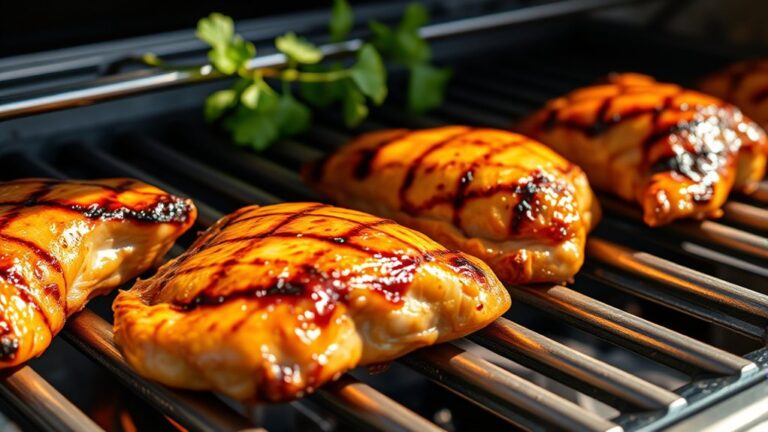
To grill bone-in chicken on a gas grill, start by marinating and seasoning your chicken, then pat it dry. Preheat your grill to medium and set up direct and indirect heat zones, adding soaked wood chips if you want smoky flavor.
Cook the chicken for 40-45 minutes, turning occasionally, and use a thermometer to check for an internal temperature of 165°F. Let it rest before serving.
Keep going to unveil more expert tips for perfect grilled chicken.
Key Takeaways
- Marinate the chicken for at least 1 hour, then pat it dry before grilling.
- Preheat the gas grill to medium heat and set up both direct and indirect heat zones.
- Season the chicken generously and place it on the indirect heat side of the grill.
- Cook for 40-45 minutes, turning occasionally, until the internal temperature hits 165°F.
- Let the chicken rest for 5-10 minutes before serving to keep it juicy.
How to Prepare Your Chicken for Grilling
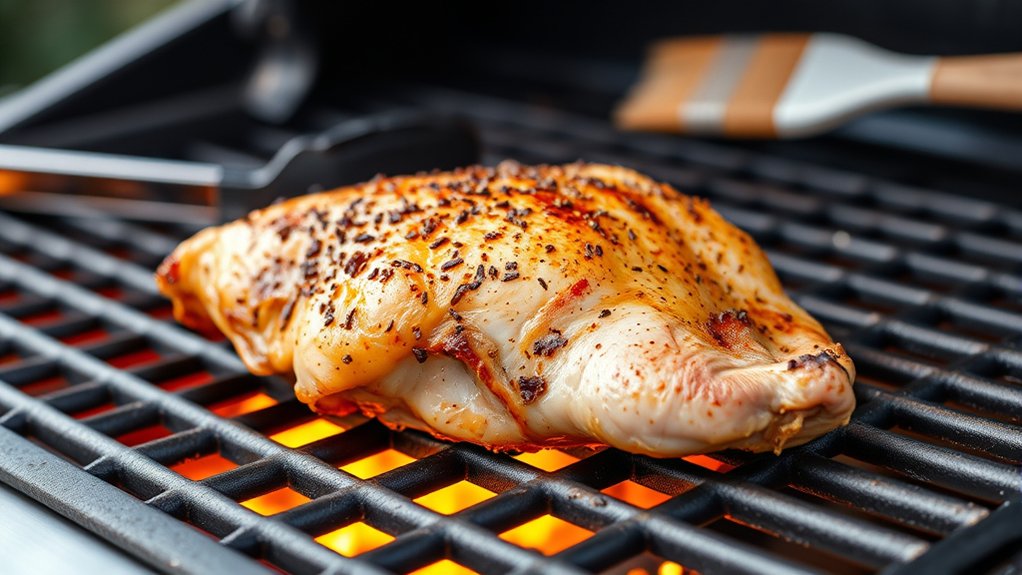
Before grilling, you need to properly prepare your chicken to guarantee it cooks evenly and stays flavorful. Start by choosing your marinade options, which can add moisture and depth of flavor. Popular choices include lemon and herbs, spicy barbecue, or garlic and olive oil. Marinating for at least one hour helps tenderize the meat and infuse it with flavor.
Next, focus on seasoning techniques. Pat the chicken dry with paper towels to promote even browning. Apply a generous layer of seasoning—salt, pepper, and your favorite spices—covering all sides. Consider using a dry rub or a marinade to improve flavor further.
Be sure to let the chicken sit at room temperature for about 20 minutes before grilling. This helps ensure even cooking. Proper preparation is key to juicy, flavorful chicken, and a good marinade combined with effective seasoning techniques sets the foundation for a delicious grilled meal.
Set Up Your Gas Grill for Perfect Bone-In Chicken
Setting up your gas grill properly is key to cooking bone-in chicken evenly and getting that smoky flavor. Start by preheating your grill on medium heat and cleaning the grates to prevent sticking.
Use marinade techniques beforehand to add flavor and moisture, making sure the chicken stays juicy. When you’re ready to grill, set up two heat zones: one with direct heat and the other with indirect heat.
This way, you can sear the chicken over high heat and finish cooking on the cooler side. For extra smoky flavor, try wood chips like hickory or applewood. Soak the chips in water for at least 30 minutes before placing them in a smoker box or wrapped in foil with holes.
This setup helps your chicken get that signature smoky taste without burning the wood. With proper prep, your grill will deliver evenly cooked, flavorful bone-in chicken every time.
Maintain the Right Temperature and Timing for Juicy Results
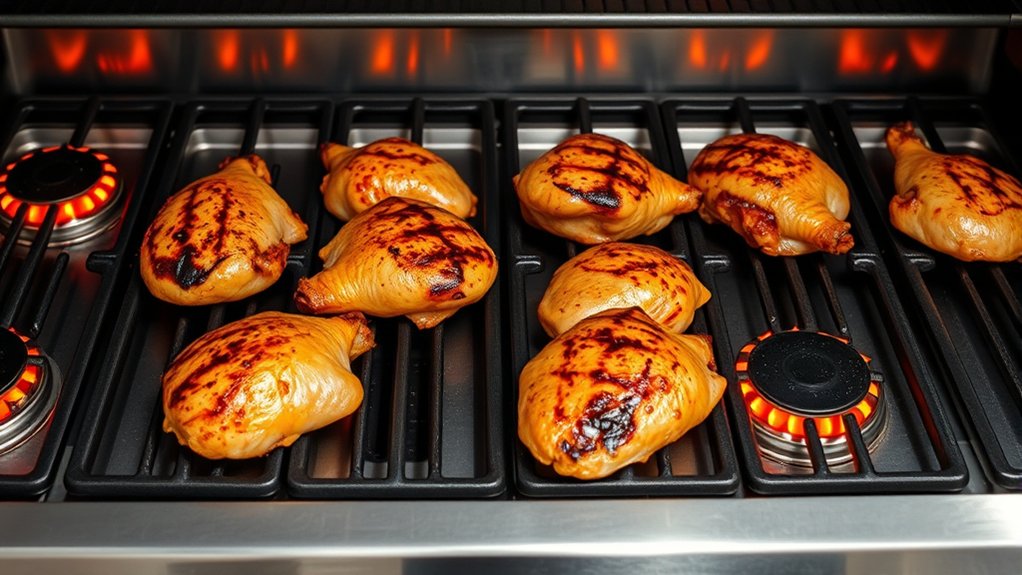
To keep your chicken juicy and tender, it’s really important to maintain a steady temperature. Using a meat thermometer can help you keep an eye on the internal temp so you don’t accidentally overcook it.
Timing also plays a big role here. When you combine proper timing with consistent heat, you’re much more likely to get that perfectly grilled, bone-in chicken that’s just right.
Consistent Temperature Control
Maintaining a consistent temperature is key for perfectly grilled bone-in chicken. It ensures even cooking, keeps the meat juicy, and brings out the best flavors. Use your grill’s thermometer to keep the heat steady around 350°F.
Think of it like this:
| Temperature Zone | Food to Cook |
|---|---|
| Low (250-300°F) | Slow braising or smoking |
| Medium (350°F) | Great for grilling bone-in chicken |
| High (400-450°F) | Searing for a crispy exterior |
You can control the temperature by adjusting your burners and opening or closing the vents. Marinades help keep the meat moist and flavorful, but steady heat is what really unlocks those delicious flavors without overcooking.
Proper Cooking Time
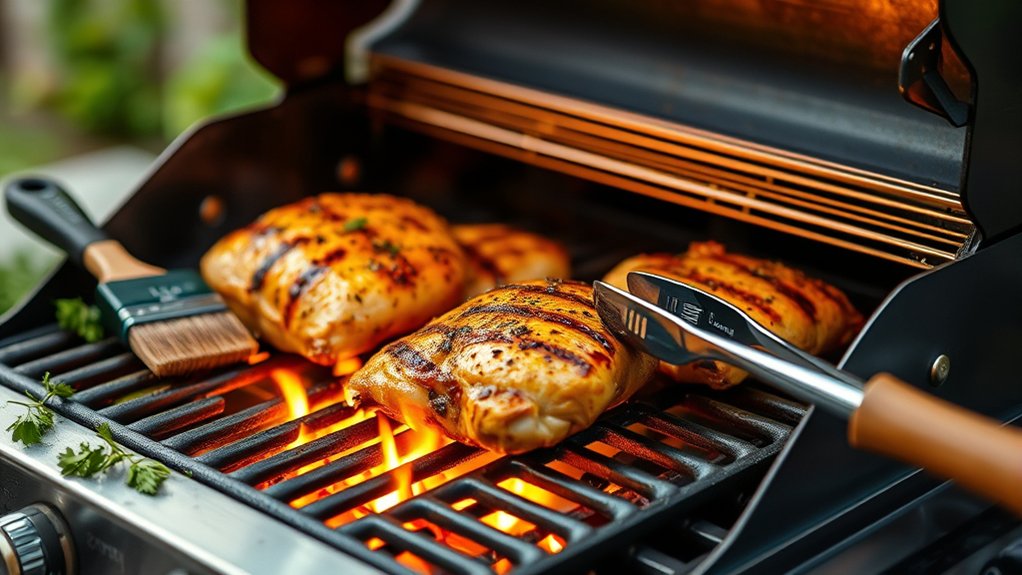
To guarantee your bone-in chicken stays juicy and tender, it’s essential to cook it for the right amount of time at a steady temperature. Aim for about 40 to 45 minutes on your gas grill, turning occasionally.
Use marinade techniques beforehand to improve flavor and moisture, but avoid over-marinating, which can cause flare-ups. Keep the grill temperature around 350°F to 375°F for even cooking.
Incorporate seasoning variations like herbs, spices, or a simple salt and pepper rub to add layers of flavor. Check for doneness by using a meat thermometer—aim for an internal temperature of 165°F.
Rest the chicken for a few minutes before serving to let the juices redistribute. This guarantees your chicken remains juicy and flavorful throughout.
Achieve a Crispy, Juicy Finish Every Time
Achieving a crispy, juicy finish on bone-in chicken requires balancing heat and timing. Start with marinade flavors that penetrate the meat, adding moisture and enhancing flavor. Let the chicken sit in the marinade for at least a few hours or overnight for maximum impact.
When grilling, use a two-zone setup: direct heat for crisping the skin and indirect heat to cook the meat through without burning. Apply chicken seasoning generously to develop a flavorful crust. During the last few minutes, increase the heat slightly to crisp the skin without overcooking the meat.
Baste the chicken with marinade or a light oil to promote a shiny, crispy exterior. Remember, patience is key; avoid flipping too often, which can disrupt the crust. With the right marinade flavors, well-seasoned skin, and proper heat control, you’ll achieve a perfectly crispy, juicy bone-in chicken every time.
Check for Doneness and Rest Your Chicken Properly
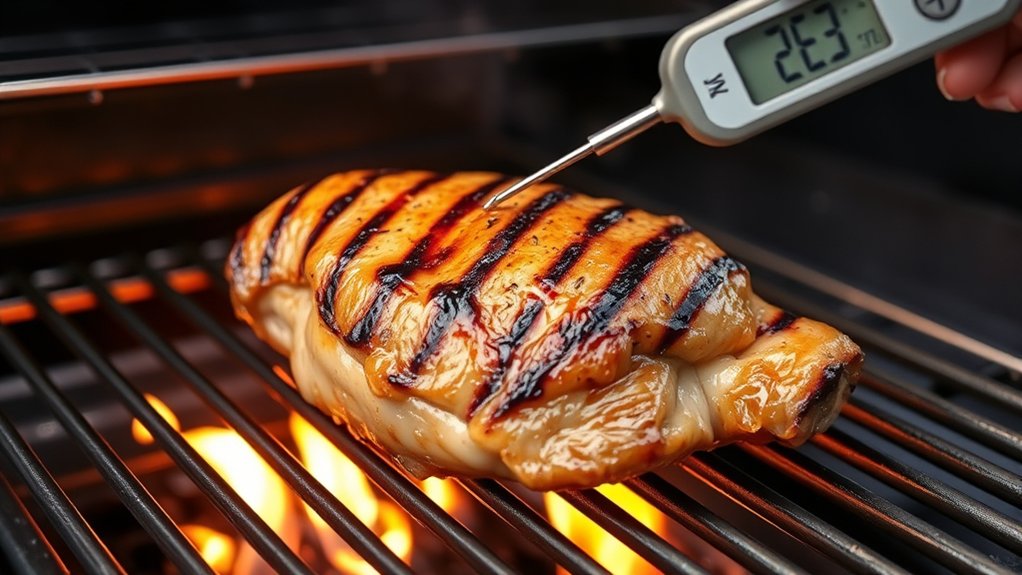
After removing the chicken from the grill, check for proper doneness to make sure it’s safe to eat and cooked just right. Use a meat thermometer inserted into the thickest part of the meat—look for an internal temperature of 165°F.
When testing, resist the urge to cut into the chicken immediately. Instead, let it rest for a few minutes. Resting allows the juices to redistribute, keeping the meat moist and flavorful.
Think about your marinade techniques and seasoning options. Well-marinated chicken benefits from resting, which helps flavors settle in. If you used dry or wet seasonings, give it some time to reabsorb those flavors.
Remember, overcooking can dry out the chicken, so keep an eye on the temperature. Resting for about 5-10 minutes ensures the chicken is tender and juicy.
This way, every bite will be satisfying. Properly checked and rested chicken guarantees a delicious, safe, and perfectly cooked meal.
Serve and Enjoy Your Grilled Bone-In Chicken
Once your grilled bone-in chicken is cooked perfectly and has rested, it’s time to serve and enjoy. To get the most out of your meal, consider these serving tips and pairing ideas.
Serve your chicken with classic sides like grilled vegetables, coleslaw, or baked potatoes to enhance that smoky flavor. These sides add variety and make your plate more appealing.
Pair your chicken with a crisp white wine, cold beer, or refreshing iced tea to bring out its flavors. These drinks complement the smoky and savory notes beautifully.
Arrange the chicken on a platter, garnish with fresh herbs or lemon wedges, and let your guests help themselves. Presentation makes the meal more inviting and fun.
Following these simple steps will boost your grilled chicken experience, making it look great and taste even better. Encourage everyone to try different pairing options to discover their favorite combo.
With these serving suggestions, your bone-in chicken will shine as the star of any meal and leave everyone asking for seconds.
Frequently Asked Questions
Can I Grill Frozen Bone-In Chicken Safely?
You shouldn’t grill frozen bone-in chicken directly because it can cook unevenly and pose food safety risks.
It’s best to thaw the chicken first using safe methods like the refrigerator, cold water, or microwave.
Thawing helps ensure even cooking, reduces bacteria risk, and helps you get the best grilling results.
Always cook chicken to an internal temperature of 165°F to keep it safe and tasty.
What Are Common Mistakes to Avoid When Grilling Bone-In Chicken?
Think of grilling bone-in chicken like a delicate dance—you don’t want to step on toes. Avoid common mistakes by not skipping marinade variations that add flavor and moisture.
Always maintain the right cooking temperature to prevent drying out or undercooking. Don’t rush the process; instead, give your chicken time to develop a crispy exterior and juicy interior.
Monitoring heat and flavoring consistently guarantees a perfectly grilled masterpiece.
How Do Different Marinades Affect Grilling Times?
Different marinade variations can impact grilling times because they influence how quickly the chicken cooks and how well it absorbs flavor.
A marinade with acidic ingredients like lemon or vinegar may slightly tenderize the meat and reduce grilling time.
On the other hand, thicker, oil-based marinades might need a bit more time to cook through.
For the best flavor, marinate your chicken for at least a few hours before grilling.
Is It Necessary to Oil the Grill Grates Before Cooking?
Yes, oil the grill grates before cooking to prevent sticking. Proper grill maintenance includes regular oil application, which helps keep your chicken tender and intact.
Use a high-heat oil and a folded paper towel or brush to coat the grates evenly. This step makes flipping easier and guarantees even cooking.
It’s especially helpful for bone-in chicken, resulting in well-seared meat with minimal fuss.
How Can I Prevent Flare-Ups During Grilling?
To prevent flare-ups during grilling, manage causes like fat dripping onto flames and grease buildup. Keep the lid closed whenever you can to contain flare-ups and maintain even heat.
Trim excess fat from your chicken and avoid overly oily marinades, which can cause more flare-ups. Maintaining a medium heat and adjusting the grill’s vents helps control the flames.
Keep a spray bottle of water nearby to quickly douse small flames, making your grilling safer and more controlled. Following these tips will help you enjoy a smoother grilling experience.
Conclusion
Now that you’ve mastered these steps, grilling bone-in chicken on your gas grill becomes a breeze. Once you get the hang of it, flipping and managing the heat will feel natural.
With a little patience and attention to detail, your chicken will turn out tender and bursting with flavor. It’s like a symphony of smoky goodness in every bite.
Remember to let the chicken rest properly after grilling. Serve it hot for the best experience and juicy results.
Follow these simple tips for grilling bone-in chicken, and you’ll impress everyone at your next cookout. Your grill will become your go-to for delicious, perfectly cooked chicken every time.