Perfect Timing for Grilling Boneless Pork Chops on a Gas Grill
Many home grillers struggle to get perfectly cooked boneless pork chops. It’s frustrating to end up with dry, overcooked meat or underdone, risky slices. You’re not alone—mastering that ideal balance takes some know-how.
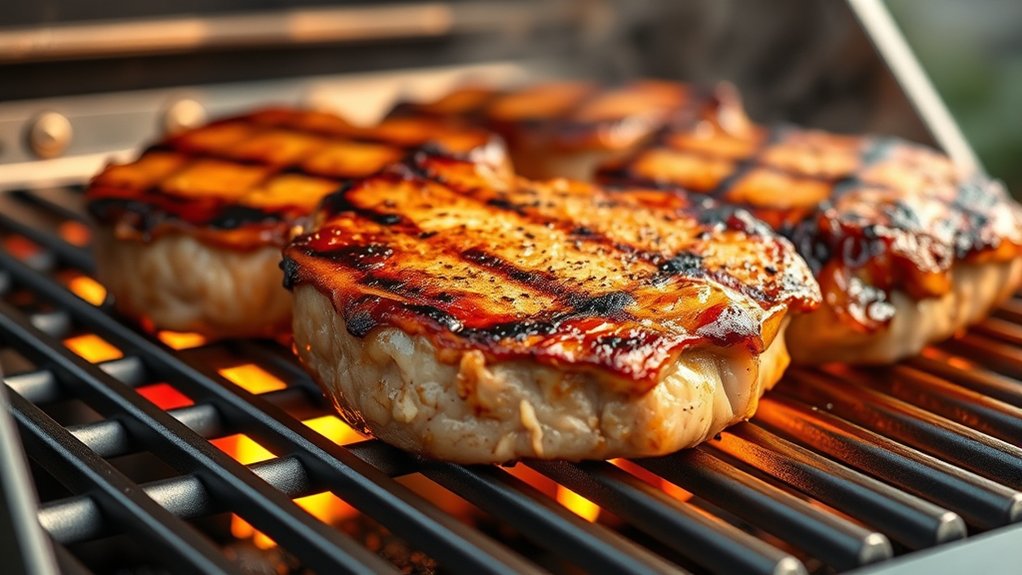
For perfectly grilled boneless pork chops on a gas grill, preheat to medium-high (375-400°F) for 10-15 minutes.
For ½-inch chops, grill for 2-3 minutes per side; for thicker, ¾-inch or more, aim for 4-5 minutes per side.
Use a meat thermometer to reach 145°F internally, then let them rest a few minutes to lock in juices.
Follow these tips closely, and you’ll master every step for juicy, flavorful results.
Key Takeaways
- Preheat your grill to medium-high, around 375-400°F, and let it heat for about 10-15 minutes before you start cooking.
- Grill boneless pork chops for 4-5 minutes on each side if they are ¾ inch or thicker.
- Flip the chops every 4-5 minutes to help them cook evenly and get those nice grill marks.
- Use a meat thermometer to check that the internal temperature hits 145°F, which is safe and keeps the meat juicy.
- After grilling, let the chops rest for 3-5 minutes so the juices can settle back in.
Preparing Juicy Boneless Pork Chops for Grilling
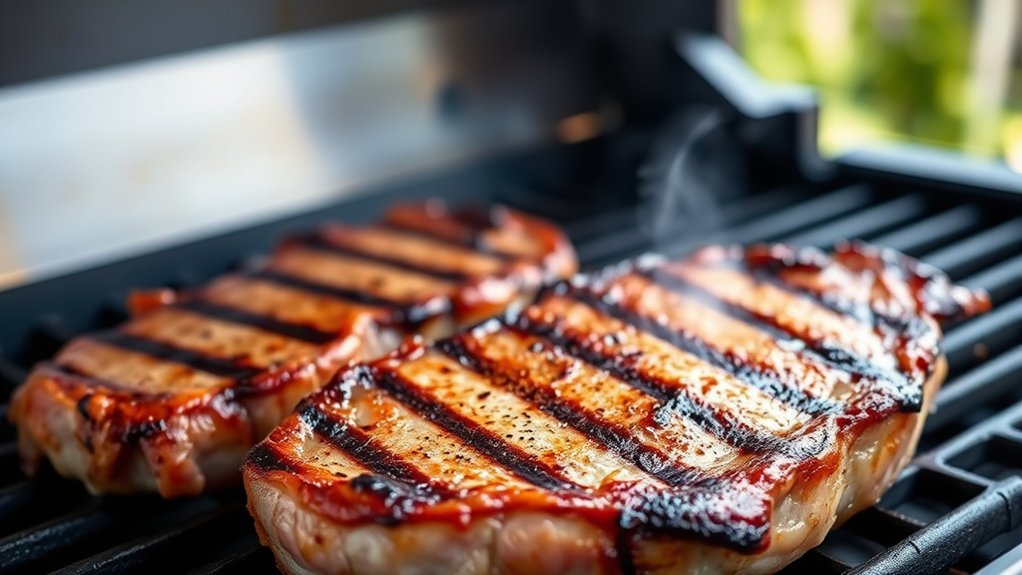
Before grilling, you want to guarantee your boneless pork chops are tender and flavorful. Start by marinating them in a pork chop marinade for at least 30 minutes, or up to 4 hours for more depth. A good marinade improves moisture and adds flavor, making your pork chops juicier and more delicious.
When preparing, always prioritize grilling safety—use separate cutting boards and utensils for raw meat to prevent cross-contamination. Pat the chops dry before grilling because excess moisture can cause flare-ups.
Season them lightly with salt and pepper if you prefer a simpler taste, or add your favorite herbs and spices to the marinade for extra flavor. Properly marinated pork chops not only taste better but also tend to stay moist during grilling.
Choosing the Right Thickness for Perfect Results
Picking the right thickness for your pork chops makes all the difference in getting that perfect cook. When you choose the right thickness, your chops will cook evenly and stay nice and juicy.
If the cuts are too thin, they cook really fast and can easily dry out if you’re not careful. On the other hand, thicker chops tend to hold onto their moisture better, giving you tender, flavorful results. So, try to aim for chops that are consistently thick—this way, you’ll get perfect, juicy pork every time.
Thin Cuts Cook Quickly
Thin cuts of pork chops are perfect for quick grilling because they cook through rapidly, often in just a few minutes per side. To maximize flavor, try different marinade variations like citrus, soy-garlic, or spicy apple.
Keep in mind, these cuts are versatile for various serving suggestions, from salads to sandwiches. When grilling, consider these tips:
- Use high heat for a quick sear, ensuring a caramelized exterior.
- Monitor cooking time closely to prevent overcooking and dryness.
- Rest the chops briefly before serving to retain juices and enhance tenderness.
Because they cook so fast, thin chops are ideal for weeknights or when you want a quick, flavorful meal. Their quick cook time also means you can experiment with marinades and serving styles without worry.
Thick Chops Retain Juiciness
Thick pork chops are great for keeping juiciness because their size helps heat spread evenly. This prevents them from drying out on the grill. Aim for at least 1.5 inches thick to help keep the meat moist.
Thick chops also respond well to marinades that add flavor and lock in moisture, like citrus or soy-based ones. Proper seasoning, such as salting and spicing before grilling, also boosts juiciness.
The extra thickness gives you more control over cooking time, so you’re less likely to overcook and dry out the meat. Keep in mind, thicker cuts take longer to cook, but they’re better at staying juicy and tender.
Consistent Thickness Ensures Even Cooking
When you choose pork chops with a consistent thickness, you’ll get more even cooking on the grill. Uniform thickness helps prevent thin edges from overcooking while the thicker parts stay underdone.
To do this, you can use a sharp knife or ask your butcher for evenly cut chops. Pound thicker chops to an even thickness for better heat penetration.
Matching thickness with your marinade and seasoning techniques also helps with flavor absorption. Consistent thickness ensures each chop cooks at the same rate, reducing the risk of dry or undercooked sections.
It also makes it easier to control cooking time, especially when adding marinades or seasonings. The result is juicy, flavorful pork chops every time.
Preheating and Setting Up Your Gas Grill for Juicy Pork
Before you fire up the grill, it’s a good idea to preheat your gas grill to the right temperature. Turn on the burners and aim for a steady, medium-high heat—think around 375-400°F. This helps ensure your pork cooks evenly and stays juicy.
Oh, and don’t forget to give the grates a good clean and a light oiling. It’s a simple step that prevents sticking and helps keep your pork tender and flavorful. Happy grilling!
Proper Grill Preheating
Preheating your gas grill properly is key to getting juicy, tender boneless pork chops. Starting with a well-prepped grill creates the perfect surface for searing and locking in flavors.
To do this, turn on all your burners to high and let the grill heat up for 10-15 minutes. Make sure to clean the grates thoroughly to prevent sticking and ensure even cooking.
Next, set up a two-zone heat. This means creating a direct heat zone for searing and an indirect zone for finishing the cooking process. This setup also helps when you’re trying indoor smoking techniques or experimenting with marinades.
Proper preheating sets the stage for juicy, flavorful pork chops every time. It’s the secret to grilling success!
Optimal Temperature Settings
Getting the temperature just right is key to perfectly cooked boneless pork chops. Start by setting your gas grill to the right heat level.
For juicy results, go for a medium-high heat—around 375-400°F. This gives you a good sear and keeps the inside tender.
Enhance the flavor with marinades like apple cider vinegar or soy sauce, which also help keep the meat moist.
Once grilled, try serving with fresh herbs, citrus slices, or a tangy sauce to complement the savory pork.
Maintaining a consistent temperature prevents overcooking and helps develop a beautiful crust. Adjust your burners as needed.
Always use a thermometer to check the grill’s temperature, so your pork chops turn out juicy and flavorful every time.
Clean and Oil Grates
To guarantee your pork chops cook evenly and get a nice sear, start by thoroughly cleaning your grill grates to remove any leftover debris or rust. Once they’re clean, oil the grates to prevent sticking and help heat transfer evenly.
Use a high-heat oil like canola or vegetable oil, and apply it with a paper towel or grill brush. For the best results, preheat the grill to high heat so the pores in the grates open up.
Keep your grill clean by using a brush or scraper during cooking. Also, for better adhesion, lightly coat the pork chops with oil before grilling.
Properly cleaned and oiled grates create the perfect foundation for juicy pork and those classic grill marks.
How Long to Grill Boneless Pork Chops at Different Thicknesses
The thickness of your boneless pork chops directly influences how long they need on the grill to reach perfect doneness. Thinner cuts, around ½ inch thick, typically need about 2 to 3 minutes per side over medium-high heat.
Thicker chops, ¾ inch or more, require approximately 4 to 5 minutes per side. To guarantee even cooking, consider your seasoning techniques and marinating tips beforehand; a well-marinated chop can cook faster and stay juicy.
Thinner chops are ideal for quick, flavorful searing, while thicker cuts benefit from longer grilling to prevent drying out. Keep in mind that thicker cuts may need to be flipped more carefully to maintain even seasoning and avoid overcooking the exterior.
Adjust grilling time based on thickness, but always aim for a slight pink center or use a meat thermometer for precise doneness. Proper timing guarantees juicy, tender pork chops every time.
Using a Meat Thermometer to Check Pork Chop Doneness
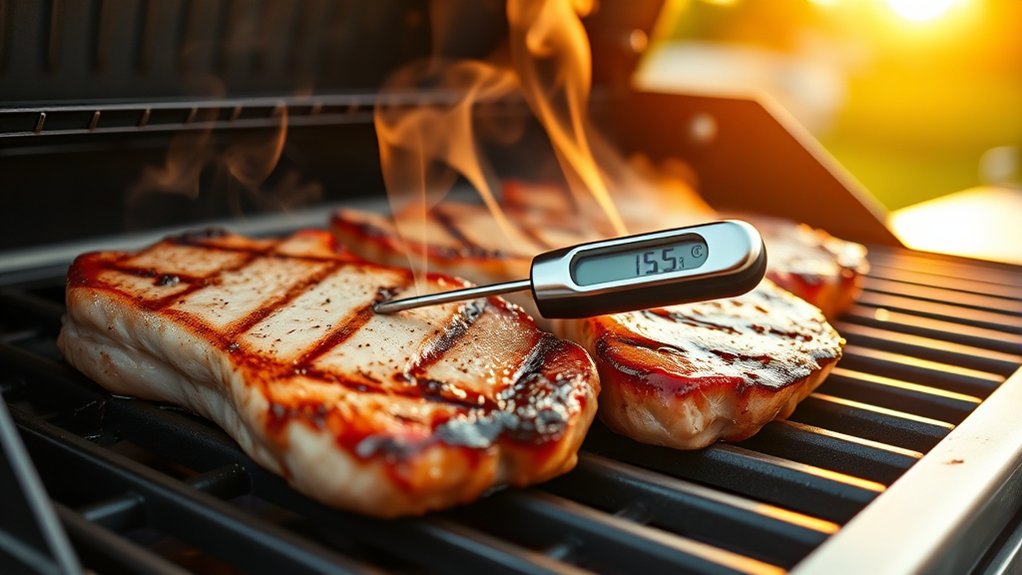
Using a meat thermometer is the most reliable way to guarantee your pork chops are cooked perfectly without overdoing it. When checking doneness, insert the thermometer into the thickest part of the chop, avoiding bone or fat. Aim for an internal temperature of 145°F (63°C), then let the chops rest for a few minutes.
Here are three tips to optimize your process:
- Choose the right marinade options: Marinate your pork chops beforehand to improve flavor and moisture, but avoid overly sugary marinades that can burn.
- Monitor temperature carefully: Use a digital meat thermometer for accuracy, preventing undercooking or overcooking.
- Focus on plating presentation: Once cooked, arrange your pork chops stylishly to boost the visual appeal, making the meal more appetizing.
Using a thermometer guarantees perfectly cooked pork, ready for a beautiful presentation and delicious flavor.
How Often to Flip Boneless Pork Chops for Even Cooking
Keeping a close eye on the flipping process guarantees your pork chops cook evenly and stay juicy. Typically, flip boneless pork chops about every 4-5 minutes, depending on their thickness. This helps the heat spread evenly and prevents overcooking on one side.
Flip pork chops every 4-5 minutes for even, juicy, and perfectly cooked results.
When marinating, make sure the chops are well-coated and have absorbed the flavors before grilling. This can affect how often you flip since marinated meat might cook faster.
Use seasoning blends thoughtfully—if they contain sugar or salt, flipping too often might cause uneven caramelization or excess seasoning in spots. Aim to flip when you see a nice grill mark forming and the meat releases easily from the grates.
Consistent flipping promotes even cooking and helps develop a flavorful crust. Remember, watch how the meat responds to heat and adjust your flipping schedule as needed for perfectly grilled, juicy pork chops.
Resting Pork Chops to Lock in Juiciness
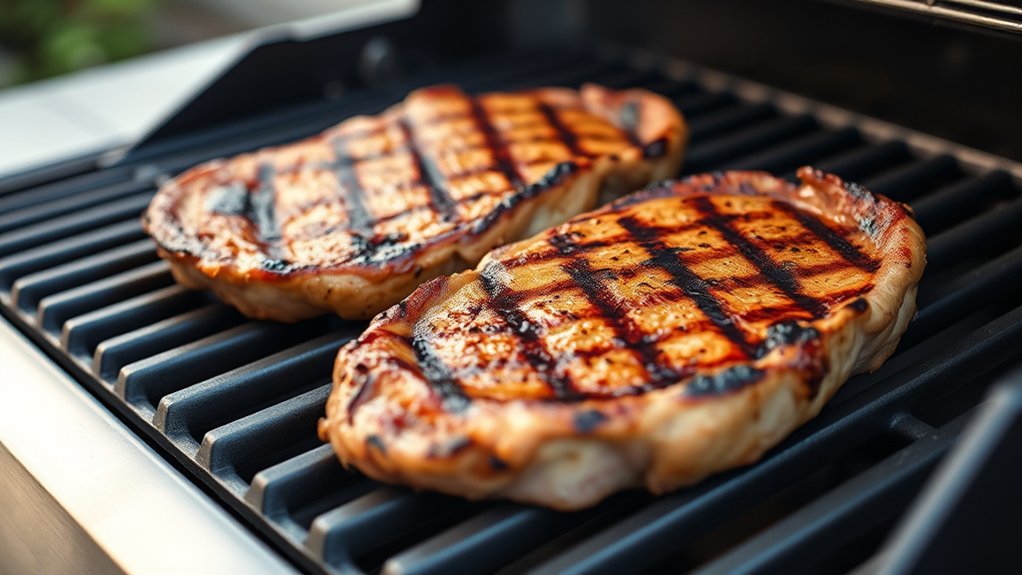
Once you’ve finished grilling your pork chops, resting them allows the juices to redistribute throughout the meat, making each bite tender and flavorful. During this time, avoid cutting into the meat immediately, as the juices will escape and cause dryness.
To maximize juiciness, consider these tips: Use marinating techniques beforehand to boost moisture and flavor. Cover the pork chops loosely with foil during resting to keep the heat in without trapping too much moisture.
Focus on plating presentation by carefully arranging the chops after resting. This allows the juices to settle and makes your dish look more appealing.
Resting also enhances the overall eating experience by giving the meat time to reabsorb its juices. It’s a crucial step for a moist, flavorful pork chop.
Properly rested meat looks more inviting and makes your presentation stand out. Don’t rush this process for the best possible result.
Common Mistakes That Can Ruin Your Grilling Timing
Even if you’ve nailed resting your pork chops, missing common grilling timing mistakes can still mess things up. Overcooking makes the meat dry and tough, ruining that juicy, tender bite you’re after.
On the flip side, undercooking isn’t just unsafe—it leaves the meat tough and not quite right. Be sure to cook thoroughly but avoid going too far.
Using marinade variations without adjusting the timing can cause problems, especially with sugary marinades that burn quickly if left too long. Keep an eye on the clock to prevent charring.
Rushing the process can lead to uneven cooking and poor presentation. Take your time to get that perfect sear and internal doneness.
Also, avoid flipping too often. Constant flipping can disrupt the sear and mess with the internal temperature, resulting in inconsistent results. And don’t forget to watch your grill’s temperature—hot spots can be tricky!
Flavor Tips to Enhance Pork Chops Without Overcooking
To improve the flavor of your pork chops without risking overcooking, focus on the right seasoning and finishing touches. Marinades can add moisture and depth, so try a simple mix of olive oil, garlic, and lemon juice or a soy-based marinade for an umami boost.
Spice rubs are also effective—they create a flavorful crust without adding extra liquid that could hinder even cooking. Consider using a balanced spice rub with paprika, cumin, and black pepper for bold flavor.
Marinate for at least 30 minutes, but no more than 2 hours, to keep the meat tender. Finish with a sprinkle of fresh herbs or a squeeze of lemon to boost brightness after grilling.
These methods help lock in flavor without overcooking, ensuring juicy, flavorful pork chops every time.
Troubleshooting Overcooked or Undercooked Pork Chops
Despite your best efforts with seasoning and timing, it’s still possible to end up with pork chops that are either overcooked or undercooked. To fix overcooking, try slicing the chops thinly and serving them with a flavorful marinade to add moisture and taste.
For undercooked pork, use a meat thermometer to ensure you reach the safe internal temperature of 145°F. If you notice uneven doneness, consider resting the meat briefly to allow residual heat to finish cooking.
When plating, slice the chops neatly and arrange them attractively, hiding any uneven textures. Incorporate fresh herbs or a drizzle of sauce to distract from minor imperfections.
To prevent future issues, monitor grill temperature carefully and use a reliable thermometer. Remember, even if your chops aren’t perfect, good plating presentation can elevate the dish and make it more appealing.
Frequently Asked Questions
Can I Grill Boneless Pork Chops Without Marinating Them First?
Yes, you can grill boneless pork chops without marinating them first.
To boost flavor, try a quick soy or citrus marinade before grilling.
If you skip marinating, just season the chops generously with salt, pepper, and your favorite spices.
For extra flavor, brush the chops with a tasty sauce during grilling or add some herbs.
This way, you’ll still get juicy, flavorful pork chops without much prep time.
What’s the Best Fuel Type for Evenly Cooked Pork Chops?
You should use propane for your gas grill because it provides consistent heat and makes it easy to control the grill temperature.
This helps you cook pork chops evenly. Propane is also fuel-efficient, so you won’t waste fuel while keeping the right heat.
Set your grill to medium-high, around 375-400°F, to ensure your pork chops cook evenly without burning. This results in juicy, perfectly grilled meat.
How Does Outdoor Temperature Affect Grilling Times?
Outdoor temperature affects grilling times because colder weather can lower your grill’s temperature, meaning you’ll need to cook longer to reach the proper cooking temperature.
Conversely, hot weather helps maintain consistent heat, allowing for quicker cooking. Keep an eye on the grill’s thermometer to make sure your pork chops reach the right internal temperature for tenderness.
Adjust your cooking time as needed to avoid under- or overcooking, especially in extreme temperatures.
Should I Cover the Grill During Cooking for Better Results?
Yes, you should cover the grill with the lid during cooking. Doing so helps trap heat inside, thanks to the grill lid, which improves heat retention.
This creates a more consistent cooking environment, ensuring your boneless pork chops cook evenly and stay juicy. Keep the lid on, especially during the first few minutes, to maintain a steady temperature and get those perfect grill marks.
How Do I Prevent Pork Chops From Sticking to the Grill Grates?
To prevent pork chops from sticking, start by making sure your grill is clean—scrape off any leftover bits from previous cooks. A clean grill helps prevent sticking and makes your food look better.
Before you grill, apply a thin layer of oil to the hot grates using a paper towel or brush. This creates a non-stick surface and helps your pork chops cook evenly.
Regularly cleaning your grill and properly oiling the grates makes it easier to flip the pork chops without sticking. Plus, it helps you get those perfect sear marks every time.
Conclusion
Mastering the perfect pork chop is like conducting a symphony—you need the right timing and technique. Proper preparation, preheating your grill, and watching your temperature carefully are key to juicy, flavorful results every time.
Remember to let your meat rest after grilling and avoid common mistakes. With a little practice, grilling boneless pork chops will become as easy as flipping a switch, impressing everyone and making them crave more.