7 Simple Steps to Grill Salmon on a Gas Grill
Many people love the idea of grilling salmon on a gas grill but often find it tricky to get it just right. You’re not alone — achieving perfectly cooked, flavorful salmon can be a bit of a challenge, especially if you’re new to grilling.
Start by selecting fresh salmon fillets and marinating them for at least 30 minutes. Preheat your gas grill to 375-400°F and clean the grates, then oil the surface to prevent sticking.
Pat the salmon dry, season, and place skin-side down, cooking for 4-6 minutes per side.
Check for doneness when it flakes easily, then let it rest before serving.
Want expert tips to boost your grilling game? Keep going for more insights.
Key Takeaways
- Preheat the grill to medium-high (375-400°F) and give the grates a good clean.
- Marinate or season the salmon, then pat it dry and brush the fillets with oil before placing them on the grill.
- Put the salmon skin-side down and cook for about 4-6 minutes per side until it turns opaque.
- Flip the fish once grill marks appear and the edges look opaque; aim for an internal temperature of 125-130°F.
- Let the salmon rest for 5 minutes before serving to keep it juicy and flavorful.
Prepare Your Salmon for Grilling
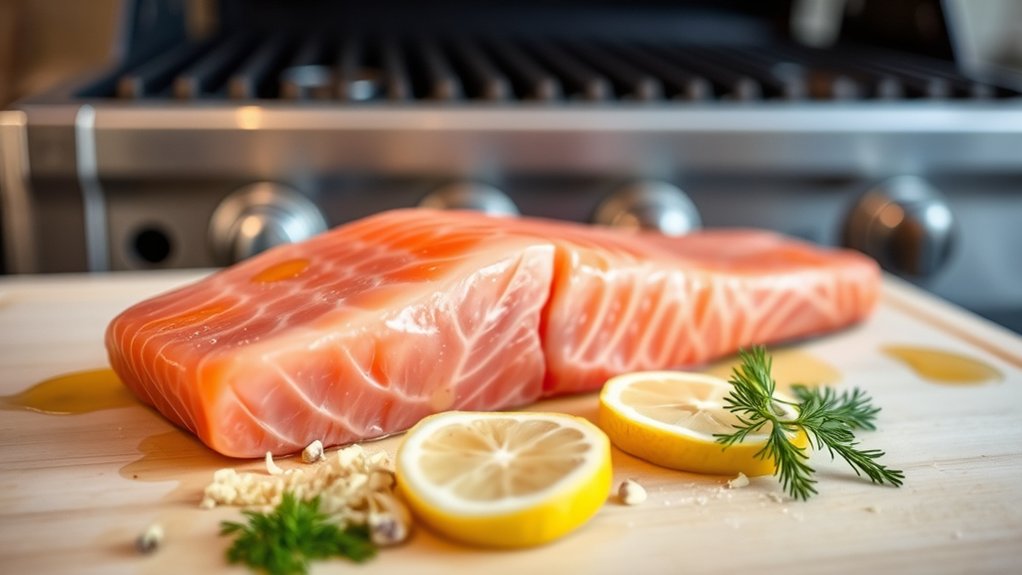
Before you start grilling, it’s important to prepare your salmon properly. Begin by selecting fresh, high-quality fillets for the best flavor.
Start with fresh, high-quality salmon fillets for the best grilling flavor and tenderness.
To enhance taste, consider a salmon marination that promotes flavor infusion. A simple marinade with olive oil, lemon juice, garlic, and herbs works well.
Let the salmon sit in the marinade for at least 30 minutes, but avoid over-marinating, as this can affect the texture.
Pat the fish dry before grilling to prevent sticking and ensure a nice sear.
If you prefer, you can also season your salmon with salt, pepper, and other spices directly on the surface.
Proper preparation not only boosts flavor but also helps keep the salmon moist and tender during grilling.
Set Up Your Gas Grill for Salmon
First things first, give your grill grates a good clean. This helps prevent sticking and makes sure your salmon cooks nice and evenly. Once that’s done, preheat the grill to a nice medium-high heat – that’s usually just right for searing salmon perfectly.
After the grill’s hot, give it a quick oiling. This creates a non-stick layer, making it easier to flip the fish without it sticking to the grates. And voilà, you’re all set to cook up some delicious salmon!
Clean Grill Grates Thoroughly
Ensuring your grill grates are thoroughly cleaned is key to getting flavorful, non-stick results when grilling salmon. A clean grate helps prevent sticking and gives you those perfect grill marks.
Use the right tools like a wire brush or scraper to remove any burnt-on residue from previous sessions. After preheating, scrub the grate vigorously, making sure to get into all the crevices.
Wipe down the grate with a damp cloth or paper towel to pick up any loosened debris. This step not only boosts the flavor of your salmon but also helps your grill last longer.
Preheat to Proper Temperature
Once your grill grates are clean, it’s time to set the right temperature for your salmon. Preheating your gas grill to a medium-high heat, around 375-400°F, guarantees the perfect cook without drying out the fish.
Proper grill temperature helps create a nice sear and promotes even cooking, which is essential for salmon. Before placing your fillets on the grill, make sure the heat is stable. This will help the seasoning stick better and give you those beautiful grill marks.
Avoid cooking on too high a heat, which can burn the outside while leaving the inside undercooked. By preheating correctly, you’ll get juicy, flavorful salmon with a tender texture every time you grill.
Oil the Grill Surface
To prevent your salmon from sticking and to get those perfect grill marks, it’s important to oil the grill surface properly. Start by brushing the grill grates with olive oil using a high-heat brush or a paper towel dipped in oil.
This creates a non-stick barrier and helps your salmon cook evenly. Before oiling, make sure the grill is preheated to the right temperature. Once hot, apply a thin layer of olive oil directly onto the grates.
You can also season the salmon with your favorite grill seasoning before placing it on the grill. This boosts flavor and helps prevent sticking.
Just remember to oil the surface right before grilling. This keeps flare-ups at bay and ensures your salmon cooks perfectly with those lovely grill marks.
Control Temperature and Timing for Perfect Results
Controlling the temperature and timing is key to grilling salmon perfectly. Keeping the grill at medium-high heat—around 375-400°F—helps prevent overcooking or burning. Use a grill thermometer to keep an eye on the temperature.
Timing is just as important to keep the salmon tender and juicy. Usually, cook each side for about 4-6 minutes, depending on how thick the fillet is. Don’t rush it—flip the fish only once when you see grill marks and the edges turn opaque.
Watch the clock and pay attention to how the salmon looks. For thicker fillets, you’ll need to extend the cooking time a bit. Remember, the goal is an internal temperature of 125-130°F for the best doneness.
Keep Salmon Juicy and Prevent Sticking
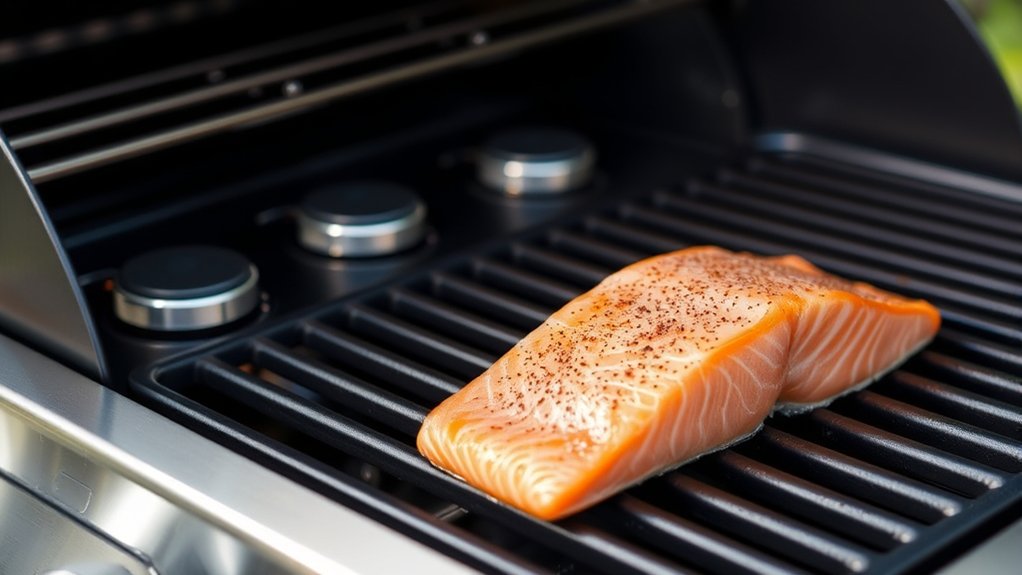
Keeping your salmon juicy and preventing it from sticking to the grill starts with proper preparation. Start by choosing a salmon fillet that’s even in thickness, about 1 to 1.5 inches, to ensure it cooks evenly.
Marinating can really help. Marinate the salmon for 30 minutes in a simple mix of olive oil, lemon juice, and herbs. This adds moisture and creates a barrier that reduces sticking.
Before grilling, make sure to preheat the grill well and oil the grates thoroughly with a high-heat oil like canola or vegetable oil. Use a brush or paper towel to coat the grates evenly.
When placing the salmon on the grill, lay it skin-side down if it has skin. Avoid flipping it too early, as this helps lock in moisture and prevents sticking.
Following these steps will keep your salmon juicy and make grilling smoother and more successful.
Get Beautiful Grill Marks and Flavor
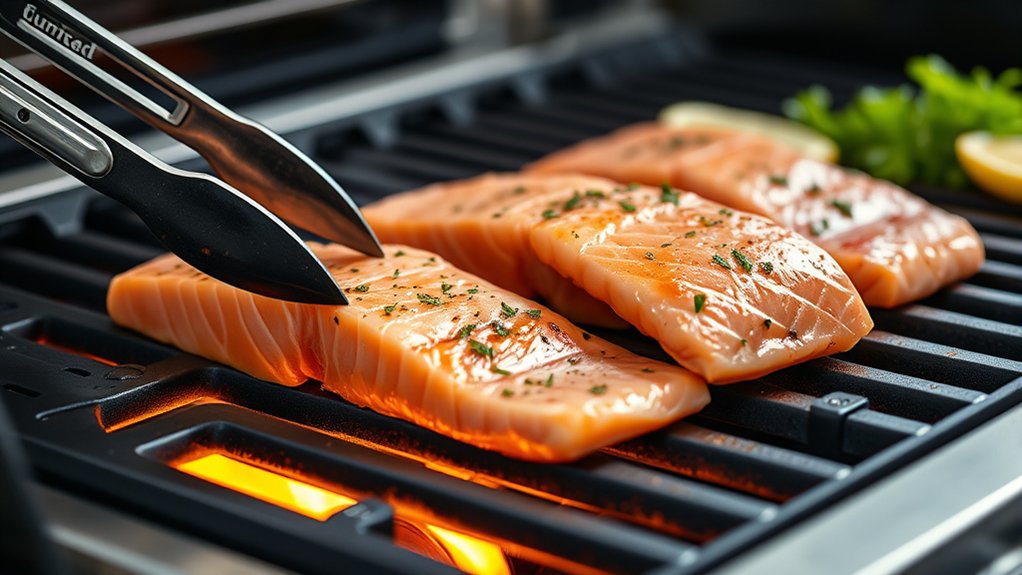
Once your salmon is properly prepped and has a good sear, focus on creating those classic grill marks that not only look appealing but also elevate the flavor. To do this, turn the fish only once during grilling, making sure the grill is hot enough to produce distinct crosshatch marks.
Marinade options like lemon herb or soy-garlic can add depth and aroma. Just be careful with overly oily marinades, as they might cause flare-ups. Use tongs to rotate the fish smoothly, maintaining even contact with the grates.
Once done, present your salmon beautifully with plating techniques. Consider garnishing with fresh herbs or lemon slices. The contrast of grill marks against tender flesh makes your dish visually stunning.
The smoky flavor from the grill complements the marinade, delivering a delicious, professional-looking result.
Check for Doneness and Rest Your Salmon
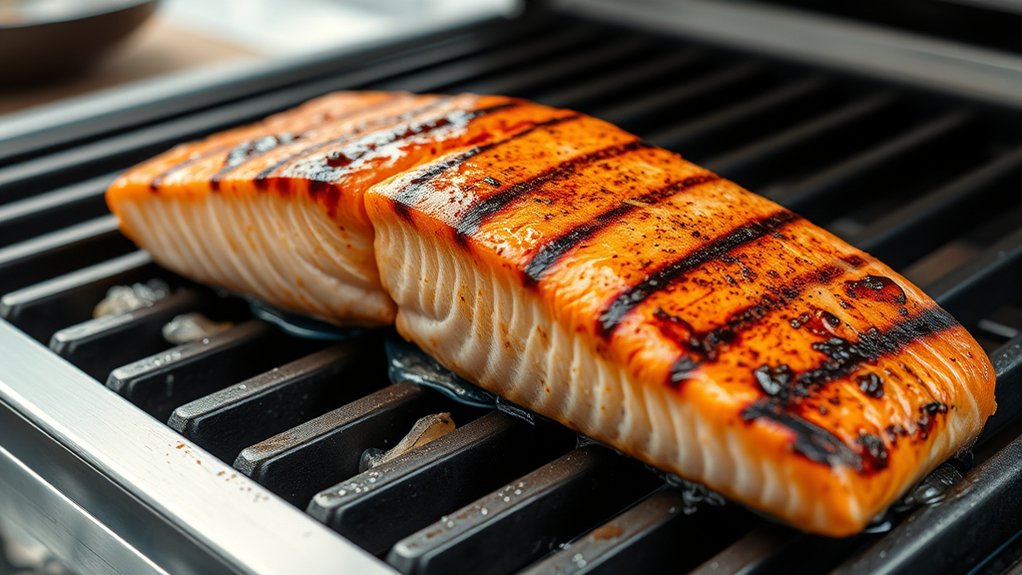
You’ll know your salmon is ready when it flakes easily with a fork and has that nice, opaque color all the way through. It’s a good idea to check for these signs so you don’t overcook it.
Once you’ve taken it off the grill, give it about 5 minutes to rest. This little pause helps keep the salmon moist and packed with flavor. Trust me, it’s worth the wait to get that tender, perfectly cooked bite!
Visual Cues for Readiness
To determine if your salmon is perfectly cooked, look for clear, opaque flesh that flakes easily with a fork. As it nears doneness, you’ll notice a subtle color change from a translucent pink to an opaque white or light pink hue.
The flesh should feel firm but not hard; it will slightly give when pressed. Pay close attention to the texture—too soft means it’s undercooked, while overly firm suggests overcooking.
Visual cues like a consistent, even color change across the fillet confirm doneness. If you see the flesh start to separate along natural lines, it’s usually ready.
These cues help you achieve perfectly grilled salmon with a moist, tender interior and a beautifully cooked exterior.
Proper Resting Time
After removing the salmon from the grill, let it rest for a few minutes before serving. This helps the juices redistribute, making each bite moist and flavorful.
During this time, check if the fish is done by gently flaking it with a fork. It should be opaque and tender.
Proper resting also makes your presentation look better, giving your dish a more appealing look. If you marinated the salmon beforehand, resting allows the flavors to settle and become even more intense.
Avoid cutting into the fish right away, as this can cause juice loss and dry out the fillet. Resting time is short but really important, so be patient.
Once rested, you’ll notice a better texture and more vibrant flavor, turning your grilled salmon into a restaurant-quality meal.
Serve and Try Delicious Variations
Wondering how to make your grilled salmon even more appealing? Try these delicious variations to impress everyone at the table. First, experiment with flavor combinations like a honey-soy glaze or lemon-dill marinade to boost the natural richness.
Second, focus on presentation techniques. Serve the salmon on a bed of fresh herbs or with colorful grilled vegetables to make it visually enticing. Third, top your fillet with a chopped herb mixture or a drizzle of spicy aioli for extra flavor and texture.
Fourth, consider serving with complementary sides such as a citrus quinoa salad or roasted potatoes to complete the dish. These simple tweaks will turn your grilled salmon from good to unforgettable.
Frequently Asked Questions
Can I Grill Salmon With the Skin on or Off?
You can definitely grill salmon with the skin on or off, depending on what you prefer. If you grill with the skin on, it helps hold the fillet together and prevents sticking, plus it adds flavor.
For a crispier texture, grill the salmon skin side down first. If you prefer, you can remove the skin before grilling, making it easier to serve and eat.
Both methods work well!
What Are the Best Wood Chips to Use for Flavor?
For flavorful salmon, use fruitwood or alder wood chips, as they add a mild, sweet smoky taste that complements the fish. You can also experiment with hickory or maple for richer, deeper flavors.
Incorporate these wood chip varieties into your smoking techniques by soaking them beforehand, then adding them to your grill. This boosts the aroma and creates a delicious, smoky crust that lifts your grilled salmon experience.
How Do I Prevent Flare-Ups While Grilling Salmon?
Flare-ups can feel like a fiery dragon threatening your salmon’s perfection, but you can tame it. To prevent flare-ups, avoid excess fat drips and oil on your grill, which cause flames.
Keep the lid closed during grilling and maintain a medium heat to keep things safe. Regularly clean your grill grates to remove grease buildup, which can cause flare-ups.
Keep a spray bottle of water nearby to control unexpected flames and help you stay in control. With these tips, your salmon will turn out perfectly grilled every time.
Is It Safe to Eat Undercooked or Overcooked Salmon?
It’s not safe to eat undercooked or overcooked salmon. Undercooked salmon can harbor bacteria or parasites, risking your health.
Overcooked salmon loses its moisture and nutritional value, making it less beneficial. To ensure safety and keep the nutritional benefits, cook salmon to an internal temperature of 145°F.
Use a food thermometer to check the temperature. Properly cooked salmon offers the best health benefits and is safe and flavorful to eat.
How Long Can I Keep Leftover Grilled Salmon Refrigerated?
You should keep leftover grilled salmon refrigerated for up to 3 days at or below 40°F. Make sure it’s stored in an airtight container to maintain freshness.
When reheating, aim for a cooking temperature of 165°F to ensure safety. If you used a marinade recipe, check if it contains ingredients that spoil quickly.
Discard the salmon if it develops an off smell or appearance. This helps keep you safe and ensures you’re not eating spoiled food.
Conclusion
Now that you’ve mastered the art of grilling salmon, you’re ready to turn your grill into a culinary masterpiece. With these simple steps, you’ll create juicy, flavorful fish that’s as appealing to the eyes as it is to the palate.
Think of your grill as a magic wand, transforming fresh salmon into a smoky, savory delight. So fire it up, follow these tips, and enjoy deliciously perfect salmon every time with your new grilling skills.