7 Simple Steps to Grill Sirloin Steak on a Gas Grill
Cooking a perfect sirloin steak on a gas grill can feel intimidating, especially if you’re new to grilling or aiming for that restaurant-quality finish. You’re not alone—many people struggle with getting the timing and technique just right. But don’t worry, with a few simple steps, you’ll be able to master grilling sirloin steak like a pro.
To grill sirloin steak on a gas grill, start by bringing the steak to room temperature and seasoning it generously.
Preheat your grill to high and set up for two-zone cooking.
Sear the steak on a hot side with proper grill marks, then move it to a cooler area to finish cooking and reach your desired doneness using a thermometer.
Rest the steak before slicing against the grain for maximum juiciness, and if you keep going, you’ll master every step for perfect results.
Key Takeaways
- Prepare the steak by bringing it to room temperature, drying it, and seasoning generously with salt, pepper, or spices.
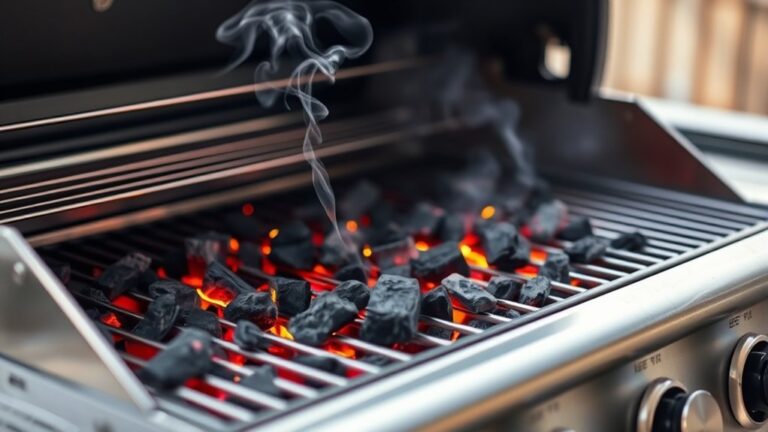
- Clean and preheat your gas grill to 450-500°F, setting up a two-zone fire for searing and finishing.
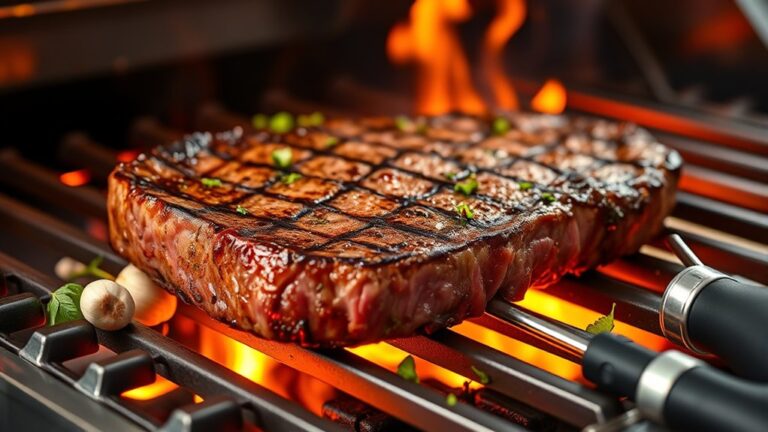
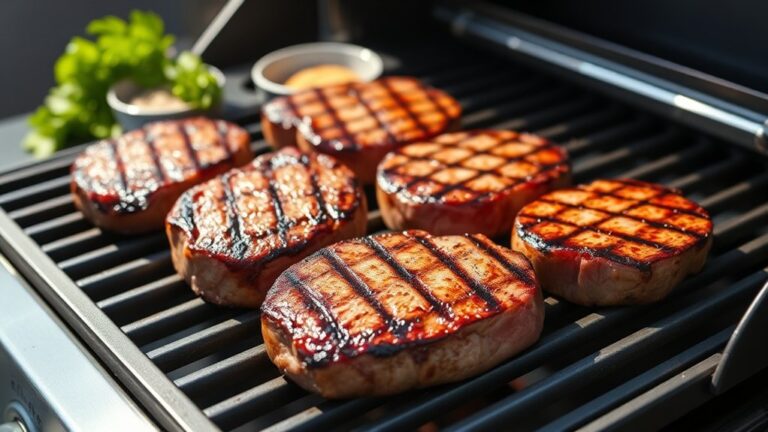
- Sear the steak on high heat at a 45-degree angle for 2-3 minutes per side to create grill marks.
- Use a meat thermometer to cook to your desired doneness, then let the steak rest for 5-10 minutes.
- Slice against the grain and serve hot for maximum flavor, juiciness, and tenderness.
How Do You Prepare Your Sirloin Steak for Grilling?
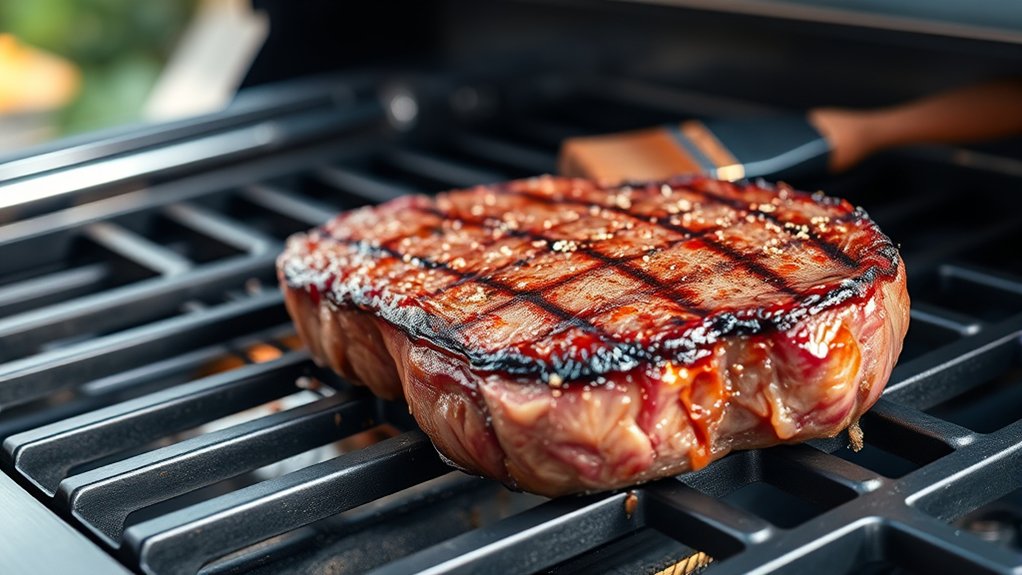
Before grilling, you need to properly prepare your sirloin steak to guarantee it turns out flavorful and tender. Start by selecting a high-quality cut and bring it to room temperature. This helps it cook evenly.
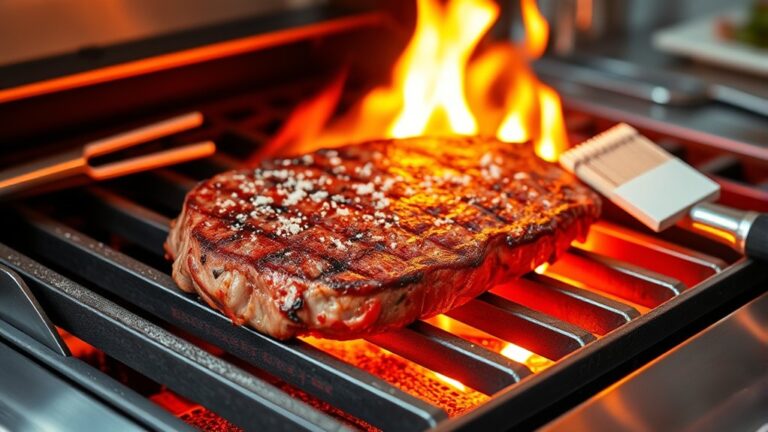
Pat the steak dry with paper towels to remove excess moisture, which ensures a good sear. Next, season it generously with salt and pepper or your favorite spices. This boosts flavor and helps form a tasty crust.
When it comes to cooking techniques, consider marinating the steak for added tenderness and flavor. Just avoid over-marinating, as that can change the texture too much.
Proper equipment maintenance is essential. Clean your grill grates thoroughly to prevent sticking and flare-ups. Check your grill’s burners and hoses for any issues to ensure safe operation.
Preparing your steak with these steps and maintaining your equipment will set a solid foundation for grilling success. The result will be a juicy, flavorful sirloin every time.
How Should You Set Up Your Gas Grill for Even Cooking?
To guarantee your sirloin steak cooks evenly, you need to set up your gas grill properly from the start. Proper grill setup ensures safe grilling and prolongs your equipment’s life.
First, check your grill’s maintenance—clean the grates and burners to prevent flare-ups and uneven heat. Second, preheat the grill with all burners on high for 10-15 minutes, then adjust to a two-zone setup: one side hot for searing, the other cooler for finishing.
Third, make sure there’s proper ventilation around your grill to promote safety and prevent dangerous gas buildup. This setup helps maintain consistent heat and avoids hot spots that could burn or undercook your steak.
Regularly inspect hoses and connections for leaks to avoid hazards. By following these steps, you’ll create an even cooking environment, maximize flavor, and stay safe every time you grill.
What Are the Best Ways to Season and Marinate Your Steak?
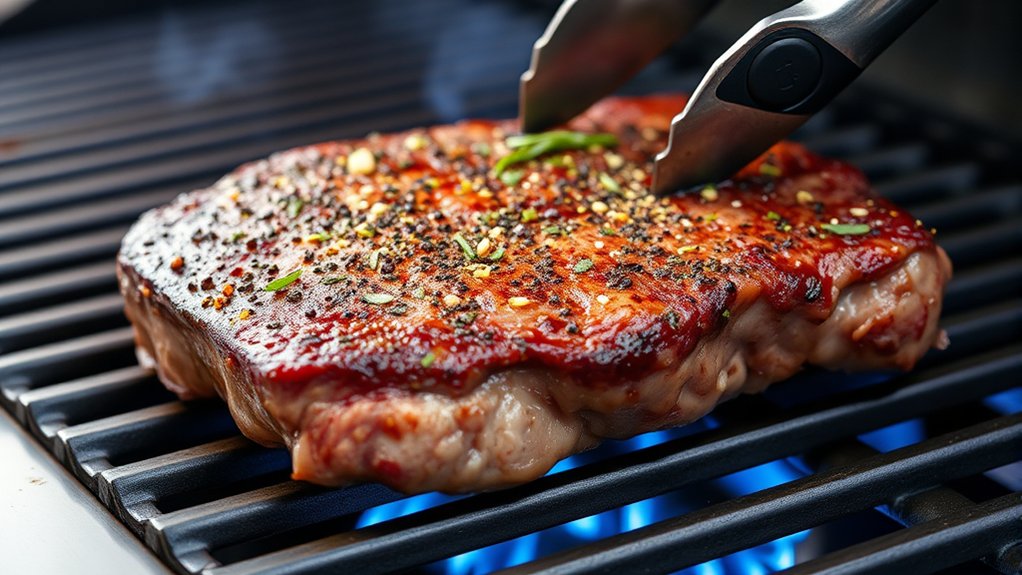
If you want your steak to be packed with flavor, it’s all about choosing the right seasonings and marinating it just right. Simple ingredients like garlic, herbs, and a good pinch of salt can really bring out the natural richness of the beef. Don’t be afraid to get creative with your spice combos—sometimes less is more, and other times a bold rub can make all the difference.
When it comes to marinating, a few hours is usually enough to help tenderize the meat and infuse it with flavor. Just toss your steak in the marinade, pop it in the fridge, and let it work its magic. After seasoning or marinating, make sure to let your steak rest for a few minutes before grilling. This helps the juices settle and keeps all those delicious flavors locked in. Happy grilling!
Ideal Seasoning Combinations
Seasoning and marinating your sirloin steak is key to bringing out rich flavor and tender texture. The right seasoning combo enhances flavor infusion and ensures each bite stays juicy and satisfying.
Here are three ideal seasoning combinations:
- Garlic, rosemary, and black pepper – Classic herbs that boost tenderness and add earthy depth.
- Smoked paprika, cumin, and chili powder – For a smoky, spicy kick that complements the beef’s richness.
- Salt, pepper, and lemon zest – Simple yet effective, this combo amplifies natural flavors without overpowering.
Best Marinating Techniques
Marinating your steak is a great way to add extra flavor and tenderness before grilling. Just remember to always do it in the refrigerator and discard used marinade or boil it before using it as a sauce.
Use a resealable plastic bag or non-reactive container to coat the meat evenly. A good marinade combines acid like vinegar or citrus juice, oil, and seasonings such as garlic, herbs, or spices.
Let the steak marinate for at least 30 minutes, or up to 24 hours for a deeper flavor. When grilling, use tongs and a meat thermometer to handle the steak safely and cook it perfectly.
Proper marinating boosts the taste while keeping safety in mind and maximizing flavor.
Timing and Resting Tips
Getting the timing right is key to guaranteeing your steak is flavorful and tender. Proper resting allows juices to redistribute, which enhances taste and texture.
To maximize flavor, follow these tips:
- Rest your steak for 5 to 10 minutes after grilling to keep it moist and prevent overcooking.
- Use a timer to avoid overcooking, ensuring consistent results and safe internal temperatures.
- Regularly clean your grill and check vents to promote even heat and reduce flare-ups, which can harm safety and flavor.
Timing and resting are vital for a perfect steak. Proper resting prevents juices from escaping, and good equipment maintenance keeps grilling safe and efficient. Always keep an eye on cooking times to get the perfect doneness without risking safety.
How Can You Achieve Perfect Grill Marks on Your Sirloin?
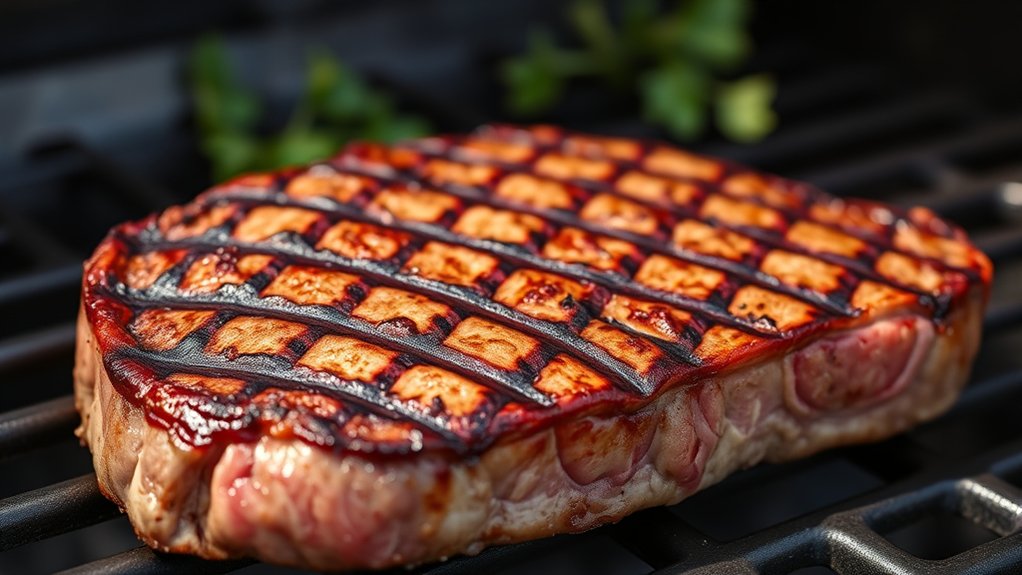
Achieving perfect grill marks on your sirloin starts with proper grill preparation and placement. First, make sure your grill is preheated to a high temperature, around 450-500°F, to sear the steak quickly and create distinct marks.
Preheat your grill to 450-500°F for perfect, distinct sirloin grill marks.
The steak’s thickness also matters; for a typical 1 to 1.5-inch cut, wait until the grill is hot enough before placing it on. To get those perfect crosshatch marks, position the steak at a 45-degree angle to the grill grates.
Let it cook undisturbed for about 2-3 minutes to develop a seared pattern. Then, rotate the steak 90 degrees to create a crosshatch effect and cook for another 2-3 minutes.
Flip the steak and repeat the process on the other side. Keeping the temperature and timing consistent helps you get sharp, clean marks without overcooking or burning.
How Do You Know When Your Sirloin Steak Is Done?
Wondering how to know when your sirloin steak is just right? Well, a good starting point is to look at the juices—if they run clear, that’s usually a sign it’s cooked through. And don’t forget to keep an eye on the color; a nice, browned exterior often indicates it’s nearing doneness.
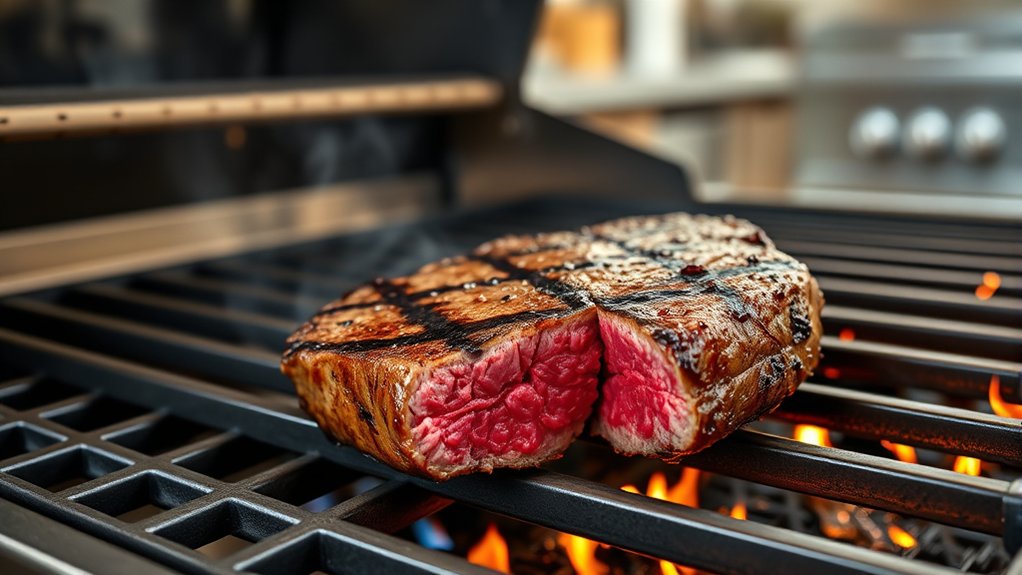
If you want to be super precise, using a meat thermometer is your best bet. It takes the guesswork out of the equation and helps you hit that perfect level of doneness every time. For example, 125°F for rare or 145°F for medium.
And if you prefer to go by feel, you can gently press the steak with your finger. The firmness will tell you a lot about how cooked it is—so with a little practice, you’ll be able to gauge when it’s just right, based on how it feels.
Visual Juices and Color
How can you tell when your sirloin steak is perfectly cooked just by looking? The visual cues of juices and color reveal a lot about doneness. A bright red or purple interior indicates rare, while a pinkish hue suggests medium. Clear juices pooling on the surface mean the steak is cooked through, which enhances its flavor. To grill safely and get the best taste, avoid overcooking, as it can dry out the steak.
Here are some key visual signs:
- The color deepens from red to brown as it cooks.
- Juices become less red and more transparent.
- The surface develops a caramelized, slightly charred crust.
These signs help you gauge doneness without cutting into the meat, so you get a safe, flavorful result.
Use a Meat Thermometer
Using a meat thermometer takes the guesswork out of grilling your sirloin steak to perfection. It helps you hit your desired doneness, whether you like it rare or well-done.
Keep in mind that marinade variations can change cooking times, so it’s best to check the internal temperature rather than just going by appearance. Maintaining the right grill temperature, around 400°F to 450°F, will cook the steak evenly.
Use the thermometer to monitor the doneness:
| Temperature | Doneness Level | Internal Temp (°F) |
|---|---|---|
| 120-125°F | Rare | 125°F |
| 130-135°F | Medium Rare | 135°F |
| 140-145°F | Medium | 145°F |
| 160°F+ | Well Done | 160°F+ |
This method guarantees a juicy, perfectly cooked steak every time.
Touch and Texture Test
Ever wonder if your steak is done without just using a thermometer? The touch and texture test is a simple way to check. Gently press the center of your steak with your finger or tongs:
- Soft and squishy: rare, with a cool, tender feel.
- Slightly firmer: medium-rare, offering a springy resistance.
- Firm and springy: well-done, with little give.
Over time, you’ll start to recognize these textures and develop an instinct for doneness. This makes your cooking more confident and helps you get it just right.
Knowing the right doneness also improves flavor pairing. It keeps your sirloin juicy and flavorful. The method takes practice but is quick and reliable.
It’s a skill that takes your grilling game up a notch and helps you serve steak exactly how you like it.
How Should You Rest and Serve Your Grilled Steak for Juiciness?
After removing your steak from the grill, let it rest for a few minutes before slicing. Resting helps the juices redistribute, so each bite stays juicy and flavorful.
During this time, tent the steak loosely with foil to keep it warm without trapping excess moisture. When you’re ready to serve, don’t cut into the steak right away, as this releases those precious juices.
Instead, use a sharp knife to slice the steak against the grain. This makes the meat more tender and easier to chew. Proper slicing not only improves the eating experience but also keeps the juiciness intact.
Resting and slicing the steak correctly helps your sirloin stay flavorful and moist. It creates that perfect balance of tenderness and richness. Serve the steak hot and enjoy every juicy, flavorful bite.
What Are Common Problems When Grilling Sirloin and How Can You Fix Them?
Even with careful resting and slicing, grilling sirloin can come with its set of common issues. One problem is uneven cooking, often caused by inconsistent heat or poor grill maintenance. To fix this, preheat your grill thoroughly and clean the grates regularly for even heat distribution.
Another issue is overcooking, which dries out the meat. Use a meat thermometer to monitor internal temperature and follow proper cooking techniques for your preferred doneness.
Lastly, flare-ups can char the steak’s surface and introduce unwanted flavors. To prevent this, trim excess fat and keep a spray bottle of water handy to tame flames during grilling. Regular grill maintenance helps minimize flare-ups and guarantees consistent results.
Frequently Asked Questions
What Are the Ideal Thickness and Weight for Sirloin Steak?
You should aim for a steak thickness of about 1 to 1.5 inches and a weight between 8 to 12 ounces.
This thickness helps you get a good sear while keeping the inside juicy. The weight makes it easier to manage cooking time and reach your preferred doneness.
Thinner steaks cook faster and are more likely to dry out, so sticking to these ideal ranges will give you the best grilling results.
Can I Use a Charcoal Grill Instead of a Gas Grill?
Think of your grill as a musical instrument. You can switch from a gas guitar to a charcoal drum. Yes, you can use a charcoal grill instead, which adds that rich, smoky flavor to your steak.
Just remember, maintaining your charcoal grill is key. It needs regular cleaning and proper fuel management. The smoky aroma will deepen, giving your sirloin a deliciously complex flavor you can’t get from gas.
How Do I Store Leftover Grilled Sirloin Steak Safely?
To store leftover grilled sirloin steak safely, start by letting it cool down to room temperature within two hours.
Then, put it in airtight storage containers to keep it fresh and prevent contamination.
Keep the containers in the fridge at 40°F (4°C) or lower.
For longer storage, you can freeze the steak.
Following these food safety tips helps prevent illnesses and keeps your steak tasting great.
What Side Dishes Pair Best With Grilled Sirloin Steak?
Think of your grilled sirloin steak as a shining star, and your side dishes as the constellation that completes the picture. Vegetable side dishes like grilled asparagus or roasted carrots add freshness.
Classic salad options such as Caesar or mixed greens provide a crisp contrast. Together, they create a balanced, flavorful meal that elevates your steak’s richness.
These pairings make your dinner memorable, turning a simple grill into a gourmet experience.
How Can I Tell if My Grill Is at the Right Temperature?
You can tell if your grill is at the right temperature by using a grill thermometer or doing a simple hand test.
For more accurate readings, aim for 400-450°F when searing and about 350°F for general cooking.
Follow your recipe’s temperature guidelines and adjust your burners as needed.
If the heat matches these targets, you’re all set to cook your sirloin steak perfectly, keeping it juicy and flavorful.
Conclusion
Now that you’ve mastered these simple steps, your sirloin steak will turn out restaurant-worthy every time. Remember, even the greatest chefs faced their first burnt steak, so don’t worry if things don’t go perfectly at first.
With patience and practice, you’ll be grilling like a seasoned pro in no time. Just channel your inner chef, and soon you’ll be saying, “This is the best sirloin steak I’ve ever made.” It’ll be a true feast for the ages!