The Ultimate Guide to How Long to Grill Sausage on a Gas Grill
Are you tired of guessing when your sausages are perfectly cooked on the grill? You’re not alone—many people struggle with getting that juicy, flavorful finish without overcooking or undercooking. Achieving grill mastery takes a bit of know-how, but once you get it, you’ll be turning out delicious sausages every time.
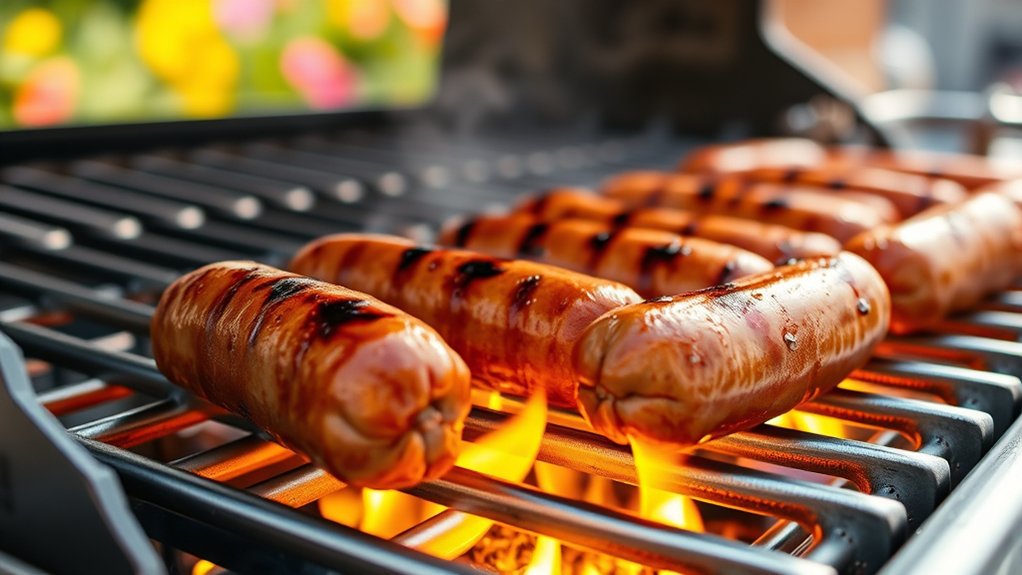
Grilling sausages on a gas grill usually takes 10 to 15 minutes, depending on their size and type. For juicy results, preheat your grill to 375-400°F and turn the sausages frequently.
Use a meat thermometer to guarantee they reach 160°F for pork or beef and 165°F for chicken or veggie sausages. Avoid piercing them to keep juices in, and let them rest a few minutes before serving.
Keep these tips in mind, and you’ll master perfect grilled sausages every time.
Key Takeaways
- Grill sausages for 8 to 20 minutes, turning every 2 to 3 minutes. This helps with even cooking and browning.
- Use a meat thermometer to check that the internal temperature reaches 160°F for pork or beef sausages and 165°F for chicken sausages.
- Keep the grill temperature between 350°F and 400°F. This prevents burning and makes sure the sausages cook through.
- The type and size of sausage can change cooking time. Smaller or thinner sausages tend to cook faster.
- After grilling, let the sausages rest for a few minutes. This keeps the juices in and boosts the flavor.
How Long Should You Grill Sausages on a Gas Grill?
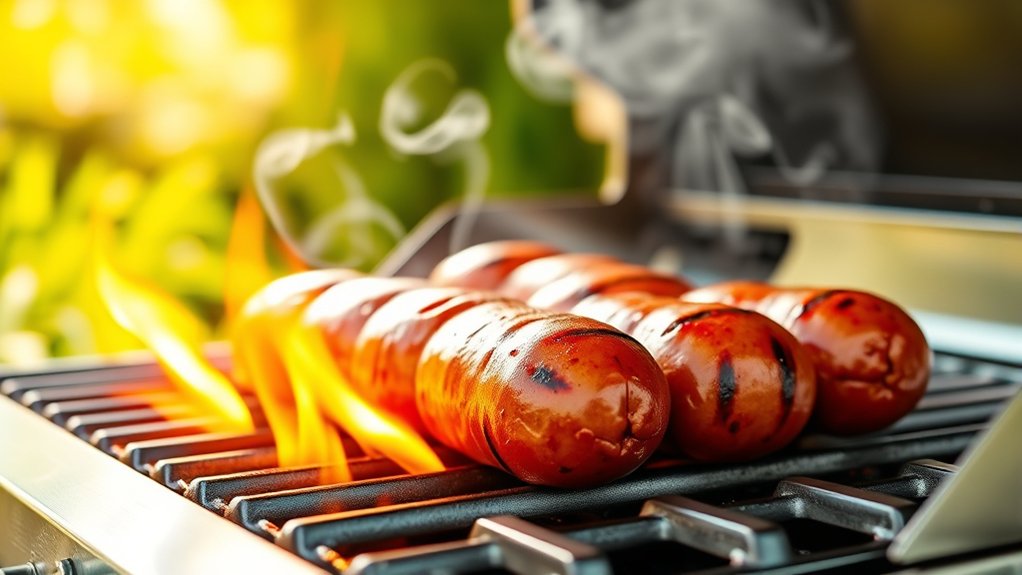
Grilling sausages on a gas grill usually takes about 10 to 15 minutes, but the exact time depends on their size and thickness. To ensure even cooking, start with a clean grill—this helps prevent sticking and flare-ups.
As you grill, turn the sausages frequently to promote even heat distribution. Before grilling, think about seasoning—well-seasoned sausages taste better and might need fewer condiments.
Use medium heat to avoid burning the casing while letting the inside cook through. Check for doneness by cutting into the sausage; it should be firm and no longer pink inside.
If you want perfect grill marks and flavor, don’t rush it. Patience is key to juicy, well-cooked sausages. Proper cleaning and seasoning make a big difference in your grilling success.
What Factors Affect Sausage Cooking Time?
When you’re cooking sausages, their size and thickness really matter. Thicker links, for example, tend to take longer to cook all the way through. It’s just like anything else—you need to give them enough time to heat evenly inside.
The temperature of your grill or pan also makes a difference. If you crank up the heat, the sausages will cook faster, but be careful not to burn the outside before the inside is done. Finding that perfect balance is key.
And don’t forget, the type of sausage can change things up too. Beef, pork, or chicken sausages each have different fat and moisture levels, which can affect how long they need to cook. So, it’s good to keep these factors in mind to get that perfect, juicy sausage every time.
Sausage Size and Thickness
The size and thickness of your sausages directly influence how long they need to cook on a gas grill. Thicker sausages take longer to cook through, especially if they have a sturdy casing. Smaller, thinner sausages cook faster and are less likely to dry out.
The marinade and seasoning can also affect cooking time. Some ingredients create moisture that slows heat penetration, so keep that in mind when grilling.
| Sausage Size | Approximate Cooking Time |
|---|---|
| Small, thin sausages | 8-10 minutes |
| Medium, standard | 12-15 minutes |
| Large, thick sausages | 15-20 minutes |
Adjust your grilling time based on these factors for perfectly cooked, juicy sausages every time.
Grill Temperature Control
Several factors influence how long sausages take to cook on a gas grill, with temperature control being one of the most critical. Keeping the right grill temperature ensures even cooking and prevents burning or undercooking.
For safe and flavorful results, aim to keep the grill between 350°F and 400°F. Adjusting the heat helps control the cooking speed and develop a nice sear.
If you’re using marinade suggestions, steer clear of high heat. This is especially important if your marinade has sugars or oils, which can cause flare-ups or burning.
Proper grill safety means keeping the lid closed to retain heat and avoid accidents. Monitoring the temperature consistently helps prevent overcooking, so your sausages stay juicy and perfectly cooked every time.
Type of Sausage Used
Different types of sausages need different cooking times because their ingredients, casing, and fat content all affect how quickly they heat through.
For instance, thicker or denser sausages like bratwurst often take longer to cook thoroughly, while thinner ones like hot dogs cook faster.
The flavor of the sausage also influences how you should cook it—spicy or heavily seasoned varieties might need gentler heat to avoid burning.
Casing type matters too; natural casings tend to be more forgiving and keep moisture in, while synthetic casings heat up faster.
Knowing these factors helps you adjust your grilling approach, so your sausages cook evenly without overdoing the outside.
Tailoring your techniques based on the sausage type ensures juicy, flavorful results every time.
What’s the Best Gas Grill Temperature for Sausages?
To guarantee your sausages cook evenly and stay juicy, maintaining the right grill temperature is essential. For ideal results, keep your gas grill between 350°F and 400°F. This range helps the sausages develop a nice sear without burning or drying out, preserving their full flavor.
If the grill is too hot, the outside may char before the inside cooks through. On the other hand, too low a temperature can cause uneven cooking and less flavorful results. Using a meat thermometer helps you monitor the heat accurately.
This way, you can adjust the burners quickly if needed. Keeping the temperature consistent also makes it easier to manage flare-ups and prevent charring. Controlling the heat improves both the taste and texture of your sausages.
It also makes grilling safer and more predictable. Stick to this temperature range for juicy, flavorful sausages every time.
Step-by-Step: How to Grill Sausages for Juicy Results
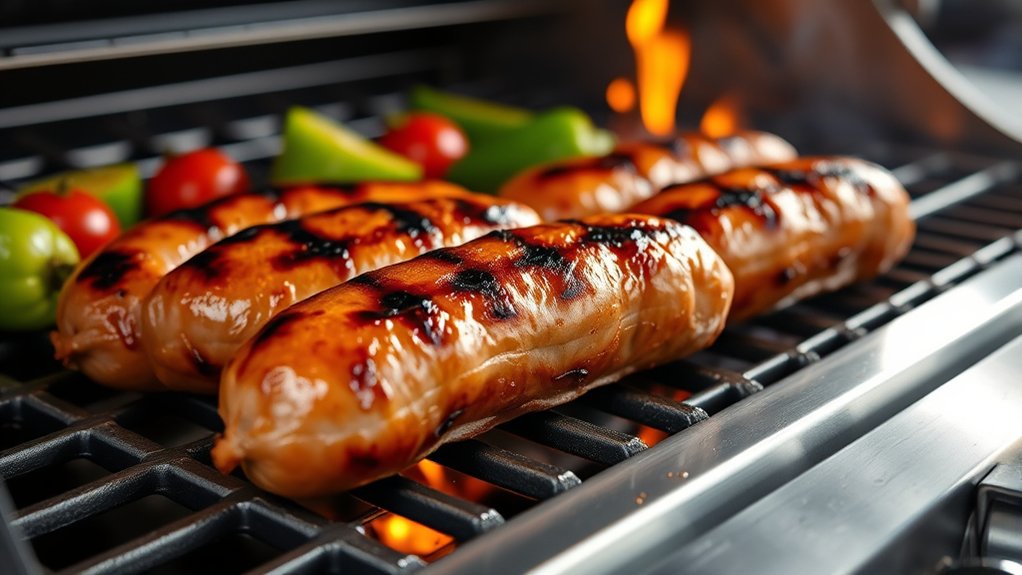
Grilling sausages to juicy perfection is simple with a step-by-step process that ensures even cooking and great flavor. Start by choosing your sausages and adding marinade if you like, which can boost moisture and taste.
Preheat your gas grill to around 350°F, which is medium heat. Use tools like tongs and a grill basket to handle the sausages safely and easily.
Preheat your grill to medium heat at 350°F, using tongs and a grill basket for safe handling.
Place the sausages on the grill, spacing them out so they cook evenly. Sear each side for 2-3 minutes to get those nice grill marks.
Then, turn down the heat to medium-low and cook for another 12-15 minutes, turning occasionally so they cook through evenly. Use a meat thermometer to check that the internal temperature hits 160°F for fully cooked, juicy sausages.
Remember to keep the heat controlled and avoid piercing the sausages, which can cause juices to escape. Feel free to adjust your marinade to match your flavor preferences, and enjoy delicious, perfectly grilled sausages every time.
How to Check If Your Sausages Are Fully Cooked
Ensuring your sausages are fully cooked is crucial for both safety and taste. To check doneness, start by using a meat thermometer—look for an internal temperature of 160°F (71°C). This guarantees the sausage has reached a safe level, preventing foodborne illnesses.
You can also cut into one sausage to check its color; the juices should run clear, and the meat should no longer be pink. When using grilling accessories like tongs or a grill basket, handle sausages carefully to avoid piercing them, which can release flavorful juices and diminish their flavor.
If you prefer a visual cue, some grill marks and a firm texture indicate proper cooking. Remember, overcooking can dry out the sausage, so aim for a balance.
Regularly checking your sausages with these methods ensures they’re fully cooked, safe to eat, and bursting with essential flavor.
Tips for Even Cooking and Preventing Burning
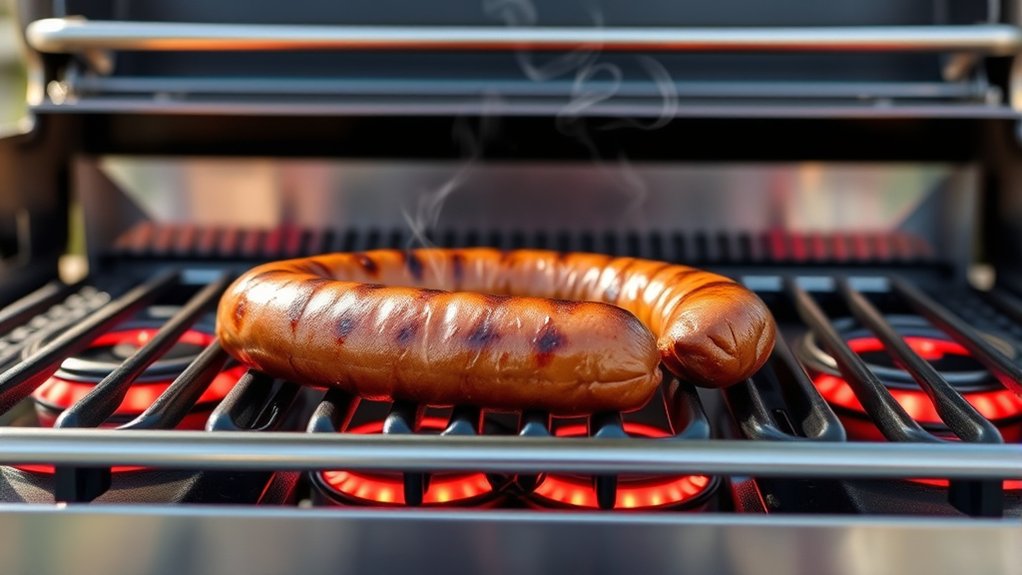
Achieving even cooking and preventing burning requires careful control of heat and handling of your sausages. To do this well, focus on managing your grill’s temperature and using proper grilling accessories. Here are four tips:
- Use two-zone heating—set one side of the grill to high heat and the other to low. This way, you can sear sausages on high and then move them to lower heat to avoid burning.
- Turn sausages frequently—this helps them cook evenly and prevents hot spots from burning the seasoning.
- Adjust lid position—keep the lid closed to maintain consistent heat, but crack it open occasionally for even heat circulation.
- Choose quality grilling accessories—use skewers or grilling baskets to handle sausages easily. This prevents puncturing the casing, which helps retain juices and promotes even cooking.
Following these tips will help you get perfectly grilled sausages with balanced seasoning and a juicy inside.
How Long to Grill Different Types of Sausages (Pork, Chicken, Veggie)
When it comes to grilling sausages, each type has its own perfect timing to make sure they’re cooked through and tasty. For example, pork sausages usually take about 15-20 minutes on the grill. Just make sure to turn them occasionally so they cook evenly and get those nice grill marks.
Chicken sausages tend to cook a little faster, usually around 12-15 minutes. Keep an eye on them and turn them regularly to prevent any burning and ensure they’re cooked all the way through.
Veggie sausages can vary quite a bit depending on what ingredients are inside, so it’s best to check the package for specific instructions. Generally, they take about 8-12 minutes. Again, turning them often helps them cook evenly and develop a good char. Just remember to keep an eye on them, and you’ll get delicious, perfectly grilled sausages every time!
Pork Sausage Cooking Time
When grilling pork sausages, the key is to cook them thoroughly without drying them out. Proper timing helps preserve their flavor and keeps them juicy. Usually, they need about 12-15 minutes over medium-high heat, around 375-400°F.
To get even cooking, turn the sausages often using tongs or other grilling tools. This helps them brown evenly on all sides.
Here are some tips to make sure they’re safe and tasty:
Preheat your grill to medium-high before adding the sausages. Use a meat thermometer to check that the internal temperature reaches 160°F.
Turn the sausages every 2-3 minutes for a nice, even browning. Once done, let them rest for a few minutes before serving to keep the juices locked inside.
Following these simple steps guarantees delicious, fully cooked pork sausages every time.
Chicken Sausage Grilling Tips
Grilling chicken sausages requires careful attention to make sure they’re cooked through without drying out. Since chicken sausages are leaner, they cook faster and can lose moisture easily.
To keep their flavor, use medium-high heat and turn them often. Aim for an internal temperature of 165°F. Using a meat thermometer helps prevent overcooking and keeps things simple.
You might also soak skewers or use a grill pan to stop sticking. Keep a close eye on the sausages, especially when flipping, to ensure even cooking.
Let the sausages rest for a few minutes after grilling. This allows the juices to redistribute, making them juicy and flavorful. With the right timing and techniques, you’ll enjoy perfect, tasty chicken sausages every time.
Veggie Sausage Preparation
Veggie sausages need a slightly different approach than meat ones to cook evenly without falling apart. Marinate them in vegetable marinades beforehand to boost their flavor.
When grilling, keep the heat medium to avoid burning. Preheat your grill and lightly oil the grates so the sausages don’t stick.
Grill veggie sausages for about 12-15 minutes, turning them often for even cooking. Be gentle when stuffing them into casings or flipping to prevent breakage.
Finally, check that the internal temperature reaches 165°F (74°C) to make sure they’re thoroughly cooked.
Common Mistakes to Avoid When Grilling Sausages
Avoiding common mistakes can really make or break your sausage grilling experience. One mistake is not considering the sausage variety you’re cooking; different types like fresh or smoked may need different temperatures and cooking times.
Using the wrong grilling accessories, such as skewers or grill baskets, can cause uneven cooking or sausages falling apart. Avoid piercing the sausages with a fork, as this releases juices and can make them dry.
Overcrowding the grill also hampers heat circulation, leading to uneven cooking. Don’t forget to preheat your grill properly—this helps prevent sticking and ensures consistent heat.
Neglecting to monitor the internal temperature can result in undercooked or overcooked sausages. Always use a meat thermometer to check if they’re done. Lastly, grilling at too high a heat can burn the outside while leaving the inside raw.
Paying attention to these common pitfalls will help you achieve perfectly grilled sausages every time.
How to Rest and Serve Your Grilled Sausages
After you finish grilling your sausages, just let them rest for a few minutes. This little step helps lock in all those tasty juices, so every bite stays juicy and flavorful.
When it’s time to serve, grab some tongs and handle the sausages gently—you want to keep them looking nice and neat. Arrange them nicely on a platter to make everything look even more tempting. Taking a bit of time to rest and present them well really makes a difference in enjoying your grilled sausages to the fullest.
Resting Time Importance
After grilling your sausages to perfection, it’s important to let them rest for a few minutes before serving. Resting helps the juices redistribute, making each bite tastier and more flavorful.
During this time, avoid cutting into the sausages right away. Instead, use the pause to clean your grill or prepare other accessories for serving.
You can also take this moment to review marinating techniques for next time or add a quick glaze or marinade if you’d like.
Resting ensures even heat distribution, helping prevent dry or undercooked spots.
For the best results, cover the sausages loosely with foil to keep them warm.
This step is key to enjoying juicy, tender, and perfectly grilled sausages every time.
Proper Serving Techniques
Once your sausages have rested and cooled slightly, it’s time to serve them properly to maximize their flavor and juiciness. Use grilling tools like tongs to handle the sausages gently, so you don’t lose any of those tasty juices.
Resting helps the juices redistribute, making each bite tender and flavorful. When serving, try slicing the sausages diagonally for a more appealing look and easier eating.
Place them on a warm plate or platter, but avoid cutting into them right after grilling. This keeps the moisture locked in. Pair your sausages with sides and condiments that complement their flavor.
Good serving techniques not only improve the taste but also make your grilling experience more fun and professional-looking.
Troubleshooting: What to Do If Your Sausages Are Undercooked or Overcooked
If your sausages turn out undercooked or overcooked, quick adjustments can save your meal. For undercooked sausages, finish cooking them with indirect heat or wrap them in foil, then check with a meat thermometer.
Overcooked sausages can become dry, so remove them promptly. Consider adding moisture with a quick glaze or dipping sauce to keep them juicy.
Here are some helpful tips:
- Use a meat thermometer to check the internal temperature accurately.
- Adjust your gas grill’s heat to avoid flare-ups and uneven cooking.
- For undercooked sausages, transfer them to indirect heat and cover to cook evenly.
- Handle sausages gently with tongs or a grilling fork to prevent puncturing and drying out.
Frequently Asked Questions
Can You Grill Sausages Directly From Frozen?
Yes, you can grill sausages directly from frozen, but it’s not the best way. Keep the temperature moderate so the outside doesn’t burn while the inside thaws.
You might notice the flavor is a bit less intense at first, but it will develop as it cooks. For the best taste and safety, it’s good to cook them a bit longer and turn them often.
This helps the sausage cook evenly without losing its juiciness. Just be patient, and you’ll end up with tasty, perfectly cooked sausages.
How Do You Prevent Sausages From Bursting While Grilling?
To prevent sausages from bursting while grilling, you should use proper grilling techniques. Start by pricking the sausages lightly with a fork to release pressure. Then, cook them over medium heat.
Turn them frequently to ensure even cooking and avoid high heat, which can cause them to burst and affect their flavor. Maintaining steady heat and gentle handling helps keep their juicy interior intact and preserves their delicious flavor.
What Accessories Can Improve Sausage Grilling?
You can improve sausage grilling with accessories like a grill basket, which keeps sausages intact and prevents flare-ups. This helps maintain a consistent grilling temperature and preserves the sausage flavor.
A probe thermometer is also handy for monitoring the internal temperature, ensuring your sausages are perfectly cooked. Using tongs instead of forks helps prevent juice loss, keeping the flavor locked in.
These tools make grilling safer and more efficient, helping you achieve evenly cooked sausages with great flavor.
Is It Better to Parboil Sausages Before Grilling?
Ever wondered if parboiling sausages before grilling is worth it? It’s not necessary, but it can help ensure even cooking and prevent flare-ups.
By parboiling, you start with gentle heat that locks in moisture, then finish on the grill at a higher temperature for that perfect char.
How Do Different Sausage Casings Affect Grilling Times?
Different sausage casings, like natural, collagen, or synthetic, influence grilling times because their casing materials affect heat conduction and moisture retention.
Natural casings usually need a bit longer to cook through and get that perfect snap. Collagen casings cook faster and help trap flavors, giving you a better infusion.
Synthetic casings tend to cook quickly, but you’ll want to keep an eye on them so they don’t burst. This helps ensure the flavors stay locked in and the texture stays just right.
Conclusion
Now that you’re armed with all the tips, grilling sausages becomes a dance you’ll master with ease. Remember, patience is your best friend—like waiting for a good story to unfold.
With the right temperature and timing, every bite will be juicy and delicious, making your grill the star of the show. So fire up that gas grill and turn your sausage game into a sizzling masterpiece everyone will rave about!