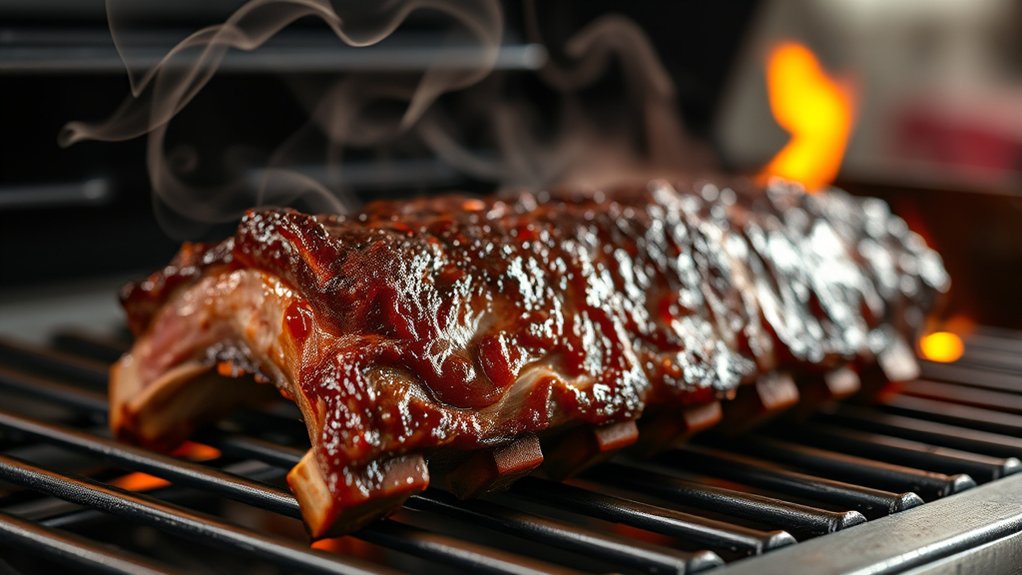
How to Smoke Beef Short Ribs Perfectly on a Pellet Grill?
Cooking perfect beef short ribs on a pellet grill is a goal many barbecue enthusiasts strive for, but it can feel overwhelming at first. You’re not alone—getting that tender, smoky flavor just right takes some practice and the right techniques.
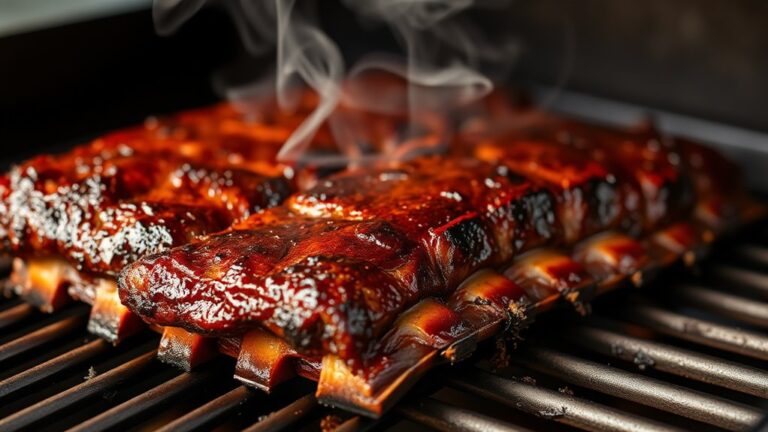
To smoke beef short ribs perfectly on a pellet grill, start by selecting high-quality, well-marbled cuts and season them with your favorite dry rub or marinade.
Preheat your grill to 225-250°F, then set it up for steady temperature control and use quality pellets to add great flavor.
Maintain consistency during smoking, monitor internal temperature, and let the ribs rest before serving.
If you want to master these steps and achieve mouthwatering results, keep exploring the process.
Key Takeaways
- Keep the temperature steady between 225°F and 250°F for consistent, tender smoked ribs.
- Pick high-quality, well-marbled beef short ribs, ideally bone-in for a richer flavor.
- Rub the ribs evenly with a dry spice mix or marinade, then let them sit overnight to boost flavor.
- Use reliable thermometers to keep an eye on the internal temperature, aiming for 200°F to 205°F for perfect tenderness.
- After smoking, let the ribs rest for 10-15 minutes to keep the juices in and get the best texture.
Understanding How to Smoke Beef Short Ribs on a Pellet Grill
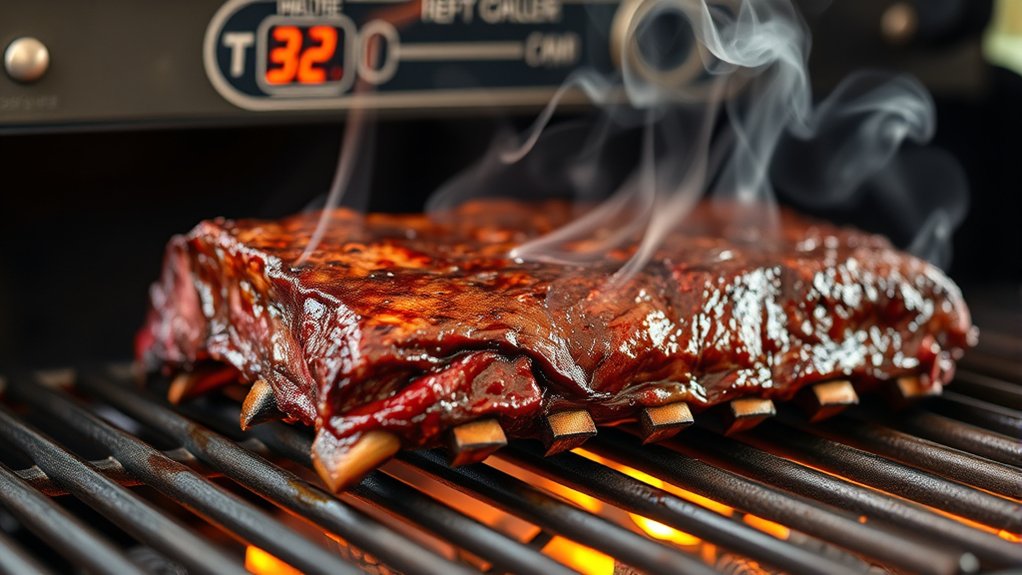
To successfully smoke beef short ribs on a pellet grill, you need to understand the basics of how this cooking method works. The key is managing cooking temperature and choosing ribs with good marbling.
High marbling ensures your ribs stay tender and flavorful throughout the smoking process because the fat melts slowly, keeping the meat moist. You should set your pellet grill to a steady temperature of around 225°F to 250°F.
This range allows the collagen in the ribs to break down gradually, resulting in tender, pull-apart meat. Consistent temperature control is vital because fluctuations can lead to uneven cooking or dry meat.
Using quality pellets also impacts flavor and smoke production, enhancing the overall experience. By paying attention to your grill’s temperature and selecting well-marbled ribs, you’ll set the stage for perfectly smoked beef short ribs that are juicy, flavorful, and tender.
Choosing the Best Cut of Beef Short Ribs for Smoking
Choosing the best cut of beef short ribs for smoking can really make a difference in flavor and tenderness. Your choice depends on marbling and whether you want bone-in or boneless.
High marbling means more intramuscular fat, which boosts flavor and keeps the meat moist during smoking. Bone-in ribs usually have richer flavor and look better when served, but boneless cuts are easier to handle and carve.
| Cut Type | Marbling Quality | Bone-in or Boneless | Ideal for | Cooking Time |
|---|---|---|---|---|
| Plate Ribs | High | Bone-in | Traditional slow smoking | Longer |
| Chuck Ribs | Moderate | Boneless | Quick, versatile | Shorter |
| Flanken | Variable | Bone-in or Boneless | Thin slicing, quick cook | Short |
| Short Plate | High | Bone-in | Classic smoked ribs | Long |
| Crosscut Ribs | Good | Boneless | Easy handling, quick meal | Short |
Pick based on your flavor preference, how easy it is to handle, and the presentation you want.
How to Prepare and Season Your Short Ribs for Smoking
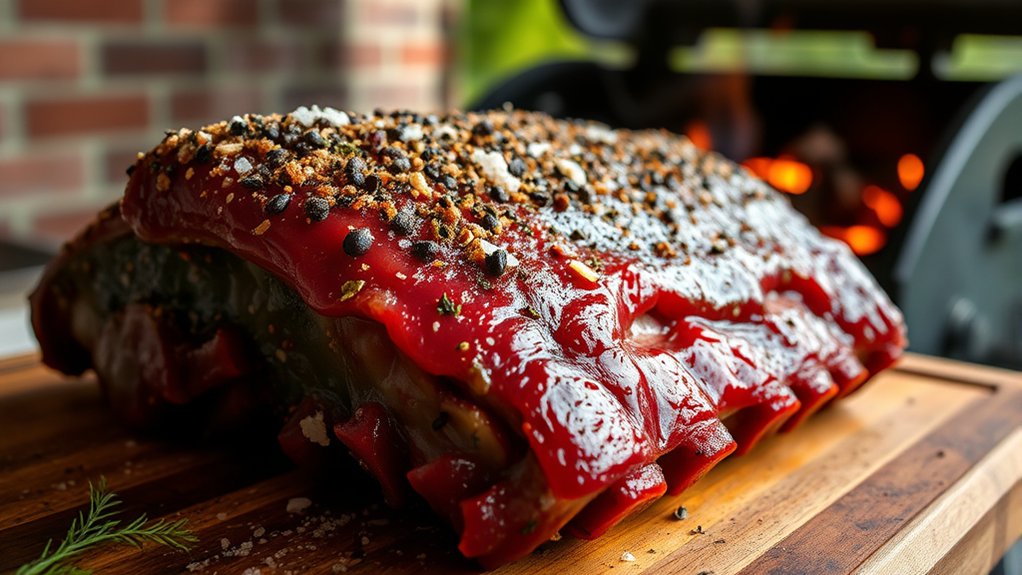
Before you start smoking, it’s important to prepare and season your short ribs properly for the best flavor and tenderness. Proper prep involves using marinade techniques to add moisture and enhance taste.
Properly prepare and season short ribs with marinade and dry rub for maximum flavor and tenderness.
You can choose a simple marinade or go for something more complex, depending on your flavor preferences. For seasoning, mix your favorite blends like salt, pepper, garlic powder, and paprika to create a tasty crust.
Here are some tips to get it right:
- Pat the ribs dry so the seasoning sticks well.
- Apply a generous coat of marinade and let it soak in for a few hours or overnight.
- Use a dry rub with your preferred spices to add flavor and develop a nice crust.
- Make sure to cover all surfaces evenly for consistent seasoning.
Following these steps will ensure your short ribs are flavorful, tender, and ready for the smoker.
Setting Up Your Pellet Grill for Perfect Smoking
Once your short ribs are seasoned and ready, setting up your pellet grill correctly ensures they smoke evenly and develop that irresistible flavor. Start by making sure your grill is clean and well-maintained; good maintenance helps prevent flare-ups and uneven heat.
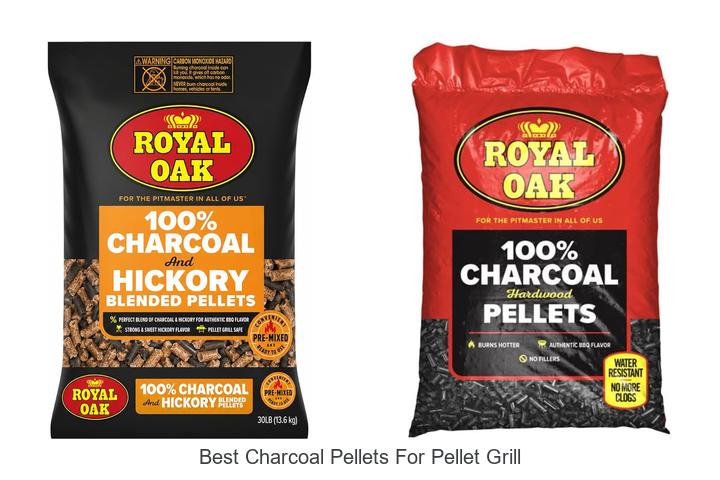
Next, choose high-quality pellets suited for smoking beef, since the type of pellet impacts flavor and how consistently they burn. Fill the hopper with your selected pellets and preheat the grill to around 225°F, which is perfect for smoking.
Check that the grates are clean and in good shape to promote even heat transfer. Adjust the heat diffuser and inspect the vents to make sure airflow is proper, creating a steady, controlled environment.
This setup is key for consistent smoking. Properly maintained equipment and quality pellets set the foundation for delicious, smoky short ribs. Take your time during setup to avoid surprises later, and you’ll be rewarded with perfectly smoked beef every time.
How to Control Temperature and Smoke Levels
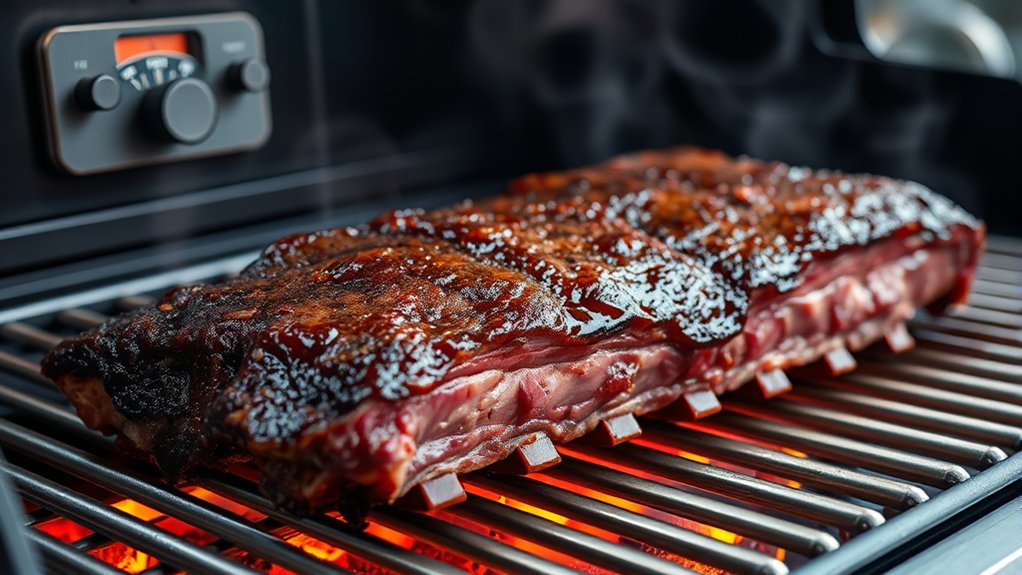
To get those beef short ribs just right, you’ve got to keep an eye on the grill’s temperature and how much smoke is coming out. It’s a good idea to use a reliable thermometer so you can see exactly what’s going on inside. If the heat starts to fluctuate, you can easily adjust the vents or the pellet feed to keep things steady.
Managing both the temperature and smoke levels is key to making sure your ribs cook evenly and get that delicious, smoky flavor everyone loves. Just a little tweaking here and there, and you’ll be on your way to perfect ribs every time.
Monitoring Grill Temperature
Keeping a close eye on your grill temperature is key to getting tender, flavorful beef short ribs. Consistent heat helps with meat marbling and stops overcooking.
Use a reliable digital thermometer to check the grill’s internal temp regularly. Proper grill maintenance, like cleaning the grates and checking the pellet supply, keeps the heat steady.
Adjust the vents if needed to fine-tune the temperature and avoid fluctuations that could mess with smoke absorption. Keep an eye on the weather, since wind or cold can impact heat levels.
Place the meat on a higher rack to prevent direct heat from drying it out. Regular monitoring ensures you keep the right temperature, resulting in perfectly smoked short ribs with great texture and flavor.
Adjusting Smoke Intensity
Adjusting smoke intensity is key to getting the perfect flavor and tenderness. By controlling the smoke levels, you influence how much smoke infuses into the meat.
If you want a stronger smoky flavor, increase the smoke output or add more wood pellets. For a milder taste, lower the smoke setting or reduce smoke exposure.
Keeping a steady temperature helps ensure consistent smoke flow, stopping it from becoming overpowering or too weak. You can also adjust airflow to fine-tune the smoke intensity for better flavor control.
Just remember, too much smoke can lead to bitterness, while too little might make the ribs taste bland. Adjusting these elements helps develop a balanced smoky aroma and rich flavor.
What Wood Pellets Are Best for Smoking Beef Ribs?
Choosing the right wood pellets can really influence the flavor and aroma of your smoked beef ribs. The type of wood you choose affects how the flavors infuse, boosting the beef’s natural richness.
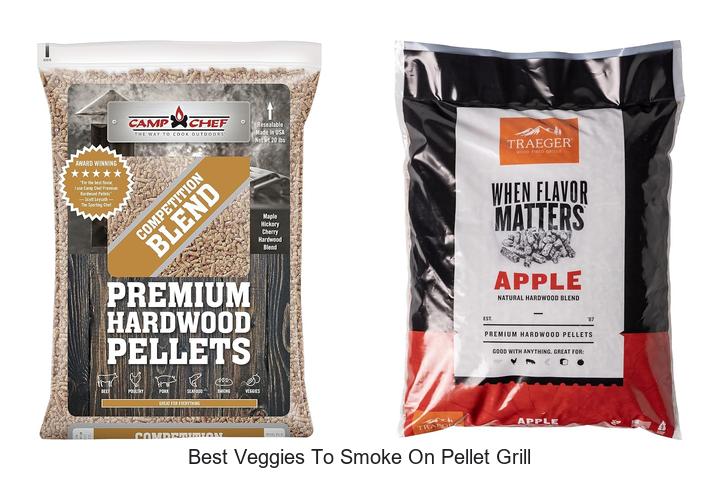
For a bold, smoky taste, hardwood pellets are your best bet. Hickory gives a strong, bacon-like flavor that pairs perfectly with beef ribs. Oak provides a milder, versatile smoke that balances richness without overpowering.
Mesquite adds a bold, earthy flavor, great if you want a more intense smoke. Fruit woods like apple or cherry give a subtle sweetness, adding depth without masking the beef’s natural taste.
Consider these options for the best results: Hickory, Oak, Mesquite, or fruit woods like apple and cherry. Picking the right pellet ensures your beef ribs develop complex, delicious flavors.
How Long Should You Smoke Beef Short Ribs?
Smoking beef short ribs takes some patience, but the results are worth it. Aim to smoke them for about 6 to 8 hours at 225°F. This lets the meat soak up smoky flavors and become tender and juicy.
For extra flavor, try marinating the ribs beforehand. Marinating for several hours or overnight helps break down connective tissues and adds depth to the taste. During smoking, keep an eye on the internal temp; target around 200°F to 205°F for the best tenderness.
If the meat reaches your desired tenderness before the time is up, you can wrap the ribs to speed things along. Remember, don’t rush it—smoking too briefly can make the meat tough, while smoking too long might dry it out.
Maintaining a consistent temperature and using good marinade techniques will help you get perfectly smoked beef short ribs every time.
Resting and Serving Your Smoked Short Ribs for Maximum Flavor
Once your beef short ribs are done smoking and have hit the right internal temperature, it’s important to let them rest. This helps the juices settle, making each bite more flavorful and tender.
Resting also boosts flavor infusion and keeps the ribs juicy. Instead of slicing right away, loosely tent them with foil for about 10-15 minutes. This step helps keep the meat tender and prevents moisture from escaping.
When serving, place the ribs on a warm surface or cutting board—not in direct heat. Cover them loosely with foil to stay warm without sweating.
For the best tenderness, slice against the grain. And don’t forget to serve with your favorite sides to complement that smoky richness.
Troubleshooting Common Issues When Smoking Beef Short Ribs
Despite careful preparation, you might run into some common issues when smoking beef short ribs. One frequent problem is dry meat, which affects tenderness and flavor. To fix this, use a reliable temperature probe and keep the heat steady.
Another issue is a bitter or overly smoky taste, often caused by too much smoke exposure. Controlling your pellet grill’s smoke level can help prevent this. If your ribs turn out tough, they might need more cooking time or a slightly higher temperature.
Finally, uneven cooking can lead to inconsistent tenderness. To avoid this, rotate the ribs during smoking and keep a close eye on the internal temperature.
Creative Ways to Serve and Pair Your Smoked Beef Ribs
Creative ways to serve and pair your smoked beef ribs can elevate your meal and impress your guests. Focus on creative plating to make your ribs look appealing, adding vibrant garnishes or colorful sides.
Enhance flavor pairings by choosing complementary sides like tangy coleslaw, roasted vegetables, or buttery mashed potatoes. Drizzle your ribs with a flavorful sauce like smoky barbecue, spicy chipotle, or sweet honey glaze to boost the taste.
Pair smoked beef ribs with tangy coleslaw, roasted veggies, or creamy mashed potatoes, and top with smoky or sweet sauces.
For a unique touch, serve ribs sliced over a bed of fresh greens or in small sliders for finger-food fun. Using different serving vessels, such as rustic platters or cast-iron skillets, can add visual interest.
Don’t forget to include elements like pickles, crusty bread, or charred corn to round out the meal. These creative plating ideas and thoughtful flavor pairings will make your smoked beef ribs a memorable dining experience.
Frequently Asked Questions
Can I Use a Different Type of Grill Instead of a Pellet Grill?
Yes, you can use different grilling methods instead of a pellet grill. Charcoal, gas, or even offset smokers work well for smoking beef short ribs.
Just focus on flavor infusion techniques like marinating or using wood chips to add smoky flavor. Keep an eye on temperature and smoke levels, and you’ll get tender, flavorful ribs no matter what grill you use.
Adapt your method to match your equipment and taste preferences.
How Do I Prevent My Beef Short Ribs From Drying Out?
To prevent your beef short ribs from drying out, focus on proper cooking techniques like maintaining a consistent temperature. Wrapping them in foil or butcher paper during the process can also help retain moisture.
Applying a marinade or a flavorful rub can improve the taste and keep moisture locked in. Using a water pan in your pellet grill adds humidity, which helps keep the ribs tender and juicy.
This way, your ribs stay juicy and flavorful throughout the smoking process, making sure they don’t dry out.
Is It Necessary to Marinate the Short Ribs Before Smoking?
Marinating your short ribs isn’t necessary, but it can offer some nice benefits like tenderizing the meat and boosting flavor.
If you’re aiming for a richer, more complex taste, adding a marinade before smoking can be a great idea. It helps lock in moisture and adds depth to the natural beef flavor.
Just keep in mind, don’t marinate for too long. Over-marinating might overpower the meat or make it mushy.
What’s the Best Way to Store Smoked Beef Short Ribs?
Think of storing smoked beef short ribs like aging fine wine. They need proper care to stay delicious.
Wrap them tightly in foil or put them in airtight containers to lock in flavor and moisture. Refrigerate within two hours of smoking and eat within 3-4 days.
If you’re not planning to eat them right away, freeze the ribs. Proper storage helps prevent spoilage and keeps your ribs tasting just as great later on.
How Do I Tell When the Short Ribs Are Fully Cooked?
You can tell when your short ribs are fully cooked by checking their internal temperature and how tender the meat feels.
Aim for an internal temperature of around 200°F to 205°F. This ensures they’re tender enough to pull apart easily.
Use a meat thermometer to keep an eye on the temperature. When the meat feels very tender and shreds effortlessly, they’re ready to enjoy.
This method guarantees a juicy, perfectly cooked result every time.
Conclusion
Smoking beef short ribs on a pellet grill is a delicious journey worth every minute. Properly smoked ribs can reach an internal temperature of 203°F, ensuring maximum tenderness.
With the right prep, temperature control, and patience, you’ll create tender, flavorful ribs that impress every time. So fire up your pellet grill, follow these tips, and enjoy the mouthwatering results. Your taste buds will thank you!