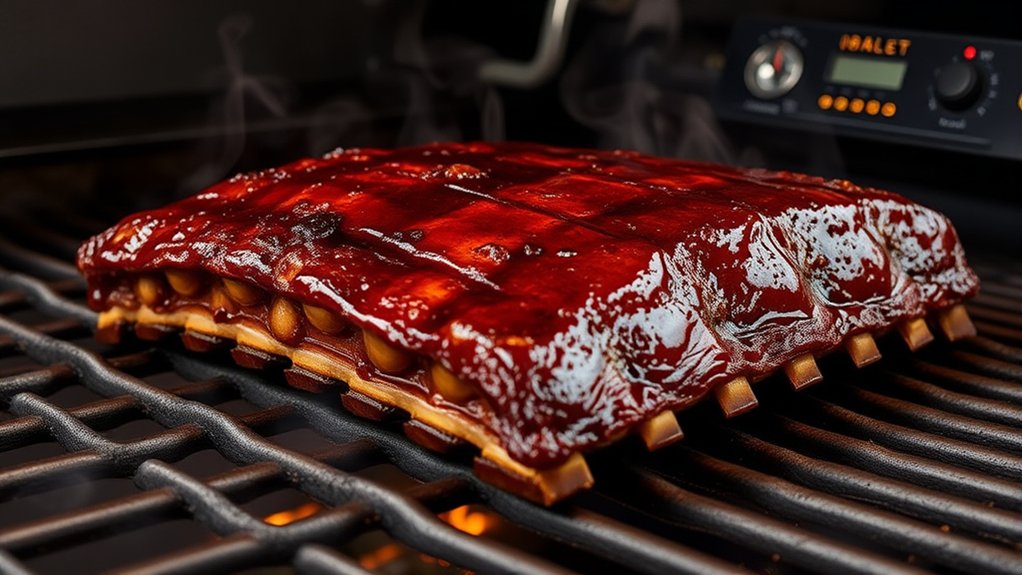
How Long to Cook Baby Back Ribs on a Pellet Grill
Many grilling enthusiasts dream of perfectly tender, flavorful baby back ribs but often struggle to get that ideal bite. It can be frustrating trying to nail the right cooking time and temperature, especially with so many variables at play. You’re not alone—mastering the art of cooking ribs on a pellet grill takes practice and patience.
For perfectly cooked baby back ribs on a pellet grill, plan to cook them at 225°F to 250°F for about 4 to 6 hours. Thinner ribs cook faster, while larger ones may need closer to 6 hours. Maintaining a steady temperature helps develop tender, flavorful meat.
Using techniques like the 3-2-1 method or monitoring the internal temperature guarantees great results. Keep in mind, a little patience pays off. Continue exploring tips to master your ribs.
Key Takeaways
- Cook baby back ribs at 225°F to 250°F for 4 to 6 hours for tender, flavorful results.
- Thinner ribs cook faster, usually around 4 hours, while thicker cuts may take closer to 6 hours.
- Using the 3-2-1 method, smoke for 3 hours, wrap for 2 hours, then unwrapped for 1 hour.
- Check for doneness when the meat easily pulls back from the bones and reaches an internal temperature of 190°F to 203°F.
- Rest the ribs for 10 to 15 minutes before slicing to boost juiciness and flavor.
How Long Should You Cook Baby Back Ribs on a Pellet Grill?
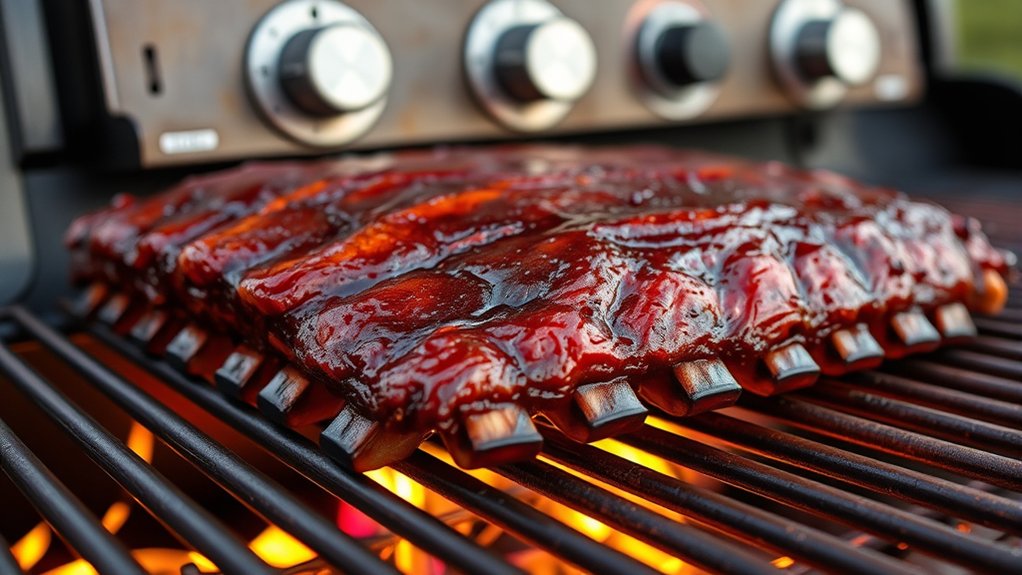
When cooking baby back ribs on a pellet grill, the typical time range is about 4 to 6 hours. During this period, your focus should be on achieving tender, flavorful meat.
Start by choosing your marinade options; whether you prefer a sweet, spicy, or tangy marinade, it’s best to marinate the ribs for a few hours or overnight for deeper flavor. Applying a good rib seasoning before cooking can enhance the taste and create a delicious bark.
Keep in mind that resting the ribs for a few minutes after cooking helps retain juices and improves texture. The cooking time depends on the thickness of the ribs and your desired tenderness, but patience is key.
Avoid rushing the process, as low and slow cooking results in tender, fall-off-the-bone ribs. Use a meat thermometer to check for doneness, ensuring the ribs are cooked through but not overdone.
What’s the Best Temperature for Perfect Baby Back Ribs?
To get perfectly cooked baby back ribs on a pellet grill, maintaining the right temperature is essential. The best range is between 225°F and 250°F, which helps the meat become tender and keeps it moist.
Keep your grilling tools handy to monitor the temperature closely and avoid overcooking. When your grill is set within this range, your ribs will develop a smoky flavor and a beautiful bark, especially if you apply your favorite marinade beforehand.
Consistent heat allows the collagen to break down slowly, giving you juicy, fall-off-the-bone ribs. Adjust your grill and marinades to match these temperatures for the best results.
How to Prepare Baby Back Ribs Before Grilling
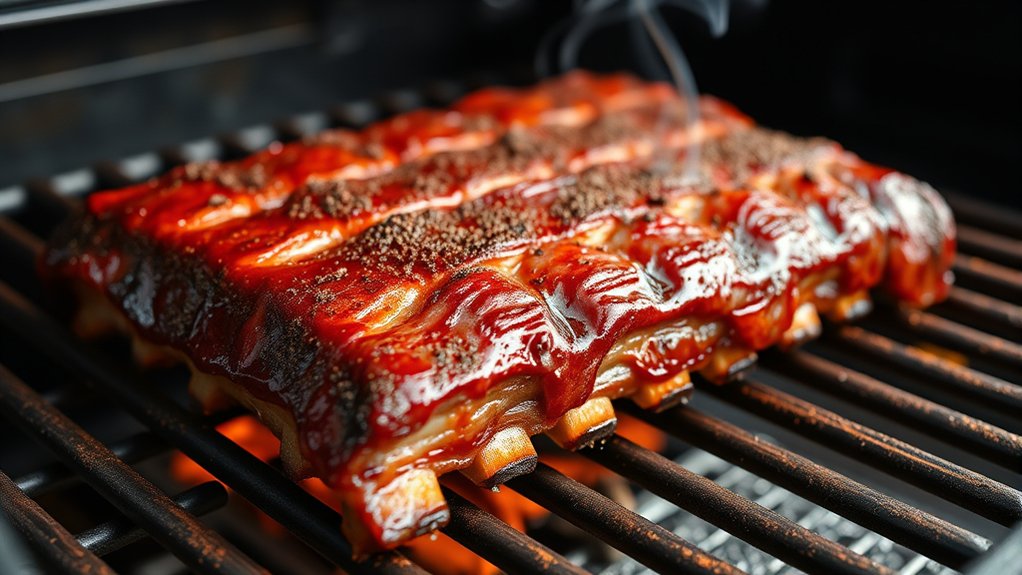
Getting your baby back ribs ready for the grill starts with proper preparation. First, inspect the ribs and use rib trimming techniques to remove excess fat and the silver skin, which helps seasonings penetrate better.
Start by inspecting and trimming your ribs for better seasoning and tenderness.
Next, decide on a marinade recipe that complements your flavor preferences—whether spicy, sweet, or smoky. Apply the marinade generously, ensuring it coats all surfaces, and let the ribs marinate for at least a few hours or overnight for maximum flavor.
Before grilling, pat the ribs dry to promote even browning. You might also want to apply a dry rub for added flavor and bark. Keep your workspace clean and organized to make the process smooth.
This prep work guarantees your ribs are flavorful, tender, and ready for the heat, setting the stage for perfect grilling on your pellet grill.
What Are the Typical Cooking Times for Baby Back Ribs at Different Temperatures?
Cooking baby back ribs on a pellet grill depends on the temperature you choose. At 225°F, expect to cook the ribs for about 4 to 5 hours. This slow process makes the meat tender and flavorful because it allows the collagen to break down.
If you turn up the heat to around 275°F, the cooking time drops to roughly 2.5 to 3 hours. The ribs will cook faster, but you’ll want to keep an eye on them to prevent drying out.
At higher temperatures like 300°F, the ribs might be ready in about 2 hours. However, they may be less tender than slow-cooked ones. The key is to aim for that perfect tenderness where the meat pulls away from the bone easily.
Adjusting your cooking time based on the temperature helps ensure your ribs come out just right. It’s all about finding the balance between temperature and tenderness to get delicious, perfectly cooked ribs.
How to Use the 3-2-1 Method on Your Pellet Grill
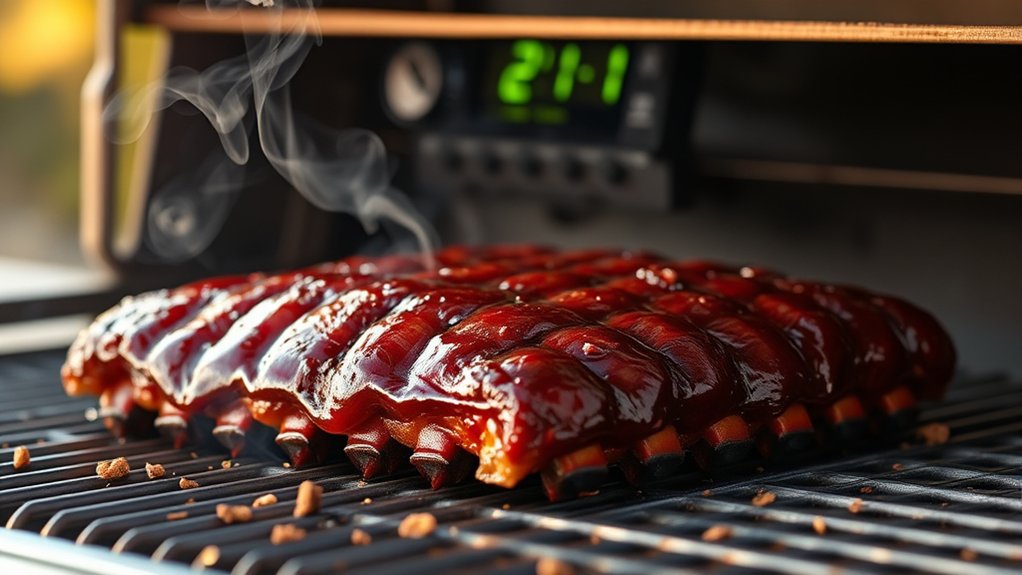
The 3-2-1 method provides an easy way to get tender, flavorful baby back ribs on your pellet grill. It breaks down into three steps: smoking, wrapping, and finishing, with each one helping to boost tenderness and flavor.
First, smoke the ribs for 3 hours, using your favorite seasoning and keeping your grill steady. Make sure to maintain a consistent temperature for the best results.
Smoke the ribs for 3 hours at a steady temperature with your favorite seasoning for perfect flavor.
Next, wrap the ribs in foil with a splash of liquid to help tenderize them. Cook for 2 hours, checking the foil for leaks to keep everything sealed in.
Finally, unwrap the ribs and cook for another hour. This step develops a caramelized, smoky crust that’s full of flavor.
Remember to keep your pellet grill clean to prevent flare-ups and promote even cooking. Also, let the ribs rest a bit before serving to maximize tenderness.
How to Know When Baby Back Ribs Are Done and Tender
Knowing when baby back ribs are done and tender is key to getting that perfect bite. You want them juicy, flavorful, and easy to pull apart.
Use a meat thermometer to check for an internal temperature of around 190°F to 203°F. That range shows they’re tender and ready.
You can also look for visual cues. The ribs should bend easily without breaking, and the meat will shrink back from the bones.
Another sign is the bones slightly exposed at the ends, making them easier to see. The surface should be glazed, caramelized, and look tender.
When you pick them up, they should bend easily without cracking, showing they’re nicely cooked.
The meat pulling back from the bones is another good indicator of doneness and tenderness.
For flavor, aim for a balanced seasoning—think sweet, smoky, and savory—that complements your favorite sauce.
Using the right accessories, like a rib rack or foil, helps keep the ribs moist and ensures even cooking.
| Indicator | What to Look For |
|---|---|
| Internal Temperature | 190°F – 203°F |
| Bone Exposure | Slightly exposed at the ends |
| Flexibility | Bends easily without cracking |
| Meat Shrinkage | Pulls back from bones |
| Visual Cues | Glazed, caramelized surface, tender appearance |
Follow these signs, and you’ll know your ribs are cooked to perfection.
How to Keep Ribs Moist and Full of Smoke Flavor
To keep your ribs moist and full of rich smoke flavor, focus on proper preparation and cooking techniques. Start with marinade variations like fruit-based or spicy blends to infuse moisture and boost flavor.
Apply a generous layer of ribs seasoning to create a tasty crust. Keep the grill lid closed as much as possible to trap smoke and moisture inside.
Consider wrapping the ribs in foil during the last few hours of cooking to lock in juices. Using a water pan in your pellet grill helps maintain humidity and prevents drying out.
Regularly baste the ribs with a thin layer of marinade or apple juice to add extra moisture and keep them tender.
Troubleshooting: What to Do If Your Ribs Are Tough or Dry
If your ribs turn out tough or dry, it’s usually because they weren’t cooked long enough or at the right temperature, or they lost too much moisture during cooking. To fix this, try wrapping the ribs in foil with a little apple juice or water to keep them moist and continue cooking until they’re tender.
Adding marinade options like a simple vinegar-based marinade or a sweet glaze can also help boost moisture and flavor. Also, check your seasoning; overly salty or heavily spiced rubs can dry out the meat.
For future cooks, consider applying a light coating of oil or a marinade before seasoning to lock in moisture. If you notice dryness early, spritzing the ribs with a spray bottle during cooking can help.
Adjusting Cooking Time for Ribs of Different Sizes
Adjusting the cooking time based on the size of your ribs helps ensure they turn out perfectly tender. Bigger ribs need a bit more time, while smaller ones cook faster. Keep the rib size in mind before you set the grill for the best results.
Think about these factors when adjusting your cooking time:
- Thicker ribs may need an extra 15-30 minutes.
- Thinner ribs can cook faster, saving you about 10-15 minutes.
- Bone-in ribs usually take longer than boneless cuts.
- Uniform size helps you achieve even cooking.
- Very large ribs might benefit from a slight increase in cooking temperature.
Resting and Serving Your Baby Back Ribs for Maximum Flavor
Once your ribs are cooked to perfection, it’s a good idea to let them rest for about 10-15 minutes. This helps the juices settle, making each bite extra flavorful and tender. Just toss a piece of foil over them loosely—no need to wrap tightly—so they stay warm without steaming too much and losing their crispy edges.
When you’re ready to serve, cut between the bones to get those nice, clean slices. Arrange the ribs on a platter, and they’ll look as good as they taste. This little step really makes a difference in how juicy and delicious your ribs turn out!
Proper Resting Techniques
Once your baby back ribs finish cooking, resting them properly is key to locking in juices and boosting flavor. Resting helps the meat reabsorb juices and become more tender.
Wrap the ribs loosely in foil or place them on a cooling rack with a towel to keep them warm. About 10-15 minutes of resting is just right.
While they rest, you can prepare marinade options or gather your serving accessories. Proper resting also stops juices from spilling out when you cut into the meat.
Visualize the process:
- Juices evenly distribute through the meat
- Meat stays tender and moist
- Flavors deepen and meld
- Easy to cut and serve
- Keeps the presentation attractive
Resting might be simple, but it’s essential for maximum flavor and the perfect texture.
Optimal Serving Suggestions
Have you ever wondered how to serve your baby back ribs for maximum flavor? The key is in proper resting and thoughtful presentation. After grilling, let your ribs rest for 10-15 minutes; this helps juices redistribute, resulting in tender, flavorful meat.
When it’s time to serve, consider your marinade options—sweet, smoky, or spicy—to *amplify* each bite. For side dish pairings, classic options like coleslaw, baked beans, or grilled vegetables complement the richness of the ribs.
Before serving, brush the ribs with a little extra sauce if desired, but avoid overdoing it to maintain the perfect bark. This approach *guarantees* your ribs stay juicy, flavorful, and irresistible, creating a memorable meal that highlights your grilling skill and taste.
Frequently Asked Questions
Can I Use Wood Pellets for Additional Flavor?
Yes, you can definitely use wood pellets for extra flavor infusion. Different pellet types like hickory, apple, or cherry bring unique tastes to your ribs.
Choosing the right pellet can boost the smoky aroma and enhance the overall flavor. Experimenting with different kinds lets you customize your barbecue experience.
This way, your baby back ribs turn out even more delicious and aromatic.
Should I Remove the Membrane From the Ribs Before Cooking?
You should remove the membrane from the ribs before cooking because it’s a key part of meat preparation that affects the cooking techniques. Taking it off helps your ribs become more tender and allows smoke and flavors to penetrate better.
Use a paper towel to grip and peel it off easily. This step guarantees your ribs cook evenly and achieve that perfect, melt-in-your-mouth texture you’re aiming for.
How Often Should I Spritz or Baste the Ribs During Cooking?
You should spritz or baste your ribs every 30 to 45 minutes during cooking. Regular moisture additions help boost flavor and keep the ribs juicy.
This frequency helps prevent them from drying out while still giving you that flavorful, moist exterior. Keep a spray bottle handy for easy application.
And don’t forget to use a mixture that complements your rub for the best results.
Is It Better to Cook Baby Back Ribs Bone Side up or Down?
You should cook baby back ribs bone side down for the best results. This position helps protect the meat from direct heat, so it cooks more evenly and stays tender.
When you use marinade techniques and season the ribs, placing the bones down allows the flavors to penetrate better. This creates a more flavorful crust that’s worth savoring.
Keep an eye on your grill’s temperature, and don’t forget to baste or spritz the ribs. This will help keep them moist and boost their flavor during cooking.
What Are Some Common Wood Pellet Flavors for Ribs?
Imagine elevating your ribs with a touch of mystery. What pellet varieties will unveil rich, smoky layers?
Common wood pellet flavors like hickory, apple, cherry, and mesquite each bring unique flavor combinations. They can transform your ribs into a true culinary masterpiece.
When you choose the right pellet variety, you add depth and complexity to your dish. So, experiment boldly—your perfect smoky symphony is just a pellet away, waiting to be revealed.
Conclusion
Now that you’re armed with the secrets to perfect baby back ribs on your pellet grill, you’re ready to turn your backyard into a smoky haven. Remember, cooking ribs is like a dance—you need the right rhythm of temperature and time.
Keep an eye on them, stay patient, and enjoy every tender, flavorful bite. When cooking baby back ribs on a pellet grill, aim for about 4 to 6 hours at 225°F for that ideal tenderness.
Before you know it, your ribs will be the star of every gathering, shining brighter than a barbecue lighthouse. Mastering how long to cook baby back ribs on your pellet grill makes all the difference for that perfect bite.