How Long to Cook Chicken Legs on a Pellet Grill
Cooking chicken legs on a pellet grill can be tricky, especially if you’re aiming for juicy meat and crispy skin. Many people struggle with getting the perfect balance of tenderness and crunch without overcooking. You’re not alone—mastering the timing and temperature takes practice.
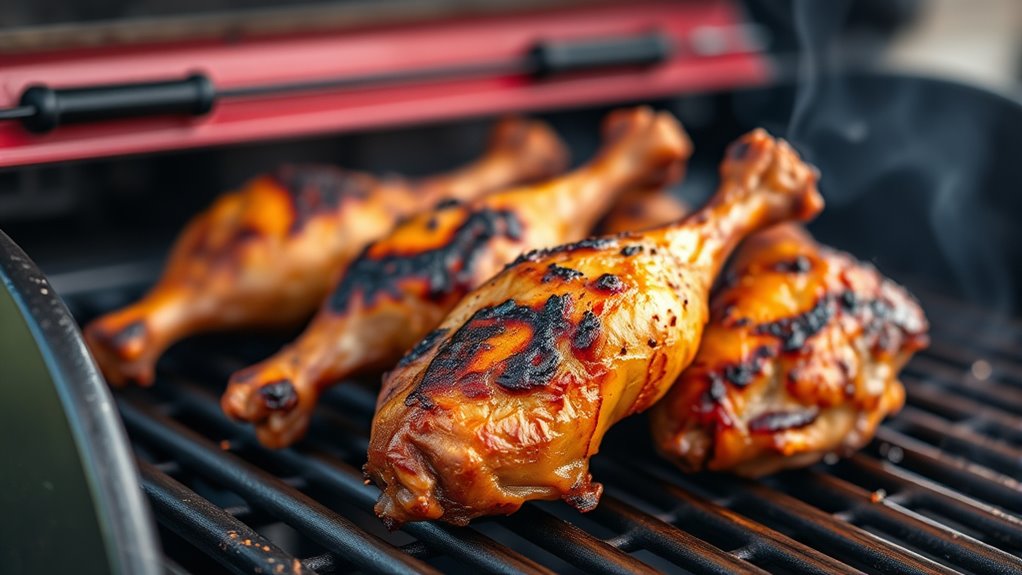
You should cook chicken legs on a pellet grill for about 30 to 40 minutes at 350°F. Check the internal temperature, aiming for 165°F for juicy, safe meat, or 170°F if you want crispy skin.
Regularly monitor your grill’s heat and use a meat thermometer to prevent overcooking. Resting the chicken after cooking helps keep it moist.
Want to perfect your grilling skills? Keep exploring to learn more tips and tricks.
Key Takeaways
- Cook chicken legs on a pellet grill at around 350°F for about 30 to 40 minutes.
- Use a meat thermometer to ensure the internal temperature reaches 165°F for safe, juicy meat.
- Let the chicken rest for 5 to 10 minutes after cooking so the juices can redistribute.
- Keep an eye on the grill temperature and make sure there’s proper airflow for even cooking.
- If you want crispy skin, finish with high heat or a quick direct flame.
How Long Should You Cook Chicken Legs on a Pellet Grill?
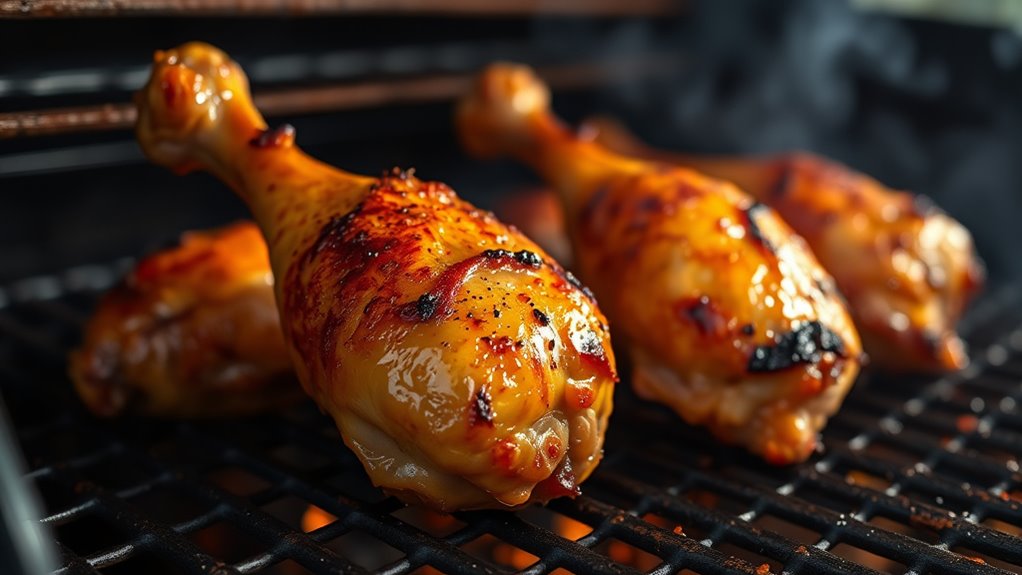
When cooking chicken legs on a pellet grill, the typical cooking time ranges from 30 to 40 minutes. This depends on the size of the legs and the grill’s temperature.
To make sure they’re flavorful, try experimenting with marinade variations like spicy, sweet, or smoky profiles. These can boost both the taste and juiciness.
Experiment with spicy, sweet, or smoky marinades to enhance flavor and keep chicken legs juicy.
Using quality grilling accessories, such as a meat thermometer, helps you keep track of the internal temperature and avoid overcooking. Remember to check your grill’s heat regularly and adjust as needed for even cooking.
Marinating the chicken beforehand not only adds flavor but can also tenderize the meat, which might slightly reduce the cooking time. Keep the grill lid closed as much as possible to maintain consistent heat.
With the right marinade choices and proper tools, you’ll end up with tender, flavorful chicken legs in the perfect amount of time. This makes your grill session both efficient and delicious.
What’s the Best Temperature for Cooking Chicken Legs?
To get perfectly cooked chicken legs, it’s really important to pay attention to the internal temperature. The best temperature for juicy, safe chicken legs is 165°F (74°C).
Cooking to this temperature ensures the meat is fully cooked, tender, and flavorful. If you like crispy skin, you can cook them a little higher, around 170°F (77°C).
You can add marinade options like citrus, garlic, or herbs before grilling to boost flavor. Just remember, always cook to the right internal temp for safety.
For storage, refrigerate leftovers within two hours and eat them within three to four days. This keeps your chicken fresh and safe to enjoy.
How to Prepare Chicken Legs for Grilling
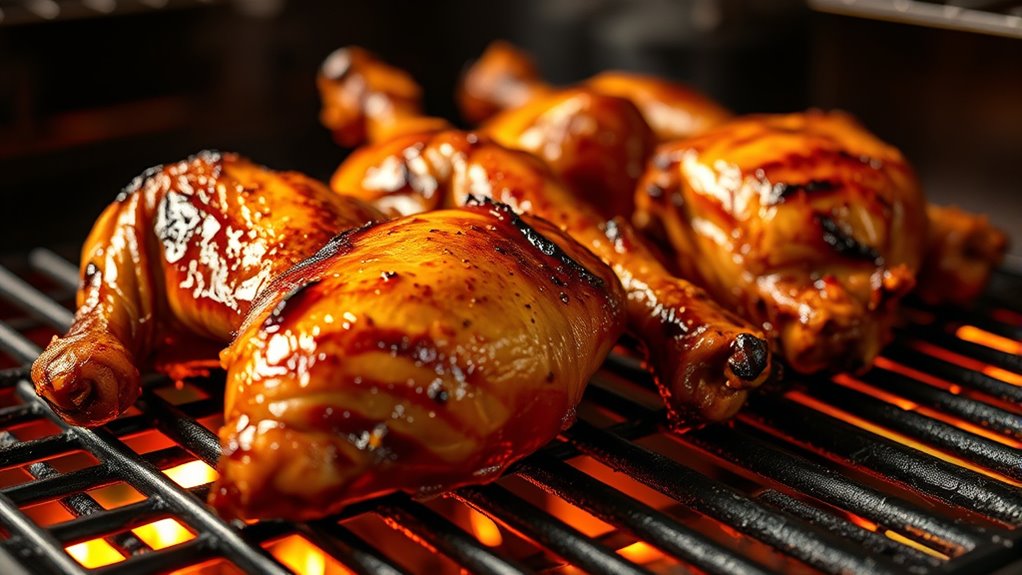
Preparing chicken legs properly before grilling guarantees they turn out flavorful and juicy. Start by patting the chicken dry with paper towels to remove excess moisture; this helps the seasoning stick better.
Pat dry chicken legs to ensure better seasoning adhesion and juicy, flavorful grilling results.
Next, choose your marinade options—whether a tangy barbecue, spicy buffalo, or a simple citrus-olive oil mix—to add flavor and tenderize the meat. Let the chicken marinate for at least 30 minutes or up to a few hours for more depth.
Alternatively, you can use seasoning blends like garlic powder, paprika, salt, pepper, and herbs to create a flavorful crust. Rub the seasoning evenly over the chicken legs, making sure every surface is coated.
Proper preparation ensures the flavors penetrate the meat and helps you achieve even cooking. Whether marinating or applying seasonings, prepping your chicken ahead of time sets the foundation for delicious, juicy grilled chicken legs.
How to Achieve Crispy Skin on Chicken Legs
Achieving crispy skin on chicken legs starts with proper drying. Pat the skin dry with paper towels to remove excess moisture, which can prevent crispiness.
Once dry, apply your preferred seasoning blends or marinade options, but be careful not to add too much liquid, as it can soften the skin. For extra crunch, consider using a light coating of oil before grilling.
Finish the cooking process with a brief blast of high heat or direct flame to crisp up the skin. This quick burst helps achieve that perfect crispy texture.
To deepen the flavor and texture, keep these tips in mind: Use seasoning blends that include salt, which helps draw out moisture and promote crispiness.
Opt for marinades with vinegar or citrus, but make sure to dry the chicken thoroughly afterward. You can also add a light dusting of baking powder along with your seasonings for extra crispness.
Following these steps will help you achieve perfectly crispy, flavorful chicken skin on your pellet grill.
How to Keep Chicken Meat Juicy While Grilling
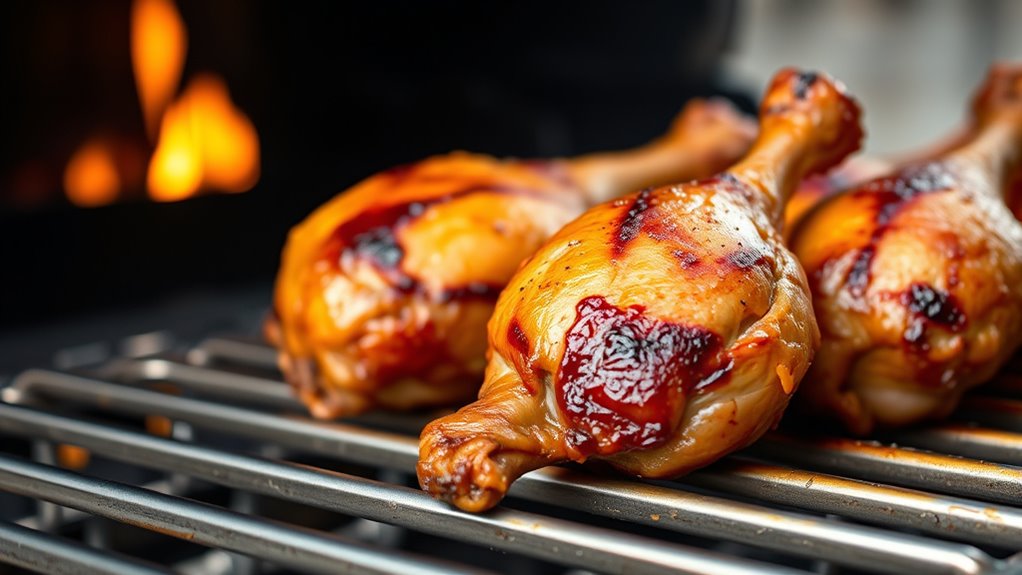
Keeping chicken meat juicy on the grill means paying attention to temperature and timing. Marinades are a great way to lock in moisture and add flavor.
Use marinades with oil, acid like lemon juice, and herbs to tenderize and hydrate the meat before grilling. Let the chicken sit in the marinade for at least 30 minutes, or longer if you want deeper flavor.
Marinate chicken with oil, lemon juice, and herbs for at least 30 minutes to enhance flavor and moisture.
Seasoning also matters. Apply salt and spices evenly to improve juiciness and taste without drying out the meat. You can even brine the chicken in a saltwater solution beforehand to help it retain moisture during grilling.
Avoid overcooking by keeping a steady grill temperature, usually around 350°F. Flip the chicken at the right time to get an even cook. After grilling, let the meat rest for a few minutes to allow the juices to redistribute, so each bite stays moist and flavorful.
How to Use a Meat Thermometer to Check if Chicken Legs Are Done
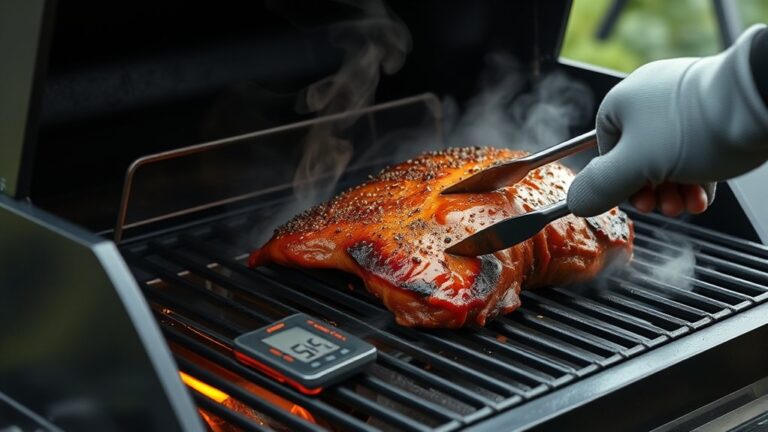
Using a meat thermometer is the most reliable way to ensure your chicken legs are fully cooked and safe to eat. Just insert the thermometer into the thickest part of the meat, avoiding the bone if it’s a bone-in piece, to get an accurate reading.
For boneless chicken legs, the process is a bit simpler since there’s no bone to worry about. Make sure the thermometer reads 165°F (74°C), which is the safe internal temperature for poultry.
Keep in mind that marinating can affect cooking time, so don’t rely solely on time estimates. Instead, check the temperature regularly as you approach the expected doneness.
When cooking bone-in versus boneless chicken, note that bone-in pieces might need a slightly higher internal temperature, but the 165°F mark applies to both.
To ensure even doneness, monitor the temperature as you near the end of cooking, and avoid cutting into the meat too early, as that can cause juices to escape.
How Do You Know When Your Chicken Legs Are Fully Cooked?
Knowing when your chicken legs are fully cooked is important for safety and flavor. The best way to tell is by using a meat thermometer, aiming for an internal temperature of 165°F.
You can also check visually: the juices should run clear, and the meat should easily pull away from the bone. If you used marinade or spice rubs, look for even color and doneness around the thickest part of the leg.
Be careful not to overcook, as that can dry out the meat. Keep an eye on it once it hits the target temperature. Remember, a browned or slightly charred exterior doesn’t always mean it’s done, so rely on internal temperature and visual cues.
Let the chicken rest briefly after cooking. This helps juices redistribute, but the key signs of fully cooked chicken legs are the correct internal temperature and juicy, opaque meat.
Resting and Serving Your Pellet Grill Chicken Legs
Once you’ve taken the chicken legs off the grill, give them a few minutes to rest. This step is key to keeping all that delicious, juicy flavor locked in. Just tent them lightly with some foil—no need to wrap them tight—so they stay warm but don’t get steamed.
After they’ve rested, you’re all set to dig in! Serve your chicken with your favorite sides or sauces and enjoy the full flavor of that perfectly grilled, juicy goodness.
Proper Resting Techniques
Once your chicken legs have finished cooking, it’s important to let them rest before serving. Resting helps the juices redistribute, making the meat moist and flavorful.
During this time, avoid cutting into the chicken right away, as this releases moisture. If you marinated or used spice rubs beforehand, resting allows those flavors to develop even more.
While resting, loosely tent the chicken with foil to keep it warm without steaming. Proper resting usually means letting it sit for at least 5 to 10 minutes.
Use a meat thermometer to check the internal temperature and make sure it’s cooked through. Keep the chicken in a warm but not hot area to prevent it from cooling too quickly.
Following these steps will help you enjoy perfectly juicy and flavorful chicken legs.
Ideal Serving Suggestions
To serve your pellet grill chicken legs at their best, let them rest for a few minutes to let the juices redistribute. This step makes the meat more flavorful and tender.
When you’re ready to plate, think about adding some variety with a spicy rub, smoky marinade, or citrus glaze to boost the flavor. Presentation is key, so arrange the legs attractively on a platter.
Pair your chicken with versatile sides like grilled vegetables, cornbread, or a fresh salad to complement the smoky taste. Finish with a sprinkle of herbs or a squeeze of lemon for extra freshness.
These simple touches will make your meal more appealing and flavorful, turning your perfectly cooked chicken legs into a memorable feast.
Common Mistakes That Can Ruin Your Chicken Legs
One of the most common mistakes that can ruin your chicken legs is overcooking them, making the meat dry and tough. To avoid this, keep an eye on cooking times and don’t stick to just one method.
Using the wrong marinade can also mess things up. Some marinades might tenderize or dry out the meat if left too long or cooked improperly.
Be careful about relying only on cooking time instead of checking the internal temperature to know when your chicken is done.
Overly acidic marinades can break down the meat if marinated for too long, so use them wisely.
And don’t forget to let your chicken rest after cooking. Skipping this step can cause juices to escape, leaving the meat dry and less flavorful.
Troubleshooting Undercooked or Overcooked Chicken Legs
When your chicken legs turn out undercooked or overcooked, it’s frustrating, but pinpointing the issue can save your next batch. First, check your seasoning variations—sometimes, overly thick or uneven coatings can affect heat transfer, leading to inconsistent cooking.
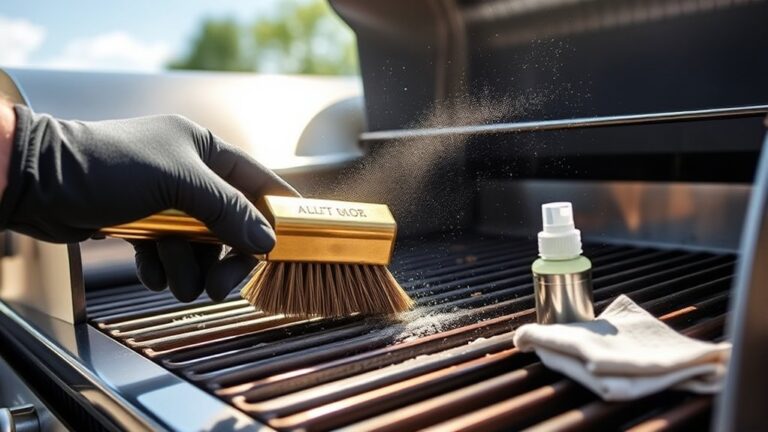
Confirm your grill is well-maintained; dirty or clogged grates can hinder heat circulation, causing uneven results. Use a reliable meat thermometer to monitor internal temperature; chicken legs should reach 165°F.
Ensure your grill is clean and well-maintained for even heat and perfectly cooked chicken legs.
If they’re overcooked, reduce cooking time or lower the grill temperature slightly. Wrapping them in foil can also help retain moisture. For undercooked legs, increase cooking time or check your pellet quality and grill settings.
Proper grill maintenance like cleaning the grates and checking airflow issues also helps prevent uneven cooking. Adjust seasoning methods and keep your equipment in good shape to get tender, juicy chicken legs every time.
Frequently Asked Questions
Can I Cook Chicken Legs Directly on the Pellet Grill Grates?
Yes, you can cook chicken legs directly on the pellet grill grates. Just make sure you’re using the right technique for the best results.
Set your grill temperature to around 375°F to 400°F for even cooking and crispy skin. Place the chicken legs directly on the grates and turn them occasionally to ensure they cook evenly.
Keep an eye on the internal temperature, aiming for 165°F. That way, you’ll know they’re fully cooked and still juicy.
Should I Marinate Chicken Legs Before Grilling?
Marinating your chicken legs is like giving them a flavor vacation. Yes, you should marinate them before grilling to infuse tasty flavors and tenderize the meat, making each bite more delicious.
Keep in mind, marinating for 30 minutes to a few hours usually works best. This step helps improve the cooking process, so your chicken legs stay juicy and flavorful throughout grilling.
How Do Different Wood Pellet Flavors Affect Chicken Taste?
Different wood pellet flavors greatly influence your chicken’s taste by adding unique flavors and aromas. Hickory gives a smoky, hearty flavor, while applewood adds a sweet, fruity aroma.
Cherry pellets bring a mild, sweet taste, and mesquite offers a bold, intense smoky profile. Trying out these flavors lets you customize your chicken’s flavor.
Each grilling session becomes a fun chance to experiment and create a taste tailored to your preferences.
Is It Necessary to Brine Chicken Legs Before Grilling?
Even in the age of smartphones, brining chicken legs isn’t always necessary but definitely beneficial. Brining techniques, like soaking in a saltwater solution, help keep the meat juicy and flavorful, especially on a pellet grill.
If you prefer added tenderness, marinating offers benefits like improved taste and moisture retention. So, while not mandatory, brining can elevate your grilled chicken, making it more succulent and delicious with minimal effort.
Can I Cook Frozen Chicken Legs on a Pellet Grill?
Yes, you can cook frozen chicken legs on a pellet grill. Just place the frozen legs directly on the grill, but keep in mind that they’ll take longer to cook.
You can apply your favorite grill seasoning before cooking or midway through to add flavor. Keep the grill temperature steady at around 375°F.
Use a meat thermometer to ensure the chicken reaches a safe internal temperature of 165°F before serving.
Conclusion
As you pull those perfectly cooked chicken legs off the pellet grill, imagine the aroma wrapping around you like a warm hug, a tribute to your patience and skill. Each crispy skin and juicy bite tells a story of careful temperature control and tender anticipation.
Remember, the true flavor lies not just in the final bite but in the journey of grilling—where heat, time, and your passion come together to create something memorable.
When cooking chicken legs on a pellet grill, aim for an internal temperature of about 165°F. This usually takes around 45 minutes to an hour, depending on the size of the legs and your grill’s temperature.
So, trust the process, enjoy the aroma, and savor the delicious result of your efforts in grilling perfect chicken legs on your pellet grill.