How Long to Smoke Salmon on a Pellet Grill?
Many people love the idea of perfectly smoked salmon, but figuring out the right time and temperature can be tricky. If you’ve ever felt overwhelmed trying to get that ideal smoky flavor without overcooking, you’re not alone. Achieving tender, flavorful smoked salmon on a pellet grill takes some practice, but with the right tips, you’ll be on your way.
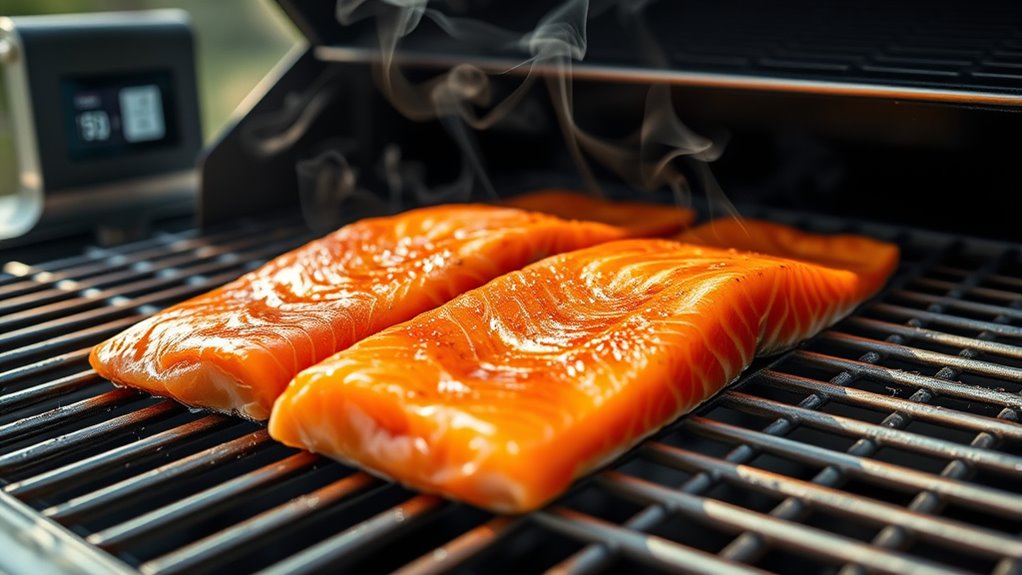
You should smoke salmon on a pellet grill for about 1 to 3.5 hours, depending on the fillet’s thickness and your preferred doneness. Aim for an internal temperature between 130°F and 140°F. Thinner cuts cook faster, while thicker ones take longer.
Consistent temperature control and monitoring with a meat thermometer are key. Keep in mind, focusing on time alone isn’t enough—you can learn how to perfect your smoked salmon by exploring further tips.
Key Takeaways
- Smoking time can range from 1 to 3.5 hours, depending on how thick your salmon is and how done you want it.
- Aim for an internal temperature of 130°F to 140°F for the best texture and safety.
- Keep your grill temperature steady between 180°F and 225°F to ensure consistent smoking.
- Use a meat thermometer to check the internal temperature instead of just relying on time.
- Thicker fillets will need more time, so adjust your smoking duration based on size and your preferred doneness.
How Long Should You Smoke Salmon on a Pellet Grill?
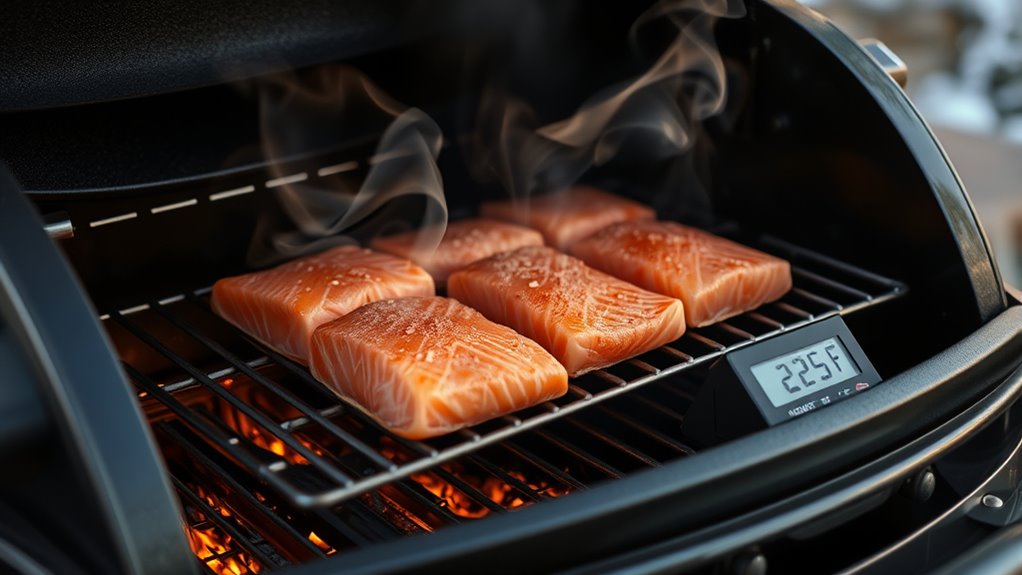
When smoking salmon on a pellet grill, it usually takes about 1 to 1.5 hours. The exact time depends on how thick your fish fillet is and how well done you want it.
Before you start, marinate your fish in a salmon marinade for at least 30 minutes. This helps boost the flavor and keeps the fish moist and tender during smoking.
Keep your pellet grill preheated to around 225°F (107°C). Place the marinated fillet on the grill, skin-side down, and start smoking.
The cooking time can vary based on thickness, but generally, 1 to 1.5 hours works well. You’ll know it’s ready when the salmon flakes easily with a fork or reaches your preferred doneness.
What’s the Best Internal Temperature for Smoked Salmon?
Achieving the perfect smoked salmon means hitting the right internal temperature to ensure it’s safe to eat and tender. Usually, aim for 130°F to 140°F. This range keeps the fish moist and flaky, so it doesn’t dry out or get overcooked.
Use a reliable meat thermometer to keep track of the temperature. Once it hits your target, take the salmon off the grill and let it rest for a few minutes.
Here’s a quick guide to internal temps and flavor pairings:
| Temperature | Texture & Safety | Serving Suggestions |
|---|---|---|
| 125°F | Slightly undercooked, tender | Light salads, sushi-style |
| 130°F | Perfect for most, flaky | Bagels with cream cheese |
| 140°F | Fully cooked, firm | Pasta dishes, canapés |
| 145°F+ | Overcooked, dry | Not recommended |
| 150°F+ | Dry, tough | Avoid for smoked salmon |
Adjust your serving suggestions based on the temperature to best suit your flavor preferences.
What Factors Affect Smoking Time on Your Pellet Grill?
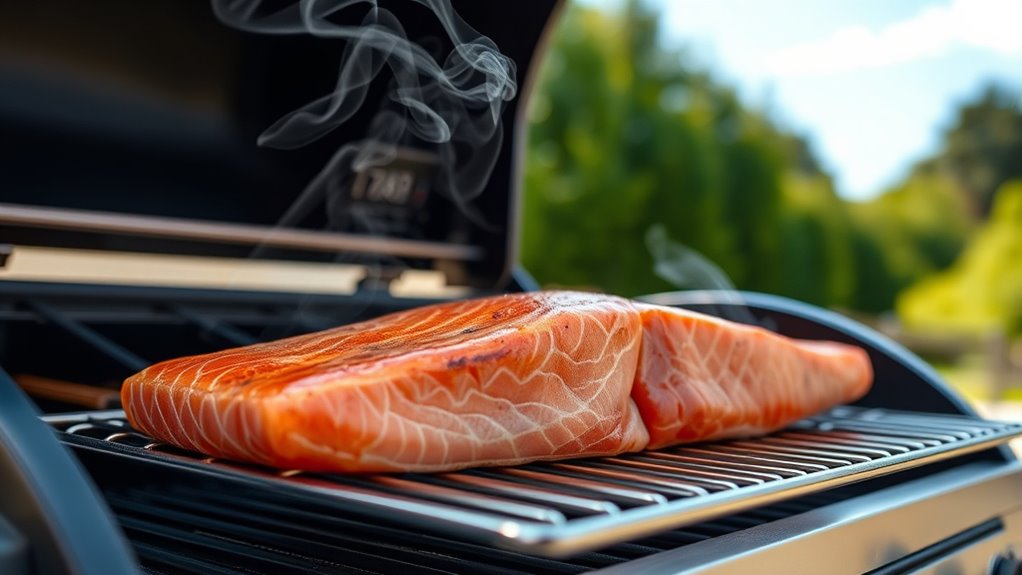
When you’re smoking salmon on your pellet grill, the size and thickness of the fish are a big deal. Thicker cuts will naturally take longer to cook through, so keep that in mind when you’re planning your smoke.
The temperature you set on your grill also makes a difference. Cranking up the heat can speed things along, but it might change the texture of your salmon a bit. So, if you want that perfect, tender finish, you might want to stick to a lower and slower approach.
And don’t forget about the smoke duration and style you choose—these will influence not just the flavor but also how long the smoking process takes overall. Picking the right smoke method can help you get that ideal balance between taste and timing.
Salmon Size and Thickness
The size and thickness of your salmon fillet directly influence how long it needs to smoke on your pellet grill. Thicker cuts require more time to reach the ideal internal temperature, while thinner fillets cook faster.
Factors like salmon farming practices and nutrition also impact the fish’s texture and flavor, which can affect your smoking process.
Use the table below to estimate smoking times based on fillet size:
| Salmon Size | Approximate Smoking Time |
|---|---|
| 1-inch thick | 1 to 1.5 hours |
| 1.5-inch thick | 1.5 to 2 hours |
| 2-inch thick | 2 to 2.5 hours |
| 2.5-inch thick | 2.5 to 3 hours |
| 3-inch thick | 3 to 3.5 hours |
Adjust times based on your specific salmon’s characteristics and freshness.
Grill Temperature Settings
Grill temperature settings are key to how long your salmon takes to smoke. Higher temps speed up cooking, while lower temps make it longer.
Setting your pellet grill between 180°F and 225°F helps it cook gently. This promotes better flavor infusion and even smoke penetration.
Keeping the temperature steady ensures your salmon gets that rich, smoky flavor all through. The type of wood you choose also matters—hardwoods like maple or hickory give more intense flavors and can slightly change cooking time.
Adjusting the heat based on your preferred smoke style and flavor helps you control how long it takes. This way, you get perfectly smoked salmon every time.
Smoke Duration and Style
Several factors influence how long smoked salmon takes on a pellet grill, making the process quite customizable. The thickness of the fillet and your preferred smoking style, whether gentle or more intense, play significant roles.
The type of wood you choose also affects flavor and smoking duration, as different woods impart varying smoke intensities. Your target internal temperature is important too, especially if you’re aiming for a specific texture or doneness.
Keep in mind that longer smoking enhances seafood nutrition and can improve salmon pairing options, offering richer flavors. If you want a delicate, flaky texture, shorter smoke times work best.
On the other hand, a longer, slow smoke produces a more robust flavor profile. Adjusting these factors lets you tailor the process perfectly to your taste and desired outcome.
Step-by-Step: How to Smoke Salmon Perfectly
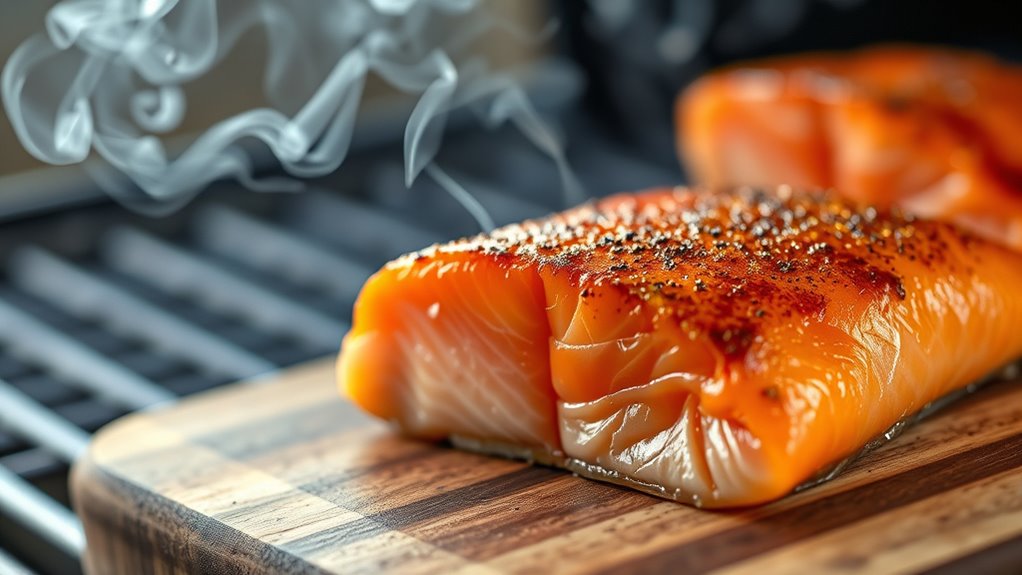
Sure! Here’s a more conversational version of the text:
—
If you want to smoke salmon perfectly, the first thing you should do is get the fish ready. Make sure it’s cleaned well and seasoned just right. Taking the time to prep it properly makes a big difference in the final flavor.
After that, it’s all about controlling your smoke and temperature. Keep an eye on these so you can get that ideal taste and texture you’re aiming for. Once you get the hang of these steps, you’ll be able to smoke salmon with confidence and impress everyone!
Preparing the Salmon Properly
Before you start smoking your salmon, it’s essential to prepare it properly to guarantee the best flavor and texture. First, remove any pin bones and pat the fish dry.
Second, consider a simple brine or dry rub to improve flavor pairing and moisture retention. Third, think about presentation tips—slice the salmon evenly for a polished look.
Proper prep also involves choosing complementary seasonings that highlight the natural richness of the fish. Keep in mind, a well-prepared salmon not only tastes better but also looks appealing when served.
Taking these steps ensures your smoked salmon will deliver a perfect balance of flavor, texture, and visual appeal, heightening your overall smoking experience.
Controlling Smoke and Temperature
Controlling the smoke and temperature during the smoking process is key to getting perfect results. Keep a steady temperature around 180°F to 200°F to ensure the salmon cooks evenly without drying out.
Use your pellet grill’s controls to adjust the heat as needed, and keep the smoke level consistent for maximum flavor. Adding a handful of wood pellets periodically helps maintain smoke without overpowering the fish’s delicate flavor.
Invest in quality grilling accessories like a digital thermometer to monitor temperature accurately. Avoid opening the grill too often, as this disrupts temperature stability.
Proper control guarantees your salmon develops a rich smoky flavor while staying tender and moist. This makes it easier to craft a delicious, perfectly smoked dish every time.
How to Check if Your Salmon Is Fully Cooked?
Checking if your salmon is fully cooked is pretty simple once you know what signs to look for. The main goal is to make sure it reaches the right internal temperature and keeps its flavor. Here are three easy ways to tell:
- Color and texture: The flesh should change from translucent to opaque and flake easily with a fork. If it still looks shiny or feels resistant, give it a bit more time.
- Temperature: Use a food thermometer to check that the inside reaches 125°F to 130°F for the best flavor and safety.
- Visual cues: The edges might start to curl slightly, and when you pierce it, the juices should run clear.
Regular pellet grill maintenance helps keep your smoker consistent, which ensures accurate temperature control. This directly affects how well your salmon is cooked.
Common Mistakes That Change Your Smoking Time
If your temperature isn’t steady, your smoking time might get all out of whack. It’s easy to overlook, but keeping a consistent heat is key to perfect salmon. Also, make sure you’re using the right kind of wood chips — different woods can change the flavor and smoking time. And be careful not to overload the grill basket; too many chips or too much salmon can mess with the airflow and affect how it smokes.
Pay attention to these common mistakes, and you’ll stay on track for that perfectly smoked salmon every time.
Inconsistent Temperature Control
Have you ever noticed how fluctuations in temperature can throw off your smoking schedule? Inconsistent temperature control affects more than just timing; it impacts flavor infusion and your overall results. To keep things steady, consider these tips:
- Regularly check and calibrate your pellet grill to ensure accurate temperature settings.
- Maintain your grill by cleaning out ash and ensuring proper airflow, which helps keep the heat steady.
- Avoid opening the lid too often, as sudden temperature drops can extend smoking time and mess with flavor infusion.
Inconsistent heat makes it harder to hit your target temperature, leading to uneven cooking and compromised flavor. Proper grill maintenance and vigilant temperature control are key to delivering perfectly smoked salmon every time.
Using Incorrect Wood Chips
Did you know that using the wrong type of wood chips can really change your smoking time? Different woods give off different flavors and burn at different rates, which affects how your salmon cooks.
For example, fruit woods like apple or cherry burn slower and give a milder smoke, while hickory or mesquite burn faster and produce a stronger flavor. Using the wrong wood chips can lead to uneven cooking or longer smoking times.
If you pick wood chips that don’t match well with salmon or don’t burn at the right rate, you might need to adjust your cooking time unnecessarily. Choosing the right wood chips is key to keeping your smoking consistent and getting the flavor you want.
Overloading the Grill Basket
Overloading the grill basket might seem like a good idea to maximize smoke flavor, but it can actually disrupt the airflow and heat distribution.
When you pack too much salmon into the grill basket, it blocks proper smoke infusion and causes uneven cooking. This can lead to longer smoking times or undercooked spots.
To prevent this, keep these tips in mind:
- Leave space between pieces for proper airflow.
- Avoid stacking fish on top of each other.
- Use a single layer to ensure even smoke exposure.
How Salmon Thickness and Cut Impact Smoking Duration
The thickness and cut of your salmon directly influence how long it takes to smoke it to perfection. Thicker fillets, around 1 to 1.5 inches, need more time to reach the ideal internal temperature, while thinner cuts cook faster.
If you’re using a salmon marinade, it’s best to apply it before smoking to boost flavor without affecting cooking time too much. The presentation of the fillet also matters—whole sides or individual portions can change how much smoke they get.
Larger pieces take longer to cook, while smaller cuts will cook quicker. Keeping cuts uniform helps ensure even cooking and consistent results. Thicker cuts benefit from longer, lower-temperature smoking, so monitor those carefully.
Thinner cuts should be watched closely to avoid overcooking. Adjust your smoking time based on these factors, and always check for doneness by aiming for an internal temperature of about 145°F.
Proper cut size and presentation give you more control over the smoking process and help you achieve perfectly smoked salmon.
Tips for Tender, Flaky, and Flavorful Smoked Salmon
Achieving tender, flaky, and flavorful smoked salmon is about more than just the smoking process—it all starts with proper preparation and technique.
First, focus on curing your salmon. A good cure not only preserves the fish but also enhances the flavor. Use a mix of salt, sugar, and spices and let it cure for several hours or overnight, depending on your taste.
Next, pay attention to the smoking temperature. Keeping a steady, low heat ensures gentle cooking that makes the salmon tender and flaky.
Finally, brine or marinate your salmon beforehand. This step boosts flavor and keeps the fish moist.
To get the most flavor, try these tips:
- Use a flavorful curing mix—think herbs, citrus, or spices.
- Apply a light glaze or marinade before smoking to add extra layers of taste.
- Let the salmon rest after smoking. This helps the flavors settle and improves the texture.
How to Adjust Smoking Time for Different Pellet Grills
Since pellet grills vary in design and heat output, you’ll need to adjust your smoking time to get perfectly cooked salmon. Some models run hotter or cooler, so it’s important to keep an eye on your grill’s temperature and make adjustments as needed.
Pellet grill differences require adjusting smoking time and monitoring temperature for perfect salmon results.
Proper maintenance, like cleaning the burn pot and ensuring the auger works smoothly, helps keep the heat consistent. This reduces differences in cooking time and results in better-tasting salmon.
The type of pellets and flavor infusion methods also matter. Hardwood pellets like cherry or apple add unique flavors that might require a slight time tweak. Focus on your salmon’s internal temperature rather than just sticking to a set time.
Understanding how your specific pellet grill performs and keeping it well-maintained makes it easier to adjust your smoking duration. This way, your salmon will come out tender and infused with the smoky flavor you love.
Troubleshooting: Undercooked or Overdone Salmon
When your smoked salmon isn’t cooked enough or turns out too dry, it’s usually because the internal temperature isn’t quite right or it’s been smoked for too long. To get it just right, focus on good flavor infusion and keeping your pellets in good shape.
Here’s what you can do:
- Check the Internal Temp: Aim for 125°F to 130°F for perfect doneness. Use a reliable thermometer and adjust your smoking time as needed.
- Adjust Smoking Time: If you smoke it too long, it can dry out. Keep an eye on it and remove it once it hits the right temperature.
- Maintain Your Pellets: Consistent pellet quality helps keep the heat steady and ensures good flavor. Clean your pellet grill regularly to avoid uneven cooking and flavor loss.
Frequently Asked Questions
Can I Smoke Salmon Without Curing or Brining Beforehand?
Yes, you can smoke salmon without curing or brining beforehand, but it won’t have the same flavor or texture.
Using proper cooking techniques, like keeping a steady low temperature, helps ensure the salmon cooks evenly.
Keep in mind, curing or brining adds depth and helps preserve the fish, so skipping those steps might make the final product less flavorful and moist.
For the best results, consider using a simple brine or marinade to enhance the flavor and moisture.
How Does Wood Pellet Flavor Influence Smoking Time?
Wood pellet flavor plays a big role in how long the smoking takes because stronger woods like hickory or mesquite can cook the salmon faster, giving it a bold flavor quickly.
Milder woods like apple or cherry offer a more subtle taste and might need a little more time to smoke properly.
In the end, your choice of wood flavor affects the overall smoking time. So, adjust your schedule based on how strong the wood is and how smoky you want the fish to taste.
Is It Necessary to Flip the Salmon During Smoking?
A stitch in time saves nine, and flipping salmon during smoking isn’t always necessary. You can boost flavor and get even cooking by keeping a steady temperature, around 225°F.
If you like crispy skin or want more even flavor, flipping the salmon halfway through can help. Otherwise, leave it undisturbed to keep it moist and maintain its delicate texture.
Trust your grill’s even heat for perfect results and only flip if you’re aiming for specific texture or flavor highlights.
What’s the Best Way to Store Smoked Salmon Afterward?
After smoking, store smoked salmon in an airtight container or wrap it tightly in plastic wrap. Keep it in the fridge for up to 3 days.
If you want to store it longer, freeze it for up to 3 months. When you’re ready to serve, consider pairing it with a crisp Sauvignon Blanc or a light Chardonnay.
Serve smoked salmon with bagels, cream cheese, or fresh dill for a tasty appetizer or main course.
How Do Different Salmon Types Affect Smoking Duration?
Think of different salmon types like drivers with unique speeds. Wild salmon, rich in omega-3s and sustainable, often cooks faster, around 1 to 1.5 hours.
Farmed salmon, slightly denser, may need 1.5 to 2 hours. Your choice affects smoking time but also impacts Salmon nutritional benefits and Salmon farming sustainability.
Always check for doneness, aiming for an internal temperature of 145°F to enjoy healthy, flavorful results.
Conclusion
Smoking salmon on a pellet grill is about patience, precision, and passion. It’s about waiting for that perfect internal temperature, adjusting for thickness, and checking for tenderness.
It’s about mastering the process, troubleshooting with confidence, and savoring the aroma. With each step, you create a masterpiece—flaky, flavorful, and tender.
So, welcome the journey, trust your grill, and enjoy every bite of your perfectly smoked salmon. When it comes to how long to smoke salmon on a pellet grill, the typical time is around 1 to 1.5 hours at 225°F.
Keep an eye on the internal temperature, aiming for about 145°F for fully cooked salmon. Remember, the thickness of your fillet can affect the timing, so use a reliable meat thermometer.
Patience is key, and with practice, you’ll master the art of smoking salmon on your pellet grill, resulting in delicious, perfectly smoked salmon every time.