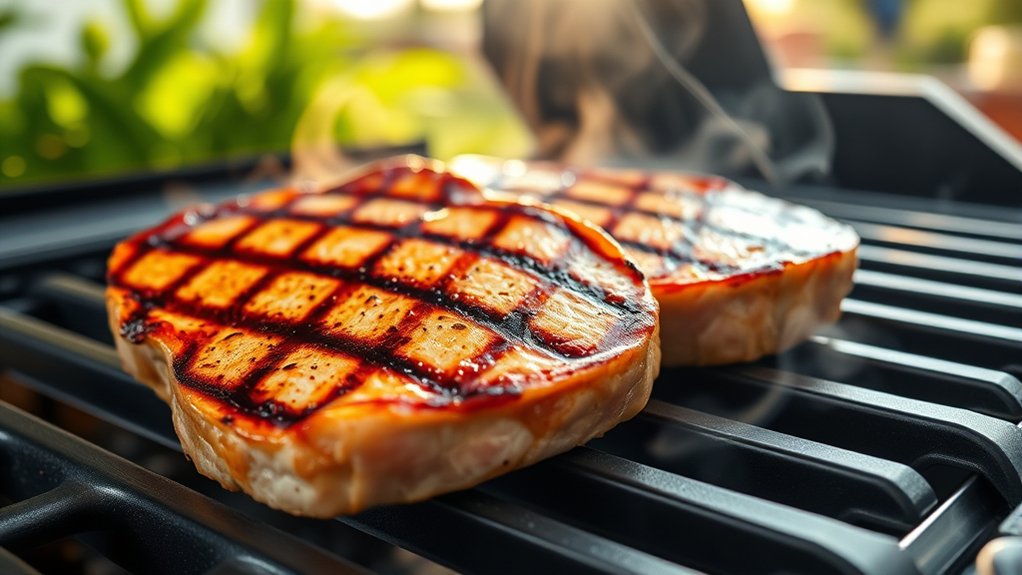
How Long to Cook Pork Chops on a Gas Grill?
Cooking perfect pork chops on a gas grill can feel tricky, especially when you’re aiming for that juicy, tender bite. You’re not alone—many people struggle to get it just right without overcooking or drying out the meat.
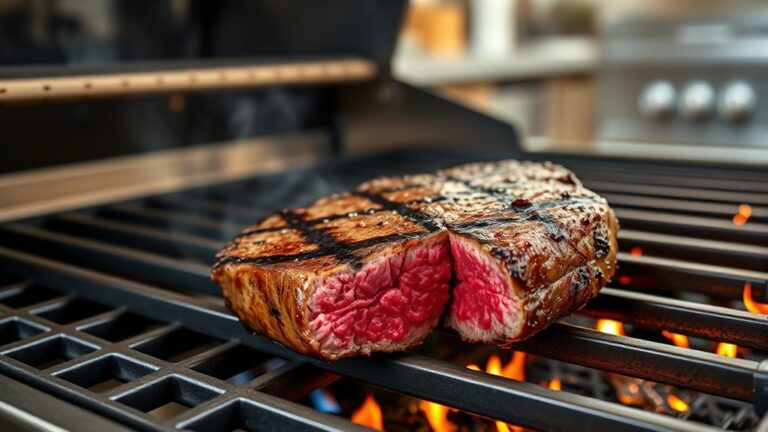
To cook pork chops on a gas grill, expect to grill 4-6 minutes per side for ½-inch thickness, and 8-10 minutes per side for 1-inch or thicker chops. Adjust times based on your desired doneness and always use a meat thermometer to check that the internal temperature hits 145°F.
Proper preheating and resting the meat after grilling help keep it juicy. If you want to master perfect pork chops, keep exploring how to get the best results.
Key Takeaways
- Thin pork chops, about ½ inch thick, usually take 4-6 minutes per side at 375-400°F for medium doneness.
- Thicker chops, around 1 to 1½ inches, generally need 8-10 minutes per side at the same temperature.
- Use a meat thermometer to check that the internal temperature hits 145°F for safe, juicy pork chops.
- Flip the chops once, after grill marks appear and the meat releases easily, so they cook evenly.
- Let the pork chops rest for 5-10 minutes after grilling to keep them juicy and flavorful.
How to Preheat Your Gas Grill for Even Cooking
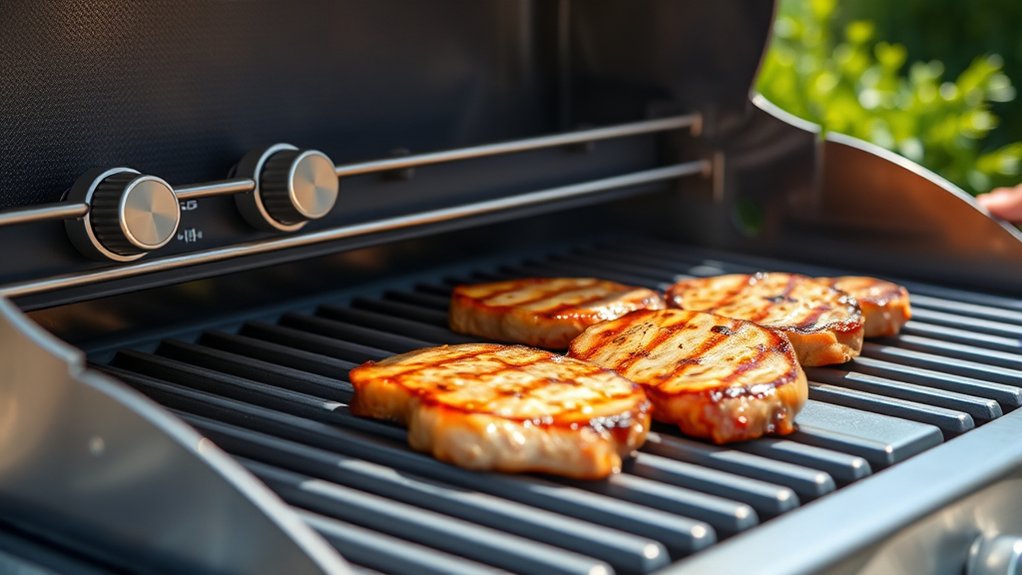
Before you start grilling your pork chops, it’s crucial to preheat your gas grill properly. This helps ensure even cooking and those perfect grill marks.
Start by turning on all burners to high and closing the lid. Let the grill heat for about 10-15 minutes until it reaches around 450-500°F.
Preheat your grill on high for 10-15 minutes until it reaches 450-500°F for perfect cooking.
Use your grill accessories, like a thermometer, to keep an eye on the temperature. While it heats up, you can prepare your marinade techniques—marinating beforehand boosts flavor and tenderness.
Once the grill hits the right heat, clean the grates with a wire brush for better contact and grill marks. If needed, turn the burners to medium-high for more precise heat control.
Proper preheating creates an even cooking surface and prevents hot spots that could burn or undercook your pork chops. This step is key to grilling success.
It helps you get juicy, flavorful results every time you grill.
Choosing the Right Pork Chop Thickness for Grilling
Choosing the right pork chop thickness is key to getting perfectly grilled results. It affects how long it takes to cook and what technique you should use.
Thinner chops, about ½ inch thick, cook quickly and are great for marinades that benefit from quick searing. Thicker chops, around 1 to 1½ inches, need more time to reach the right internal temperature.
When picking your pork chops, think about your marinade options. Thicker cuts can hold marinade flavors longer and stay juicy. Using tools like a meat thermometer and grill baskets helps ensure even cooking, no matter the thickness.
Thin chops are easier for quick grilling, but thicker cuts need careful attention to prevent overcooking. Choosing the right thickness helps you get consistent, juicy results.
It also lets you customize your grilling approach based on your marinade and tools. This smart choice improves flavor, texture, and overall grilling success.
What Temperature to Set Your Gas Grill for Juicy Pork Chops
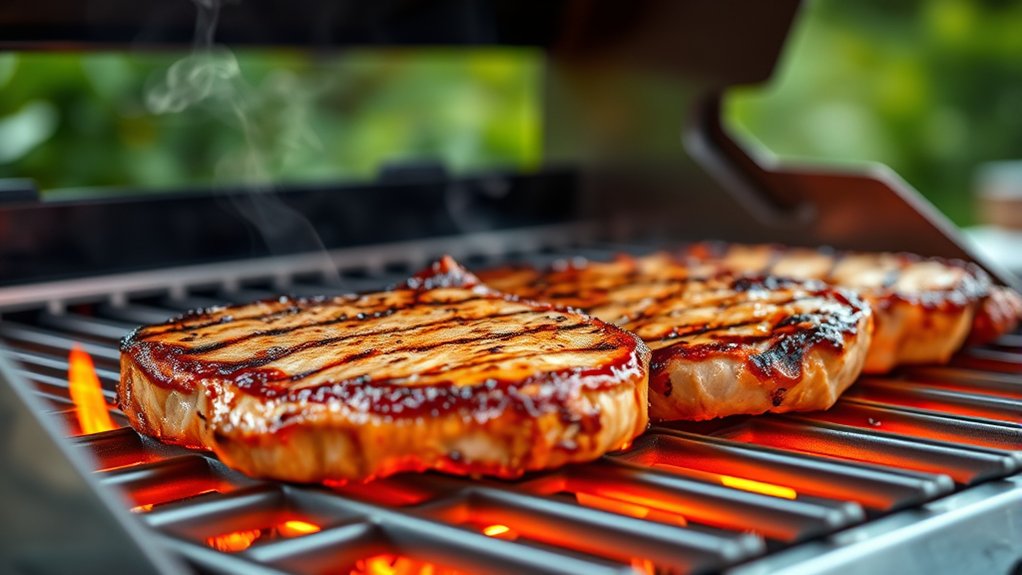
Want juicy, flavorful pork chops? Just turn your grill to a medium-high heat, around 375-400°F. Keeping the temperature steady is key—this way, your chops cook evenly and stay tender.
And don’t forget to use a meat thermometer! When the internal temperature reaches 145°F, your pork chops are perfectly cooked and juicy. Happy grilling!
Ideal Grilling Temperature
Achieving juicy pork chops on a gas grill starts with setting the right temperature. For perfectly cooked chops, aim for a grill temperature of around 375°F to 400°F. This range helps the pork cook evenly without drying out, especially if you’ve marinated it beforehand, which helps retain moisture.
Using a reliable grill thermometer is essential to monitor the heat accurately. Make sure your grill accessories, like a temperature probe or grill mats, are in place to help regulate and maintain this ideal temperature.
Prevent high heat, which can cause charring while leaving the inside undercooked. Consistent temperature control is key to juicy, flavorful pork chops. Set your grill within this range and keep an eye on the heat throughout your cooking.
Maintaining Consistent Heat
Maintaining consistent heat throughout your grilling session is key for juicy, evenly cooked pork chops. Set your gas grill to a steady medium-high temperature, around 375-400°F.
Proper grill maintenance helps keep the heat steady. Clean and oil the grates before cooking to prevent hot spots. Seasoning techniques like marinades or dry rubs also help retain moisture and promote even cooking.
Avoid opening the grill lid too often, as this can cause temperature fluctuations. Keep an eye on the burners and adjust the knobs as needed to maintain your target temperature.
Consistent heat ensures the pork chops cook evenly, locking in juices and flavor. This way, your meal turns out tender and delicious every time.
Use a Meat Thermometer
Using a meat thermometer is essential for ensuring your pork chops are cooked to perfection. It helps you avoid overcooking or undercooking, keeping the meat juicy and tender. For best results, aim for an internal temperature of 145°F (63°C).
When marinating, make sure the chops are fully cooked to prevent food safety issues. Use grilling accessories like a digital thermometer probe for accurate readings without lifting the lid.
| Temperature | Doneness |
|---|---|
| 145°F | Juicy, slightly pink |
| 150°F | Firm, cooked through |
| 160°F | Well done, dry |
| 170°F | Overcooked, tough |
How Long to Grill Pork Chops Based on Thickness and Doneness
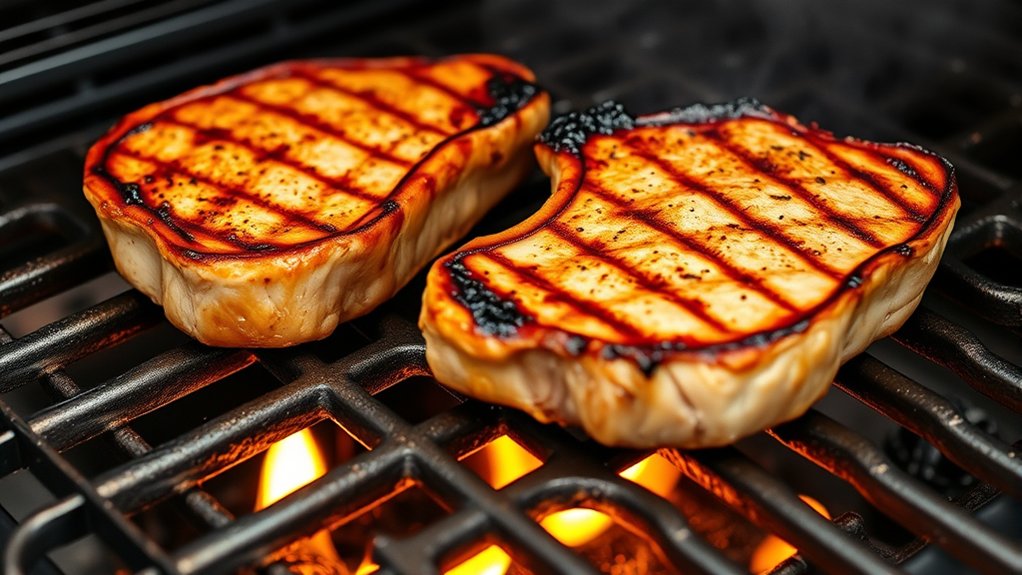
The thickness of your pork chops and your preferred level of doneness directly influence how long they need to stay on the grill.
Thinner chops, about ½ inch thick, typically cook in 4-6 minutes per side for medium doneness. Thicker cuts, around 1 inch or more, may require 8-10 minutes per side.
If you like your pork more well-done, expect longer grilling times, especially for thicker cuts. Using marinades can add flavor and moisture, but be mindful that sugary marinades might cause flare-ups.
Keep grilling accessories like a spray bottle handy to control flames. Always turn the chops once to ensure even cooking.
Remember, thicker chops need a slightly longer cooking time, but avoid overcooking to prevent dryness. Adjust your grilling time based on the thickness and doneness you prefer.
Keep a close eye on the process for the best results.
How to Use a Meat Thermometer for Perfect Results
To get perfectly cooked pork chops, a reliable meat thermometer is a must. It helps you hit the right internal temperature without guessing, making sure they stay juicy, safe, and full of flavor. Just insert the thermometer into the thickest part of the chop, avoiding bone or fat for the most accurate reading.
A reliable meat thermometer ensures juicy, safe, and flavorful pork chops every time.
For extra flavor, you might try using marinades that boost tenderness and taste. Keep in mind, marinades won’t change the internal temperature, so a thermometer is still your best friend. When grilling, consider using a digital probe thermometer for continuous monitoring.
This allows you to keep an eye on the temperature without constantly opening the lid, which helps maintain consistent heat. Aim for an internal temperature of 145°F (63°C) for safe, moist pork. Once it reaches this point, take the chops off the grill and let them rest for a few minutes before serving.
Using a meat thermometer correctly guarantees perfectly cooked pork chops every time.
Tips for Flipping and Handling Pork Chops on the Grill
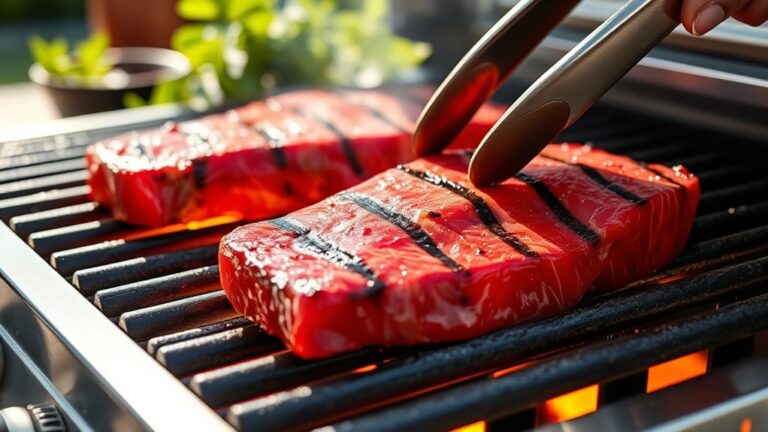
When you’re flipping pork chops on the grill, grab your tongs and turn them gently. Be careful not to pierce the meat—that way, you’ll keep all those delicious juices inside. It’s all about handling them with care so they stay tender and flavorful.
And remember, gentle handling is key—especially if the chops are still a bit tender. If they stick or tear, it can affect how evenly they cook and how juicy they stay. So take your time, and you’ll end up with perfectly grilled pork chops every time.
Proper Flipping Techniques
Proper flipping is essential to guarantee your pork chops cook evenly and develop a good sear. Always use tongs or a spatula to handle your meat gently, avoiding piercing the meat, which can cause juices to escape.
Before flipping, confirm your grill grates are clean and hot. This promotes grill safety and helps prevent sticking. When flipping, do so confidently in one smooth motion to avoid tearing or uneven cooking.
If you’ve marinated your pork chops, wait until they’re well-drained to prevent flare-ups. Using marinade techniques that incorporate oil can help with sticking issues and improve searing.
Handling Juicy Pork Chops
Handling juicy pork chops on the grill requires careful attention during flipping and movement to keep their moisture and flavor intact. Use tongs to flip gently, avoiding piercing the meat, which lets the juices escape.
Before grilling, think about marinade options like apple cider or garlic herb to boost tenderness and add flavor. When flipping, wait until grill marks form and the meat releases easily.
Pair your pork chops with side dishes like roasted vegetables or mashed potatoes to complement their richness. To make your presentation better, use a clean spatula for handling.
Here’s a quick guide:
| Step | Tip | Purpose |
|---|---|---|
| Flip at the right time | Wait for grill marks | Keep it juicy |
| Use tongs | Avoid piercing meat | Preserve moisture |
| Handle carefully | Gentle movements | Maintain tenderness |
This approach ensures flavorful, juicy pork every time.
How to Know When Your Grill Is Ready to Cook
Ever wonder how to tell if your grill is hot enough to start cooking? The best way is to use your grill accessories, like a grill thermometer, to check the temperature.
For pork chops, aim for a temperature of around 375°F to 400°F. Before placing the meat, make sure the grill grates are clean and thoroughly preheated. This helps prevent sticking and ensures even cooking.
If you’ve marinated your pork, give it a few minutes to drain excess marinade so it doesn’t cause flare-ups. To test the heat, hold your hand about five inches above the grill grate. If you can keep it there for 2-3 seconds before it gets too hot, your grill is ready.
Properly heated grills will give you a good sear, locking in juices and flavor. Checking these signs guarantees your grill is at the perfect temperature for cooking juicy, flavorful pork chops.
Why Resting Pork Chops Matters and How Long to Wait
Resting pork chops after cooking is super important because it helps the juices spread out evenly throughout the meat. This makes the chop juicier and more flavorful.
Resting pork chops ensures juices distribute evenly, resulting in a juicier, more flavorful, and tender bite.
When you let the meat rest, it also enhances the overall eating experience by boosting flavor and tenderness. This step is key no matter how you’re cooking—whether grilling, broiling, or pan-searing.
Here’s why resting is a game-changer:
- It stops the juices from spilling out when you cut into the chop, keeping it moist.
- It helps the meat’s natural juices settle evenly, making it tastier.
- It improves the texture, so each bite is tender and delicious.
- It ensures the pork hits the perfect temperature for safe and juicy eating.
Aim to rest your pork chops for about 5-10 minutes after taking them off the grill. This simple step makes a big difference in flavor and overall quality.
Common Mistakes That Lead to Overcooked or Undercooked Pork Chops
One common mistake that leads to overcooked or undercooked pork chops is relying solely on time rather than using a reliable meat thermometer. Without checking the internal temperature, you risk ending up with dry, tough chops or undercooked meat that’s unsafe to eat.
To avoid this, aim for an internal temperature of 145°F (63°C). Proper seasoning tips, like a simple salt, pepper, and garlic rub, help enhance flavor without masking doneness cues.
Pair your pork chops with side dishes such as grilled vegetables or a fresh salad for a balanced meal. Using these tips will help you cook perfect, juicy pork chops every time.
Bone-In vs. Boneless Pork Chops: What’s the Difference?
Choosing between bone-in and boneless pork chops really depends on what you prefer—flavor, juiciness, or how you plan to cook them. Bone-in chops have a different bone structure that can affect both cooking time and taste.
The bone adds extra flavor when grilling and helps keep the meat moist, making it more tender and juicy. Boneless chops are easier to handle and cook faster, but they might not have the same depth of flavor.
Bone-in chops tend to have more marbling, which boosts flavor and juiciness. The bone also conducts heat, leading to more even cooking.
Boneless chops cook quicker because there’s no bone to slow heat transfer. They’re easier to cut and serve, but may lack some of the richness you get from the bone.
In the end, it’s really about what matters most to you—ease of handling or better flavor.
Frequently Asked Questions
Can I Grill Pork Chops Directly From the Refrigerator?
Yes, you can grill pork chops directly from the refrigerator, but for safety and better cooking, it’s best to let them sit at room temperature for about 15-20 minutes first.
This helps ensure even cooking and keeps everything safe in the fridge. Remember to keep pork chilled until you’re ready to cook and avoid leaving it out for too long.
Prepping your pork chops properly helps prevent bacteria growth and results in juicier, tastier meat.
How Do I Prevent Pork Chops From Sticking to the Grill?
To prevent pork chops from sticking to the grill, start with a properly preheated grill at medium-high temperature, around 375-400°F. Make sure your grill grates are clean and oiled beforehand.
The thickness of your meat matters—thicker chops need more careful handling. Let the pork chops come to room temperature before grilling, and avoid flipping them too early.
This approach creates a natural sear, reducing sticking and ensuring juicy, flavorful results.
Should I Marinate Pork Chops Before Grilling?
Yes, marinating pork chops before grilling can really boost their flavor.
For the best results, let the chops soak in the marinade for at least 30 minutes, but no more than 4 hours. This helps prevent the texture from breaking down.
A good marinade adds moisture and depth, making your pork chops juicier and tastier. Just remember to pat them dry before grilling to get a nice sear.
What Are Signs of Overcooked Pork Chops?
When pork chops turn dry and tough, it’s like biting into cardboard. Overcooked chops show signs of shrinking, with a firm, rubbery texture and a loss of that tempting pink hue.
If your cooking temperature’s too high or you ignore the juiciness preservation, the meat dries out fast. Look for a meat thermometer reading of 145°F to avoid this.
Juicy, tender pork comes from careful heat and mindful timing.
How Do I Store Leftover Grilled Pork Chops Safely?
To store leftover grilled pork chops safely, let them cool slightly first. Then, place them in airtight containers. This helps prevent bacteria growth and keeps your food safe.
Make sure to refrigerate the leftovers within two hours of cooking. You should plan to eat them within three to four days for the best quality.
If you want to keep them longer, freeze the pork chops. Use sealed containers or freezer bags to avoid freezer burn and keep them fresh.
Conclusion
Mastering grill timing guarantees juicy pork chops every time. It’s funny how the right temperature and resting period often match the chop’s thickness—almost like they’re guiding you.
When you pay attention to those details, you’ll notice how each perfectly cooked chop feels like a small victory. It’s a reminder that grilling is as much about patience as it is about technique.
In the end, great barbecue often hinges on these tiny, almost coincidental moments. Knowing exactly when to pull off the pork chops on a gas grill makes all the difference.