How to Smoke Steaks on a Pellet Grill: Ideal Temp Tips
Many barbecue lovers dream of perfectly smoked steaks, but nailing that ideal flavor and texture can feel overwhelming. You’re not alone—smoking steaks on a pellet grill might seem tricky at first, but with the right tips, you’ll get there.
To smoke steaks on a pellet grill, keep the temperature steady between 225°F and 250°F for even cooking and smoky flavor. Use a reliable thermometer to monitor internal temp, aiming for 130°F–135°F for medium-rare or adjust according to your preferred doneness.
Select the right wood pellets like hickory or cherry to enhance the flavor. Remember to let the steaks rest before slicing.
Stick with these tips, and you’ll master perfect smoked steaks—there’s much more to uncover.
Key Takeaways
- Keep the smoker temperature steady at 225°F to 250°F for tender, flavorful smoked steaks.
- Use reliable thermometers to check the internal temperature so you get the doneness you want.
- Smoke the steaks until they hit an internal temp of 130°F to 135°F for medium-rare.
- After smoking, sear the steaks at a high heat around 450°F to develop a nice crust and boost flavor.
- Let the steaks rest for 5 to 10 minutes before slicing to keep the juices in and make them more tender.
What Are the Basics of Smoking Steaks on a Pellet Grill?
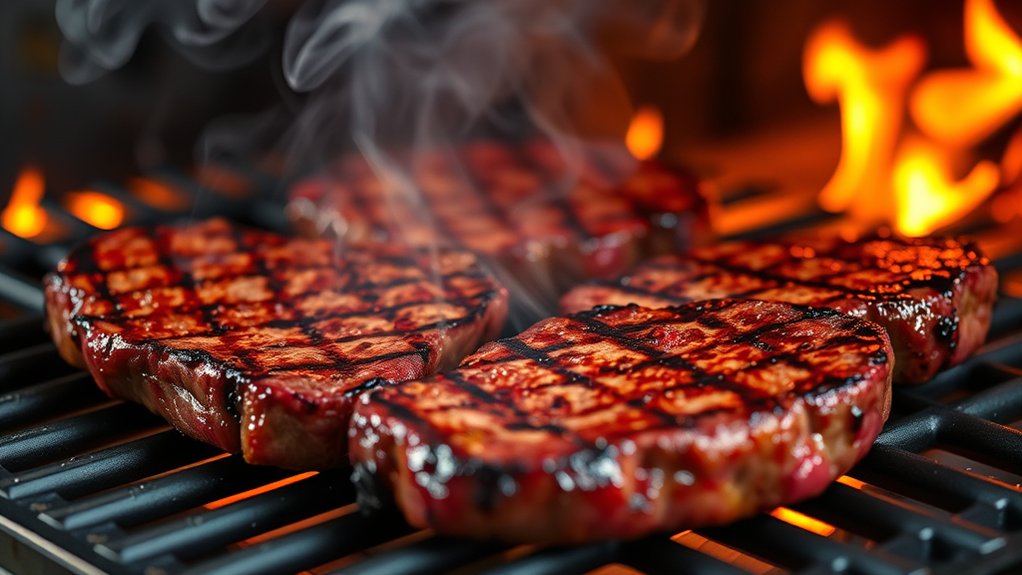
Before you start smoking steaks on a pellet grill, it’s important to understand the basics. The quality of the marbling in your steak greatly impacts flavor and tenderness, so choose cuts with good marbling for the best results. A well-marbled steak melts fat during smoking, creating rich flavor and juiciness.
Choose well-marbled steaks for tender, flavorful smoking results.
Temperature control is key. Keep a steady low heat around 225°F to ensure even smoking without overcooking. You can add flavor with marinades, but be careful not to overpower the natural beef taste.
Simple marinades with salt, pepper, garlic, or herbs work well, and some folks prefer dry rubs instead. Always pat your steak dry before applying marinade or seasoning to promote even smoke absorption.
Finally, preheat your pellet grill to your desired temperature, add your preferred wood pellets, and be patient. Smoking takes time but results in tender, flavorful steaks.
How to Choose the Right Cut of Steak for Smoking
Choosing the right cut of steak is key for great flavor and tenderness when smoking. Look for cuts with good marbling because the fat melts during smoking, adding flavor and keeping the meat moist.
Avoid very lean cuts; instead, go for options like ribeye or sirloin. These develop a rich smoky flavor and stay tender through the process.
To picture your options, think of these cuts:
- Ribeye: Juicy and well-marbled, perfect for full flavor.
- New York Strip: Has a good balance of marbling and lean meat, cooks evenly.
- Flat Iron: Tender and budget-friendly, with enough marbling for a tasty result.
What Is the Best Temperature for Smoking Steaks on a Pellet Grill?
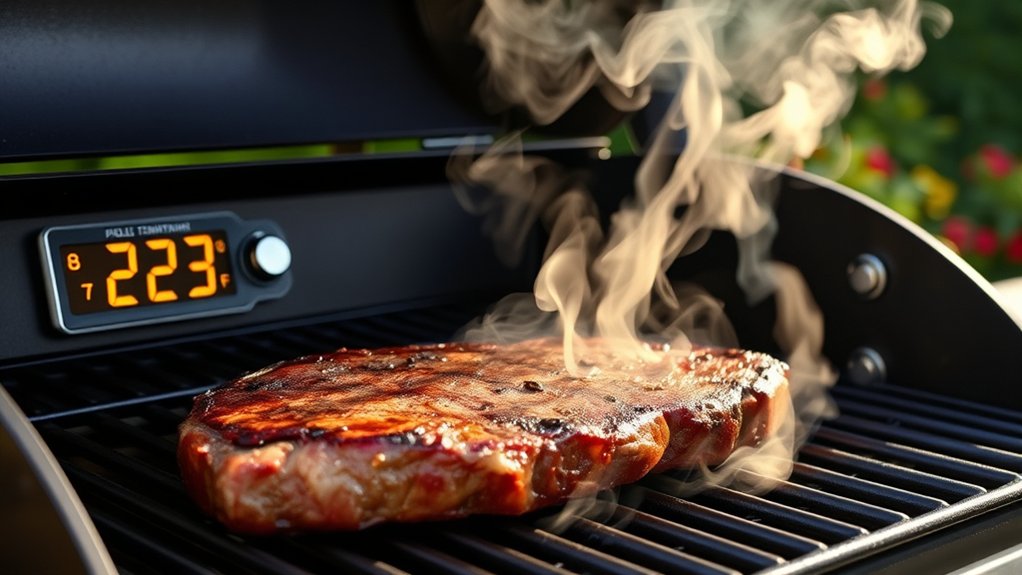
The best temperature for smoking steaks on a pellet grill is typically between 225°F and 250°F. This range is great because it lets the steak develop a really flavorful smoke crust without cooking it too fast or unevenly.
Of course, a few things can influence the perfect temp for your steak—like how thick it is, how you like it cooked, and even how your specific pellet grill performs. So, it’s good to keep those factors in mind and tweak the temperature a bit if needed. With a little practice, you’ll be able to find that sweet spot for your ideal level of doneness every time.
Ideal Smoking Temperature Range
What’s the ideal temperature range for smoking steaks on a pellet grill? Typically, you want to keep your grill between 225°F and 250°F. This range lets the smoke penetrate the meat slowly, which boosts flavor and tenderness.
Staying within this temperature helps you avoid overcooking or undercooking your steak. During the process, marinating beforehand can add extra flavor, so consider doing that to enhance the taste.
Regular grill maintenance is key to ensuring consistent heat and smoke output. This is crucial for even cooking. Look for visual cues like steady, light smoke and a consistent grill temperature to stay within the ideal range.
Factors Influencing Temperature
Several factors can influence the temperature at which you smoke steaks on a pellet grill, affecting the final flavor and texture. Your choice of marinating techniques can impact internal moisture, which in turn influences how the heat interacts with the meat.
Proper grill maintenance is essential; a clean, well-calibrated grill maintains consistent temperatures and prevents hot spots that can cause uneven cooking. External conditions like ambient temperature, wind, and humidity also play a role.
If your grill isn’t properly maintained or if you use marinades that introduce excess moisture, you might find it challenging to keep a steady temperature. To get the best results, regularly check your grill’s temperature, clean it thoroughly, and choose marinades that enhance flavor without affecting heat consistency.
Achieving Perfect Doneness
Achieving the perfect doneness when smoking steaks on a pellet grill depends on hitting the right internal temperature. For tender, flavorful results, aim for specific temperature ranges based on your desired doneness: rare (120°F-125°F), medium-rare (130°F-135°F), medium (140°F-145°F), or well-done (160°F+).
Think about the marbling of your steak because higher marbling helps it stay juicy at lower temperatures, making it more tender. Marinades also play a role—they can influence how quickly and evenly your steak cooks while adding moisture and flavor.
Visualize your steak to get the right look: a juicy, pink center for medium-rare, an even color with a slight crust for medium, or a firm texture with a deep brown exterior for well-done.
Using a reliable thermometer to monitor the internal temperature guarantees perfect doneness every time.
How to Keep Your Grill at the Perfect Temperature During Smoking
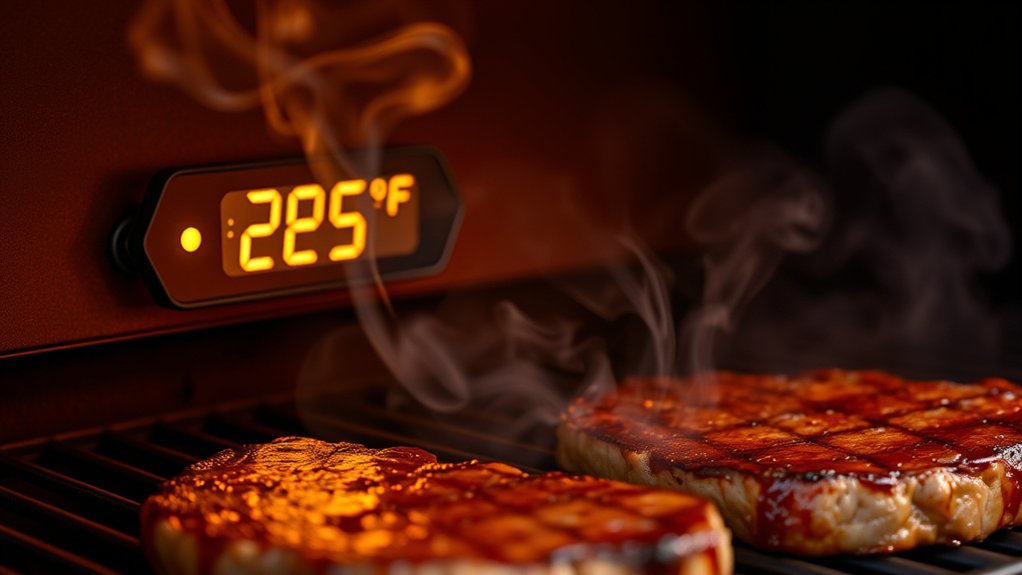
Maintaining a consistent temperature on your pellet grill is key to perfectly smoked steaks. It all starts with setting your grill to the right temp, usually around 225°F to 250°F, and making sure the pellet hopper is filled with high-quality fuel.
Keep an eye on the temperature gauge so you catch any fluctuations early. Adjust the air vents and hopper feed rate as needed to keep the heat steady.
During smoking, try marinade variations that help retain moisture. This reduces the risk of drying out, especially if your grill’s temperature varies a bit.
Presentation techniques like slicing steaks against the grain really benefit from consistent smoking conditions. This way, each bite stays tender and flavorful.
Staying attentive to your grill’s performance helps you achieve steady heat. The result? A beautifully smoked steak with an even, delicious finish.
What Internal Temperatures Indicate Steak Doneness?
Monitoring the internal temperature of your steak is the best way to guarantee it reaches your desired level of doneness. Using a reliable meat thermometer, you can accurately gauge how cooked your steak is rather than guessing. For example, a rare steak hits about 125°F, while medium rare is around 135°F, and medium reaches 145°F.
Imagine slicing into a perfectly cooked steak: the juices are just right, and the texture matches your preferred doneness. To boost flavor, try marinating beforehand, which can influence how the steak responds to heat. Steak seasoning can also add flavor as it cooks.
- Rare: 120-125°F, cool red center, tender
- Medium: 140-145°F, warm pink center, firm
- Well done: 160°F and above, fully cooked, firm texture
How to Achieve a Perfect Crust and Rich Smoke Ring
To create a stunning crust and a vibrant smoke ring, start by preparing your steak with a dry rub or seasoning that helps with good browning. The marbling is super important—fat marbling helps develop a flavorful crust and boosts the smoke ring’s intensity.
Before grilling, consider applying a steak marinade to improve moisture and flavor. This also helps you achieve a better sear. To get that perfect crust, make sure your pellet grill is hot enough—around 450°F—so the surface caramelizes quickly.
Keep the lid closed during the initial searing. This traps moisture and smoke, which helps form the smoke ring. As the heat interacts with the meat’s surface, the myoglobin reacts with smoke compounds, creating that rich pink ring.
Proper seasoning, high heat, and patience are key. They help balance a hearty crust with the beautiful, flavorful smoke ring that signals a perfectly smoked steak.
Using Wood Pellets to Maximize Flavor in Pellet Grill Smoking
Looking to get the most flavor out of your steak on a pellet grill? Picking the right wood pellets is a game-changer. For a bold, smoky kick, go for hickory or mesquite—they really pack a punch. If you prefer a sweeter, fruitier taste, apple wood is a fantastic choice.
And here’s the thing—using quality pellets makes all the difference. They burn more consistently, giving you steady smoke and that rich flavor you’re after in every bite. So, take your time, choose wisely, and enjoy that perfectly smoked steak!
Optimal Wood Pellet Choices
Selecting the right wood pellets can significantly enhance the flavor of your smoked steaks, so knowing your options is key. Different pellets add unique tastes that work well with your meat’s natural flavor.
For a rich, beefy flavor, try hickory or oak. If you want a milder, slightly sweet aroma, fruit woods like apple or cherry are great choices. These options influence not just flavor but also how well your steaks absorb smoke, which can help with marinating and tenderizing.
Picture your perfect smoked steak:
- Hickory or oak for bold, smoky depth
- Apple or cherry for subtle sweetness and fruitiness
- Maple for a smooth, balanced flavor
Picking the right pellets allows you to control the flavor profile, making your smoking process more precise and delicious.
Enhancing Smoke Flavor
Enhancing the smoke flavor on your pellet grill starts with understanding how different wood pellets influence the intensity and nuance of the smoke. Light fruit woods like apple or cherry add subtle sweetness, while hickory or mesquite give bold, smoky notes.
These choices can complement the marbling of your steak, boosting flavor without overpowering the meat’s natural richness. To get the most flavor, consider using marinades that enhance smoky notes or tenderize the meat, but keep the smoke profile balanced.
Using a mix of pellets can create complex layers of flavor, enriching the steak’s aroma and taste. By selecting the right wood and pairing it with thoughtful marinades, you’ll elevate your smoking game and achieve a richer, more satisfying flavor.
What Tools Can Help You Monitor Steak Temperature?
To guarantee your steak reaches the perfect level of doneness, monitoring its temperature accurately is essential. Using the right tools helps you maintain ideal grill conditions and makes sure your seasoning techniques shine through with perfectly cooked results.
Accurate temperature monitoring ensures perfectly cooked, flavorful steaks every time.
A digital meat thermometer is your best friend, giving you instant readings and precise control. Wireless probes let you monitor the steak’s temperature remotely, so you don’t have to open the lid and lose heat.
A grill surface thermometer helps you keep track of the pellet grill’s ambient temperature, ensuring consistent smoke and heat levels.
- Digital instant-read thermometer for quick, accurate readings
- Wireless probe thermometer to monitor steak without lifting the lid
- Grill surface thermometer for maintaining perfect grill temps
These tools let you focus on seasoning and grill maintenance, guaranteeing flavorful, perfectly smoked steaks every time.
Common Mistakes to Avoid When Smoking Steaks on a Pellet Grill
Even experienced grillers can make mistakes when smoking steaks on a pellet grill, but recognizing common pitfalls can help you avoid them. One mistake is relying solely on generic seasoning blends; instead, customize your spices to enhance the steak’s natural flavor.
Overusing salt or strong spices can overpower the meat, so apply seasoning blends moderately. Another common error is improper marinade techniques—marinating too long can change the texture, while too little time might not infuse enough flavor.
Be sure to balance your marinade ingredients and give enough time for the flavors to soak in. But avoid over-marinating, which can lead to a mushy texture. Also, neglecting to preheat the grill properly can cause uneven cooking.
Stay attentive to your temperature settings and try not to open the lid too often. Opening it too much can cause temperature swings that ruin your cook. By avoiding these mistakes—over-seasoning, poor marinade timing, and inconsistent temperature control—you’ll end up with a perfectly smoked steak full of rich flavor and ideal doneness.
Resting and Serving Your Smoked Steak for Maximum Juiciness
Once you’ve taken your smoked steak off the grill, give it a few minutes to rest. This little pause allows the juices to settle back into the meat, making each bite more flavorful and juicy. Trust me, rushing to cut into it right away can cause those tasty juices to escape, leaving you with a drier steak.
While resting, aim for a temperature that keeps the steak moist and full of flavor—usually around 5 to 10 minutes, depending on the thickness. Covering it loosely with foil can help retain heat without trapping too much moisture. Just a gentle rest, and you’ll be rewarded with a juicy, perfectly tender steak when you’re ready to serve!
Proper Resting Techniques
Once your smoked steak reaches the desired internal temperature, resting it properly is key to locking in the juices and enhancing the flavor. During this time, the meat redistributes its juices, making every bite tender and flavorful.
To get the most juiciness, loosely tent the steak with foil for 5–10 minutes. This allows heat to escape slowly, helping prevent moisture loss.
Think about your marinade options and spice rubs when resting—these flavors deepen as the meat relaxes. You can also pair it with fresh herbs or a light drizzle of finishing oil for extra richness.
Proper resting turns a good smoked steak into a memorable one, highlighting its tenderness and flavor. It’s the final step to serving a juicy, perfectly smoked steak.
Ideal Serving Temperature
To serve your smoked steak at its juiciest, it’s important to aim for an ideal internal temperature during resting. Resting brings the steak to its perfect doneness, boosting flavor and tenderness.
For maximum juiciness, target an internal temperature about 5°F below your desired doneness, then let it rest. Consider marinades like soy, garlic, or herbs beforehand to add extra flavor.
When plating, focus on an attractive presentation—slice the steak against the grain and arrange it neatly. Resting helps juices redistribute, making each bite moist.
Serving at the right temperature keeps the steak tender and flavorful. A well-rested, properly served steak will elevate your meal and leave a great impression.
Juiciness Preservation Tips
Maintaining maximum juiciness in your smoked steak hinges on proper resting and serving techniques. After smoking, let your steak rest for at least 5 minutes, wrapped loosely in foil, to allow juices to redistribute. This step prevents them from spilling out when sliced.
To improve juiciness, consider choosing cuts with good marbling, as higher marbling naturally locks in moisture. Adding a marinade before smoking can also boost both flavor and moisture retention.
When serving, slice against the grain to maximize tenderness and juiciness. Wrap the steak loosely in foil during resting to trap heat and moisture, keeping it juicy until you’re ready to serve.
Frequently Asked Questions
Can You Smoke Other Types of Meat on a Pellet Grill Alongside Steaks?
Yes, you can smoke other meats like chicken, pork, or fish alongside steaks on your pellet grill. Just keep in mind the ideal temperature for each type of meat to get the best results.
Use the same smoke wood for everything to maintain a consistent flavor profile throughout your meal. For vegetables, try smoking asparagus or peppers—they add a nice touch.
For side dishes, baked potatoes or coleslaw work really well and complement the smoked meats beautifully. This way, you end up with a delicious, well-rounded meal with flavors that go together perfectly.
How Long Does It Typically Take to Smoke a Steak to Desired Doneness?
Time is a silent teacher, revealing the art behind perfect steaks. Typically, smoking a steak to your desired doneness takes about 1 to 2 hours, depending on thickness and temperature.
Using proper cooking techniques and low-and-slow heat allows flavor infusion and tenderness to develop beautifully. Keep an eye on internal temperature with a meat thermometer, aiming for about 125°F for rare or 135°F for medium.
Patience is your best seasoning.
What Are the Best Wood Pellet Flavors for Smoking Steaks?
For smoking steaks, cherry and hickory pellets are your best options. Cherry wood offers a mild, fruity flavor that enhances the steak’s natural taste. Hickory adds a smoky, savory richness that’s hard to beat.
Both pair really well with beef, giving you excellent wood pairing and flavor enhancement. Choose based on what flavor you prefer—light and fruity or bold and smoky—to elevate your steak on the pellet grill.
Is It Necessary to Marinate Steaks Before Smoking?
Marinating steaks before smoking isn’t necessary, but it can offer some great benefits like tenderizing the meat and adding flavor. If you want a richer taste, a marinade can really boost your steak’s profile and help keep it moist, especially for thicker cuts.
That said, if you prefer the natural beef flavor, you can definitely skip marinating. Just make sure your steak is well-seasoned and cooked to your desired doneness for the best smoking experience.
How Do You Reheat Smoked Steaks Without Losing Quality?
To reheat smoked steaks without losing quality, use sous vide finishing. Set your water bath to a low temperature, around 130°F, and submerge the steaks for about 30 minutes.
This gentle method helps preserve moisture and flavor, keeping the smoke ring intact. Once reheated, quickly sear the steaks on high heat for a crispy exterior.
This way, your smoked steaks stay tender, juicy, and flavorful, just like they were fresh off the grill.
Conclusion
With each smoky sizzle and tender slice, you’re creating more than just a steak—you’re crafting a moment to savor life’s simple pleasures.
As the aroma drifts through the air and the juices glisten in the warm glow of your grill, it’s a reminder that patience and care turn a good cut into a memorable feast.
So, cherish the process, enjoy the journey, and let every bite reflect the passion you poured into it.
When smoking steaks on a pellet grill, keeping an ideal temperature is key.
Aim for around 225°F to 250°F for a slow, flavorful smoke that results in tender, juicy steaks.
Cooking at this temperature allows the smoke to penetrate deeply and evenly, enhancing flavor and tenderness.
Remember, the right temperature makes all the difference—so keep an eye on your pellet grill’s heat for the best results.