Basics of Cooking on a Pellet Grill
Many people struggle with getting consistently delicious results on their pellet grill, especially if you’re new to the world of outdoor cooking. You’re not alone—pellet grilling can seem intimidating at first, but with a few simple tips, you’ll be turning out flavorful dishes in no time.
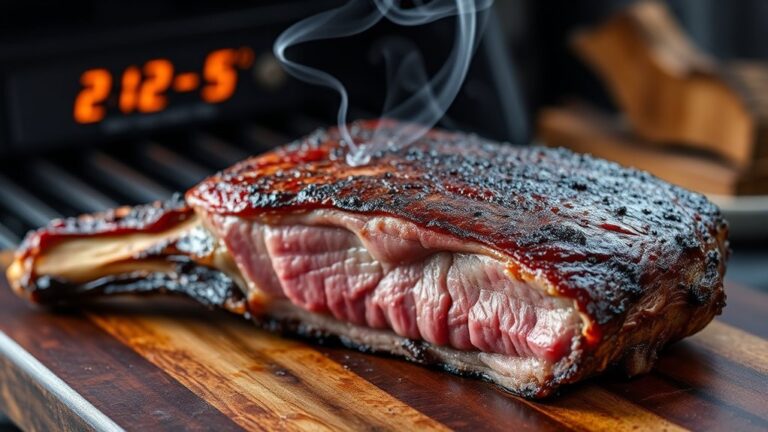
Cooking on a pellet grill is simple and flavorful. You start by filling the hopper with high-quality hardwood pellets and preheating the grill to your desired temperature, usually around 225°F for slow cooking or smoking.
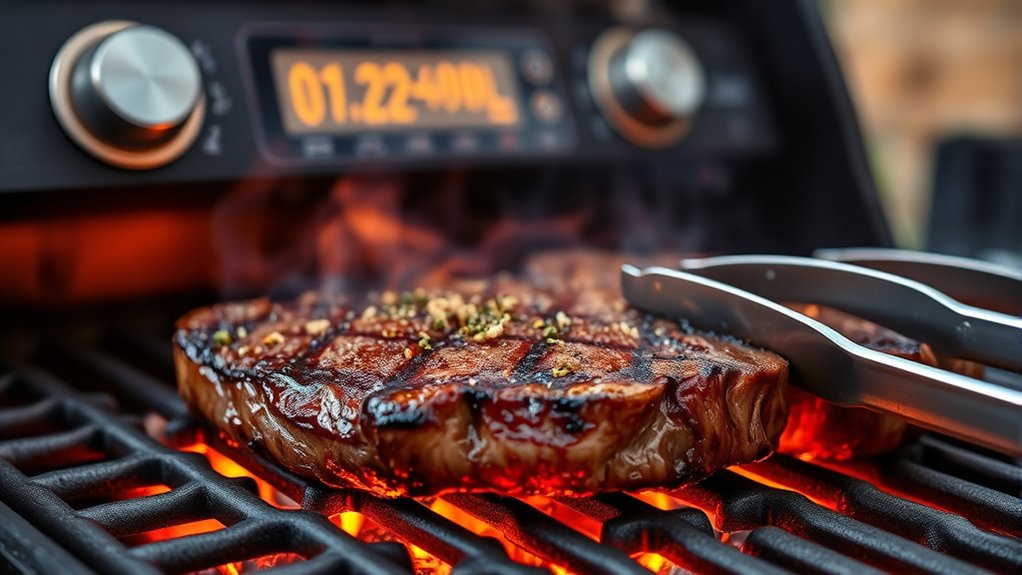
Use the digital controller to maintain steady heat, keep the lid closed to trap smoke, and choose the right wood for flavor.
Regularly clean and troubleshoot your grill for best results. Keep exploring to uncover more tips for perfect dishes.
Key Takeaways
- Choose high-quality, 100% hardwood pellets that match the flavor you’re aiming for.
- Preheat the grill to your desired temperature and let it stabilize before you start cooking.
- Keep the temperature steady using the digital controller, and try not to open the lid too often.
- Use the right wood pellets and smoking techniques to boost flavor and get tender, delicious results.
- Regularly clean and maintain your grill parts to keep it working well and lasting longer.
What Is a Pellet Grill and How Does It Work?
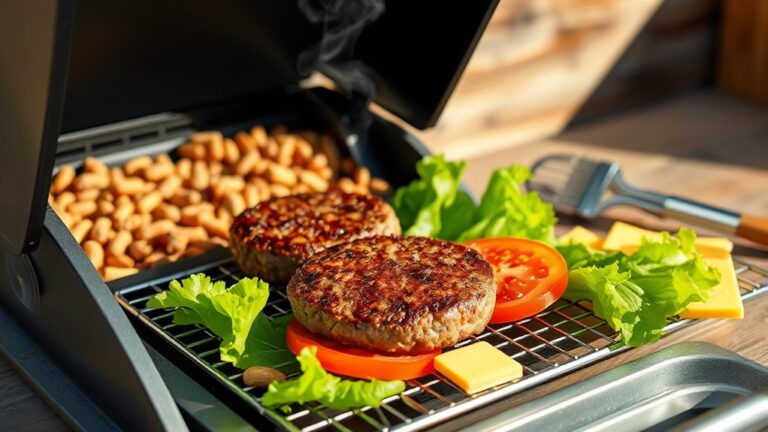
Have you ever wondered how a pellet grill works? It uses compressed wood pellets as fuel, which are made of natural hardwood with minimal additives—this is what we call the pellet composition.
When you turn on the grill, an auger feeds pellets into a firepot, where an electric igniter sparks to start combustion. This creates steady heat and smoke, making temperature control easy and precise.
As the pellets burn, they release aromatic smoke that infuses your food with rich flavors, thanks to the flavor infusion process. The grill’s digital controller keeps the temperature consistent by automatically adjusting the pellet feed rates.
This combination of pellet composition, controlled heat, and smoke ensures even cooking and better taste. Because of its efficiency and ability to add authentic smoky flavors, a pellet grill has become popular among barbecue lovers.
It’s an easy way to get delicious results with minimal effort.
Choosing the Best Pellets for Flavor and Performance
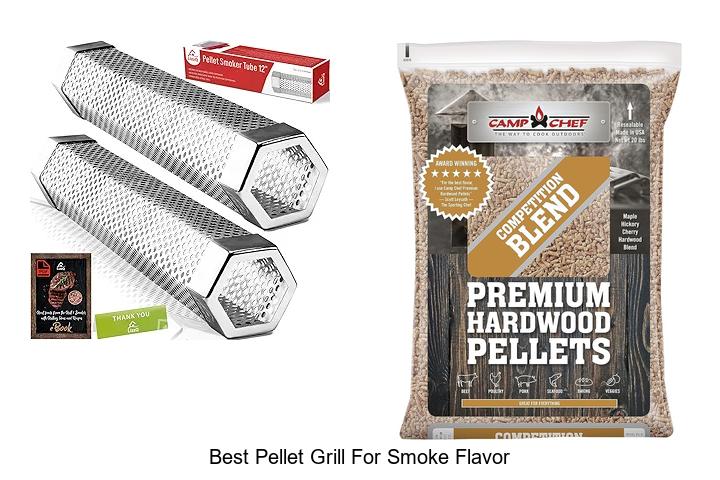
Selecting the right pellets is crucial because they directly impact your grill’s flavor and performance. When choosing pellets, go for high-quality options made from 100% hardwood. They burn cleaner and give a richer flavor.
Proper pellet storage is key. Keep your pellets in a dry, airtight container to prevent moisture absorption, which can lead to poor combustion and uneven heating. Also, watch the shelf life—over time, pellets can lose moisture, reducing burn efficiency and flavor.
Fresh pellets usually produce a better smoky aroma and help maintain a consistent temperature. Avoid pellets with added binders or fillers, as these can affect taste and cause clogging.
When shopping, choose reputable brands known for quality and consistency. By paying attention to storage and shelf life, you’ll ensure top performance and delicious results every time you grill.
How to Set Up Your Pellet Grill for Success
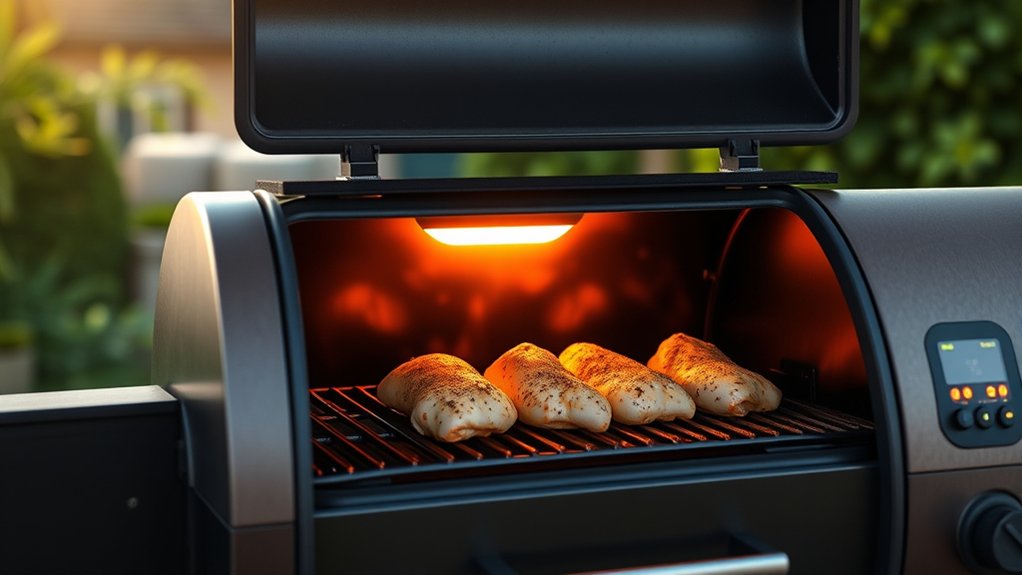
Getting your pellet grill set up correctly is key for consistent cooking and great-tasting results. Proper setup helps with maintenance and enhances flavor infusion.
Start by placing your grill on a stable, level surface. This ensures even heat distribution for better cooking results.
Next, fill the hopper with high-quality pellets that match your desired flavor. Preheat the grill to your target temperature and let it stabilize before you start cooking.
Here are three simple steps to maximize your setup:
- Clean the grill grates and interior to prevent flare-ups and improve flavor transfer.
- Calibrate the temperature controller if needed so your cook times and heat levels stay accurate.
- Arrange wood pellets strategically, mixing different types if you want a custom flavor profile.
A well-maintained setup minimizes issues and keeps your pellet grill performing at its best every time.
How to Light and Start Your Pellet Grill Properly
First things first, find a spot for your pellet grill that’s nice and level, and make sure it’s in a well-ventilated area. Keep it away from your house, deck overhangs, or any structures—safety first!
Next, use the recommended way to ignite your grill—whether that’s the pellet feed switch or an electronic igniter. Just follow the manufacturer’s instructions to the letter. That way, you’ll get a reliable, safe start every time without any fuss.
Choosing the Right Spot
Have you ever wondered how to guarantee your pellet grill lights smoothly and starts safely? Picking the right spot is key. First, choose a flat, stable surface away from outdoor decor that could catch fire or get damaged.
Second, make sure there’s enough clearance around the grill for proper ventilation and to prevent accidents. Third, position your grill in a shaded area if possible, to keep it cool and protect your equipment.
This setup improves cooking safety and keeps your outdoor space looking good. Always avoid spots with strong wind or close to overhanging branches. Proper placement not only helps with ignition but also ensures a safe, enjoyable grilling experience.
A well-chosen spot makes all the difference in your pellet grilling journey.
Proper Ignition Techniques
Wondering how to ignite your pellet grill safely and efficiently? Start by making sure your pellet storage is filled with good-quality pellets suited for your grill.
Next, turn on the power and set the grill to the “ignite” or “start” setting. Use the right accessories, like a reliable ignition button or an electric starter, to make the process easier.
Here’s a quick guide:
| Step | Action |
|---|---|
| 1 | Load pellets into the hopper |
| 2 | Turn the grill on and set it to ignite mode |
| 3 | Wait until the fire is established |
Always check your grill’s manual for specific ignition instructions. Proper techniques help keep your pellet grill running smoothly and safely.
Mastering Temperature Control on a Pellet Grill
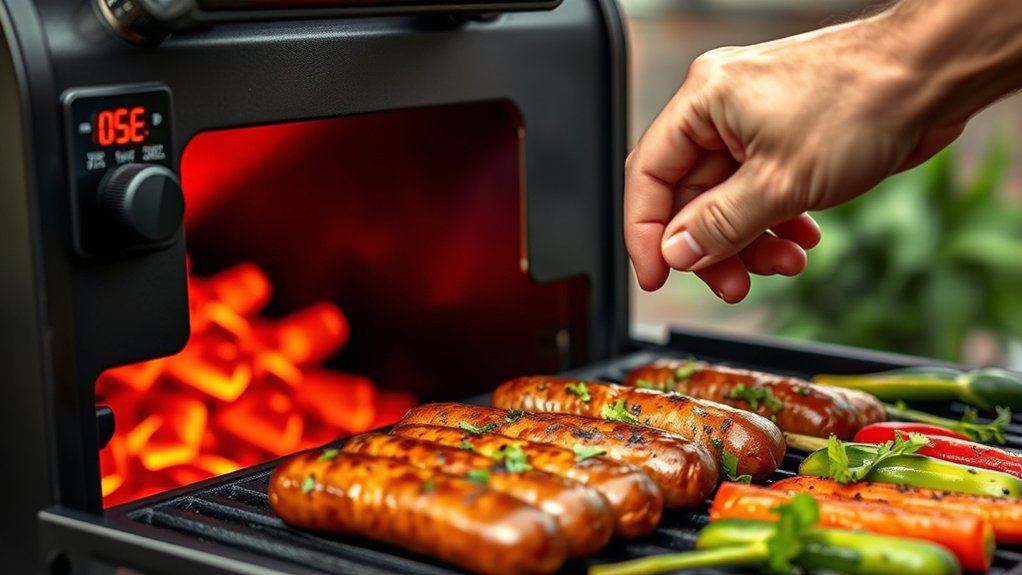
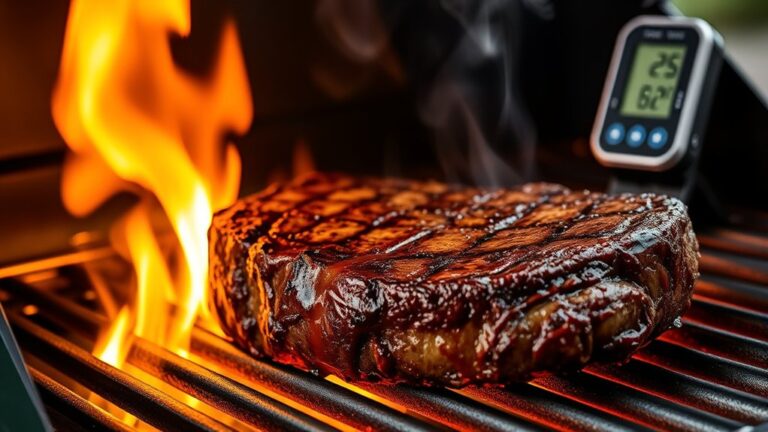
To get the best results, you want to set the right temperature levels and keep a close eye on your grill’s heat. It’s pretty handy to use a digital controller because it makes fine-tuning your settings a lot easier and helps keep the cooking conditions consistent.
Just remember to regularly check the temperature and make adjustments if needed. That way, you can be sure your food cooks perfectly every time.
Setting Correct Temperature Levels
Mastering temperature control on a pellet grill is key to cooking perfect dishes. Setting the right temperature helps keep things consistent and gives you that great smoky flavor.
Use the grill’s dial or digital control to choose the exact temperature you want. It makes a big difference in getting accurate results.
Try to keep the temperature steady by avoiding lots of adjustments. Constant changes can throw off your cook.
Check your grill regularly to make sure it stays at the set temperature without any fluctuations. This way, your food cooks evenly and just how you like it.
Using the Digital Controller
Using the digital controller on your pellet grill makes it easy to keep track of your temperature settings. It lets you set a specific heat level, so your food cooks evenly and gets that nice flavor infusion.
When you’re grilling, this control helps prevent temperature swings that could mess with the taste. Many controllers even have automatic pellet feeding, which keeps the pellets flowing steadily.
That means your grill runs smoothly without constant adjustments, and you don’t have to worry about running out of pellets mid-cook. The digital interface makes it simple to monitor and adjust your settings.
Monitoring and Adjusting Heat
Monitoring and adjusting the heat on your pellet grill is key to getting that perfect cook. Keeping the temperature steady helps with flavor infusion and smoke control, so your food comes out just right.
Check your digital controller often to make sure the temperature stays consistent. If you notice it fluctuating, tweak the pellet feed rate or the temperature setting.
Use the smoke setting wisely to balance that smoky flavor and heat. This helps prevent over-smoking or undercooking, making sure your food turns out delicious every time.
How Often Should You Clean and Maintain Your Pellet Grill?
Regular cleaning and maintenance are key to keeping your pellet grill working at its best. Setting up a consistent cleaning schedule helps prevent buildup that can impact both flavor and performance.
Regular cleaning and maintenance ensure optimal performance and longer lifespan for your pellet grill.
You should clean your grill after every few uses, especially if you’re cooking greasy or fatty foods. Wipe down the exterior and regularly clean out the grease trap to keep everything running smoothly.
For maintenance, remove and clean the burn pot and hopper once a year to avoid blockages and ensure proper pellet flow. Check and clean the grill grates after each use to prevent residue buildup.
Don’t forget to inspect the auger and fan for any debris or obstructions. Conduct a deep clean at least once each season, including brushing out ash and inspecting all components.
Staying on top of these tasks will keep your pellet grill in great shape, deliver consistent results, and extend its lifespan.
Techniques for Smoking and Slow Cooking on a Pellet Grill
After cleaning and maintaining your pellet grill, you’re ready to unlock its full potential for smoking and slow cooking. To get the best results, focus on these key techniques:
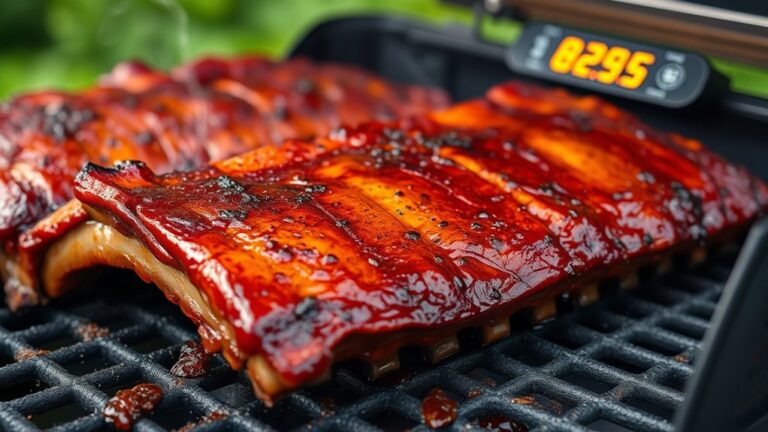
- Set the right temperature: Keep it low and steady, around 225°F, for slow cooking and that perfect smoke flavor.
- Choose the right wood pellets: Opt for wood types like hickory, apple, or mesquite to add flavor that complements your meat.
- Maintain proper airflow: Keep the lid closed as much as possible to trap smoke and heat, which helps with tenderness and flavor.
Grilling Vegetables, Seafood, and More: Tips and Tricks
Grilling vegetables and seafood on your pellet grill is really about getting the timing and heat just right to make everything taste amazing. A little marinade or some spices can go a long way in boosting those flavors, and don’t forget—you can even add wood pellets that complement what you’re cooking to give it that extra smoky kick.
With a few simple techniques, you’ll be able to bring out the natural goodness of your ingredients and whip up some truly mouthwatering dishes. It’s all about experimenting and finding what works best for you, so have fun with it!
Perfect Vegetable Grilling Techniques
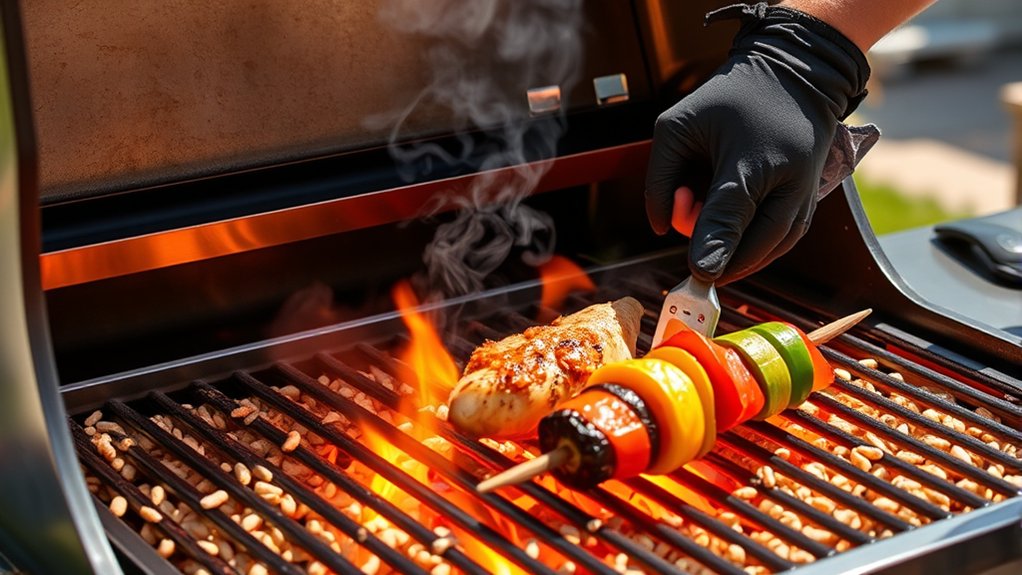
Mastering vegetable grilling on a pellet grill involves choosing the right produce, prepping it well, and using the right techniques to boost flavor and texture. To take your grilling skills up a notch:
- Marinate your vegetables to add flavor and tenderize them before grilling.
- Get grilling accessories like skewers, grill baskets, and tongs to ensure even cooking and easy handling.
- Keep the heat at medium-high—this works well for most vegetables to get a nice char without burning.
Always preheat your pellet grill and brush your vegetables with a bit of oil to prevent sticking. Watch the grilling times closely; thinner slices cook fast, while thicker cuts need more time.
With these tips, your vegetables will turn out perfectly grilled every time.
Enhancing Seafood Flavors
Wondering how to make your seafood truly stand out on a pellet grill? The key is using the right seafood seasoning to amplify natural flavors and guarantee a rich flavor infusion.
Start by choosing a seasoning blend that complements the seafood, like lemon pepper or garlic herb. Apply the seasoning generously before grilling, allowing it to penetrate the flesh.
To boost flavor infusion, consider marinating the seafood for 30 minutes before grilling. Maintain a moderate grill temperature to prevent overcooking and preserve moisture.
Using wood pellets with subtle smoke adds depth without overpowering the delicate taste. With the right seafood seasoning and technique, your grilled seafood will boast vibrant flavors and an irresistible aroma, impressing every guest at your next cookout.
Troubleshooting Common Pellet Grill Problems
When your pellet grill isn’t working as expected, troubleshooting is key to getting back to cooking. Most issues come from not maintaining the grill properly or setting it up incorrectly. To fix problems quickly, try these steps:
Troubleshooting your pellet grill starts with proper maintenance and correct setup.
- Check the Pellet Hopper and Feed System: Make sure pellets are flowing freely. Blockages or moisture can cause feeding issues and lead to inconsistent temperatures.
- Clean the Burn Pot and Vent: Built-up ash or grease blocks airflow, which affects heat and flavor. Regular cleaning keeps your grill performing at its best.
- Inspect the Temperature Sensor: A faulty sensor gives inaccurate readings and messes with your cook. Calibrate or replace it if needed.
Fixing these problems helps your grill run smoothly and keeps your flavors on point. Proper maintenance ensures consistent heat and delicious results every time. Troubleshooting quickly saves time and makes your grilling experience better.
Selecting Wood Pellets to Enhance Your Flavor
Choosing the right wood pellets can really boost the flavor of your grilled dishes. The type of wood you pick influences the taste, so go for a variety that complements your food.
For smoky, bold flavors, hickory or mesquite pellets are great choices. If you like milder, sweeter notes, try fruitwoods like apple or cherry.
Think about the meat you’re cooking—poultry pairs nicely with fruitwoods, while beef benefits from stronger woods.
Make sure to choose high-quality, 100% hardwood pellets. They burn cleaner and give better flavor.
Don’t be afraid to experiment with different types to find what you like best. Mixing woods can create unique, exciting flavors too.
The key is matching your pellet choice with your dish to bring out its natural taste. That way, every meal will be flavorful and satisfying.
Frequently Asked Questions
Can I Use My Pellet Grill for Baking or Roasting?
Yes, you can use your pellet grill for baking or roasting, showing off its versatility. Just make sure to control the temperature properly and use the right cookware.
Keep safety in mind if you’re baking indoors. Work in a well-ventilated space and avoid using the grill for extended periods indoors.
Pellet grills are great because they can bake bread, roast vegetables, or cook other dishes with a smoky flavor. When used carefully and correctly, they make a handy all-in-one cooking tool.
How Long Do Pellet Grills Typically Last?
Pellet grills usually last around 3 to 5 years, but with proper care, you can extend that lifespan. Regular maintenance is key to keeping your grill in good shape.
Cleaning your pellet grill often helps prevent buildup and keeps parts working smoothly. Be sure to check for wear and tear on components like the auger and igniters.
Are Pellet Grills Safe to Use Indoors?
You shouldn’t use pellet grills indoors because poor indoor ventilation can lead to smoke inhalation, which is dangerous. Pellet grills produce smoke and carbon monoxide, so using them inside risks health issues.
Always operate your pellet grill outside in a well-ventilated area. If you want indoor grilling, consider electric indoor grills designed for indoor use, ensuring safety and proper air circulation.
What Are the Best Accessories for a Pellet Grill?
The best accessories for your pellet grill turn it into a culinary fortress. You’ll want a good set of essential cleaning tools like brushes and scrapers to keep it spotless, ensuring perfect flavor every time.
Consider a grill cover to protect it from the elements and a wireless thermometer for precise cooking. These accessories boost pellet grill maintenance, making your grilling experience easier, more efficient, and downright legendary.
How Do I Store Leftover Pellets Properly?
To store leftover pellets properly, keep them in a dry, airtight container to prevent moisture absorption. Moisture can cause clogging during your next cook, so it’s really important to keep them dry.
Store the container in a cool, well-ventilated area away from direct sunlight and heat sources. This helps keep your pellets fresh and reduces the risk of accidental ignition.
Good pellet storage not only preserves their quality but also promotes fire safety. Always check for any signs of moisture or damage before using them again.
Conclusion
Now that you’ve got the basics down, your pellet grill becomes an extension of your culinary creativity. Imagine the gentle release of smoky aroma curling around your favorite dishes, filling the air with irresistible flavor.
Feel the sizzle of vegetables and the tender pull of perfectly smoked meats. Each cook helps you refine your skills and turns simple ingredients into mouthwatering masterpieces.
Cherish the process, experiment freely, and enjoy the rich, inviting flavors that only your pellet grill can deliver. Happy grilling!