Smoke a 20 Lb Turkey on a Pellet Grill in 8 Simple Steps
Many people love the idea of a perfectly smoked turkey for special occasions, but getting it just right can be tricky. If you’ve struggled to achieve that juicy, flavorful result, you’re not alone. Smoking a 20 lb turkey on a pellet grill might seem daunting, but with a few simple steps, you’ll be serving up a delicious, smoky masterpiece.
To smoke a 20 lb turkey on a pellet grill, start by preparing your turkey with a brine or dry rub for flavor and moisture. Set up your grill by cleaning it, preheating to 225-250°F, and choosing the right wood pellets.
Place the turkey breast side up, monitor the internal temperature, and wrap it in foil once it hits 155°F to keep it moist. Let it rest before carving for the best results—learn more tips to perfect your smoky turkey.
Key Takeaways
- Prepare and season the turkey with brine and dry rub for flavor and moisture retention.
- Clean and preheat the pellet grill to 225-250°F, choosing the right wood pellets for your taste.
- Place the turkey breast side up on the grill and keep the temperature steady throughout the smoking process.
- Keep an eye on the internal temperature, wrapping the turkey in foil at 155°F, and cook until the breast hits 165°F.
- Let the turkey rest for about 20 minutes, then carve and serve for the best juicy and flavorful results.
Gather Your Supplies and Prepare Your Turkey for Smoking
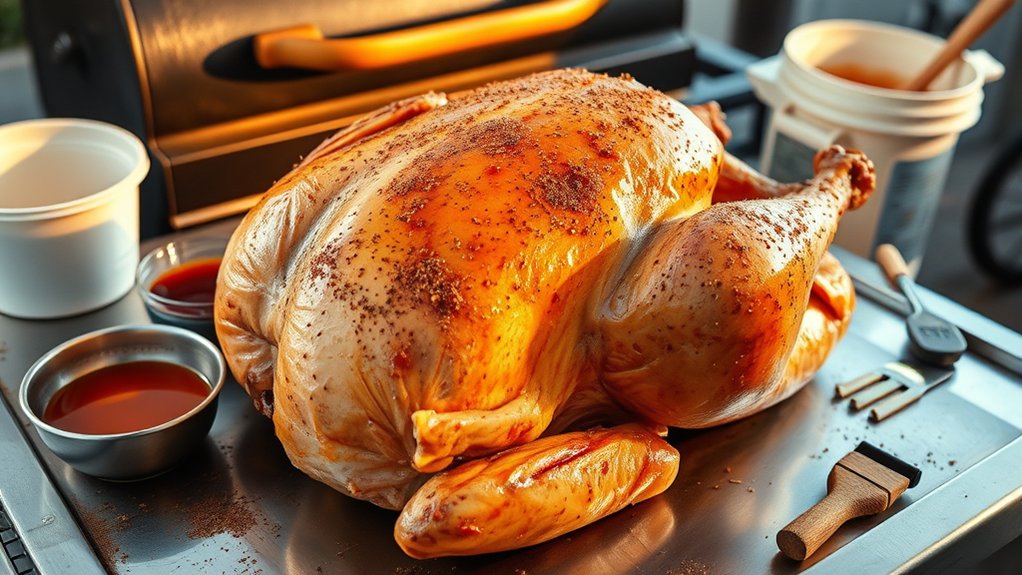
Have you gathered all the supplies you need before starting? Make sure you have the right turkey accessories, like a good meat thermometer, baster, and heat-resistant gloves. These tools help you monitor the smoking process and handle the bird safely.
Ensure you have essential tools like a thermometer, baster, and gloves for safe, successful smoking.
Prepare your 20 lb turkey by removing the giblets and excess fat, then pat it dry with paper towels. This helps the smoke adhere better and results in crispy skin.
When it comes to smoking techniques, consider using a reliable pellet grill and choosing the right wood pellets for flavor. You might pick hickory for a smoky profile or apple for sweetness.
Having everything ready saves time and keeps the process smooth. Remember, proper preparation is key to getting tender, flavorful meat.
With your supplies in order and the turkey prepped, you’re all set to move on to the next step in mastering your smoked turkey.
Season Your Turkey: Brine, Dry Rub, or Both
Brining is a great way to keep your turkey nice and moist, especially if you’re planning to smoke it for a long time. It helps the meat stay juicy and adds extra flavor from the inside out.
On the other hand, a dry rub gives your turkey a tasty crust and really brings out its natural flavors. It’s like adding a flavorful coat on the outside that you can savor with each bite.
If you want the best of both worlds, why not do both? Combining brining and dry rubbing can give you the juicy, well-seasoned turkey with a delicious, flavorful crust on the outside.
Benefits of Brining
Seasoning your turkey through brining offers several key benefits that can elevate your smoked bird. First, it boosts flavor penetration, making sure every bite is juicy and savory.
Second, it helps the meat stay moist during long smoking sessions, preventing dryness. Brining creates a saltwater solution that seeps into the meat, making it more tender and flavorful.
This process also keeps the turkey moist even if cooking times vary. To see the benefits more clearly, check out this table:
| Benefit | How It Helps | Result |
|---|---|---|
| Flavor infusion | Adds seasoning deep inside | Tastes more flavorful |
| Moisture retention | Locks in natural juices | Juicy, tender meat |
| Tenderness | Breaks down muscle fibers | Softer texture |
| Even cooking | Promotes uniform heat transfer | Consistent doneness |
| Reduced dryness | Keeps meat moist over time | Enjoyable, succulent slices |
Brining guarantees a moist, flavorful turkey every time.
Dry Rub Advantages
Applying a dry rub to your turkey offers several distinct advantages that improve its flavor and texture. It creates a flavorful crust and helps the seasoning penetrate directly into the meat.
A dry rub is quick to apply and doesn’t require soaking time like brining. Plus, it lets you experiment with a variety of seasonings to suit your taste.
It amplifies the natural flavors without adding moisture, which helps keep the skin crispy during smoking. Dry rubs are versatile and customizable, so you can try different spices, herbs, and seasonings to create unique profiles.
This method also makes preparation easier, allowing you to prep your turkey ahead of time. Overall, using a dry rub boosts flavor and makes seasoning your turkey straightforward and effective.
Set Up Your Pellet Grill for Perfect Smoking
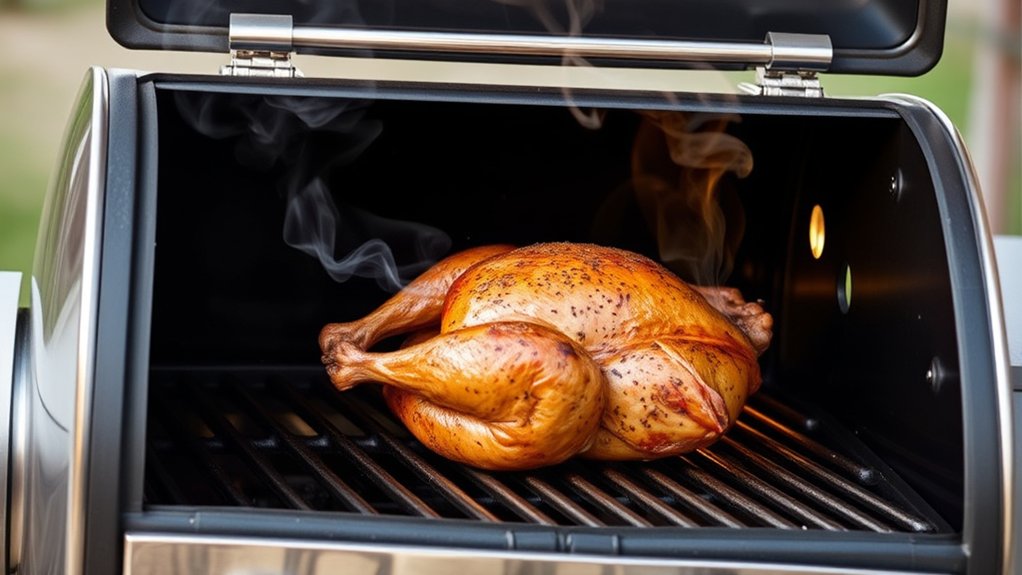
First things first, give your grill a good cleaning and preheat it. This helps create a nice, clean cooking space and makes sure everything’s ready to go. Next, pick the right wood pellets—whether you’re after a smoky, bold flavor or something a bit milder. Set your grill to the right temperature so you get steady, consistent smoking. Once you’ve got all that sorted, you’re all set to smoke your turkey to perfection!
Clean and Preheat Grill
Before you start smoking your turkey, it’s really important to clean and preheat your pellet grill. Keeping your grill in good shape helps it work better and stops flavors from past cooks from messing up your turkey.
Use a grill brush and scraper to get rid of any leftover residue or buildup inside. This helps the heat stay even and gives you more of that smoky flavor we’re after.
Next, preheat your pellet grill to around 225°F to 250°F. Let it heat up and stabilize before you start cooking. To make things easier, you can remove old ashes and debris, wipe down the grates, check your pellet supply, and then set the temperature.
Select Appropriate Wood Pellets
Choosing the right wood pellets is crucial for infusing your turkey with the best smoky flavor. Your pellet selection influences the wood flavor and overall taste of your meat.
For poultry, fruit woods like apple or cherry offer a mild, sweet aroma, while hickory provides a stronger, smoky profile. Consider the flavor intensity you want to achieve and match it to the type of wood pellets you select.
High-quality pellets guarantee consistent burning and ideal smoke production. Avoid cheaper options that might contain fillers or binders, which can affect flavor and performance.
Proper pellet choice not only improves the taste but also helps maintain steady heat and smoke levels during cooking. This ensures your turkey turns out perfectly smoked and delicious.
Adjust Temperature Settings
To get the best smoking results, you need to set your pellet grill’s temperature just right. Proper calibration ensures consistent heat, which is key for evenly cooking your turkey and controlling how long it smokes.
Start by checking your grill’s temperature with an external thermometer and adjust the controller if necessary. Set your target smoking temperature—around 225°F to 250°F for turkey.
Keep an eye on the digital display and make small tweaks to maintain steady heat. Avoid quick fluctuations, as they can impact smoke production and cooking time.
Cook Your 20-Pound Turkey on the Pellet Grill
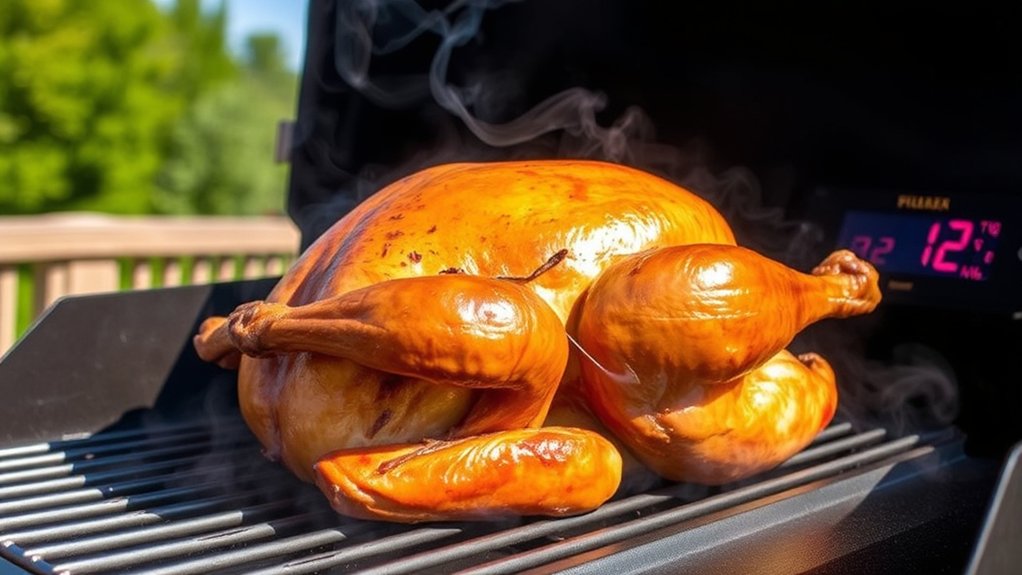
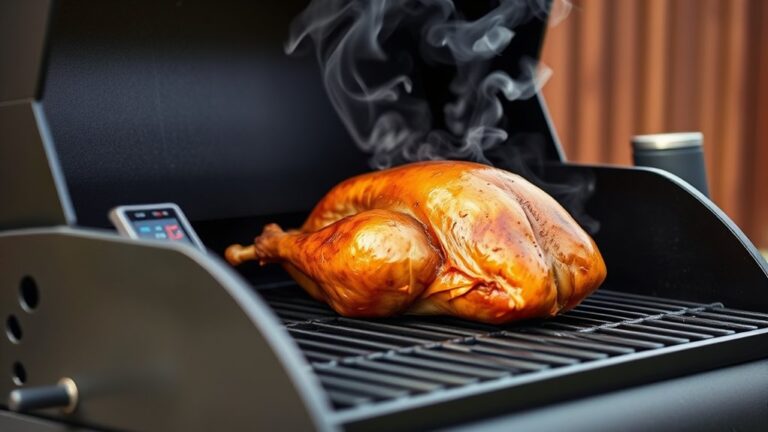
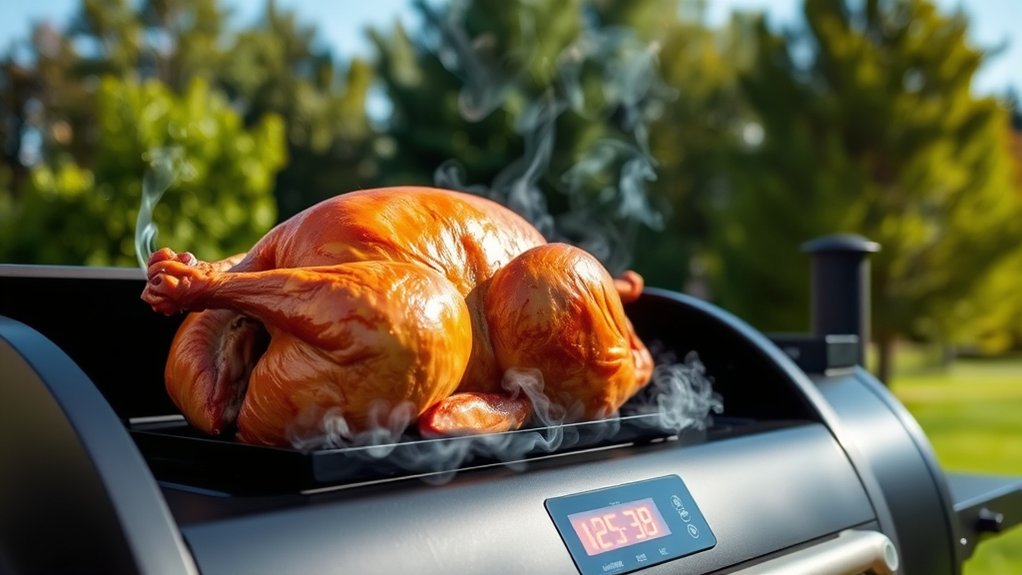
Once you’ve prepared your pellet grill and your turkey, it’s time to start cooking. Place the turkey on the grill, breast side up, and close the lid. To add extra flavor, consider applying a marinade or dry rub beforehand. This also makes for a more impressive presentation when serving.
Keep the grill temperature around 225-250°F and make sure the smoke circulates evenly. Use a meat thermometer to check the internal temperature; you want 165°F in the breast and 175°F in the thigh. Baste occasionally if you like, but try not to open the lid too often so the smoke flavor stays consistent.
Let the turkey smoke steadily, allowing it to soak up those rich flavors. Once it hits the right temperature, remove it from the grill and let it rest. Resting helps keep the juices in and makes carving easier, giving you a beautifully smoked, flavorful turkey.
Monitor Temperature, Wrap When Needed, and Rest the Turkey
Keeping a close eye on the turkey’s internal temperature guarantees it cooks evenly and reaches the safe, flavorful finish you want. Use a reliable meat thermometer to monitor progress. When the temperature hits around 155°F, consider wrapping the turkey with foil to prevent overcooking and boost flavor infusion.
Monitor the turkey’s temperature closely and wrap with foil at 155°F for moist, flavorful, and evenly cooked results.
Wrapping also helps retain moisture and encourages consistent smoke absorption. As you cook, periodically check the temperature to avoid under or overcooking. Once the turkey reaches 165°F, it’s time to rest.
Resting allows the juices to redistribute, ensuring moist meat and crispy skin. During this period, keep the wrapped turkey in a warm spot, which helps preserve its flavor and temperature. Remember, patience during the resting stage maximizes flavor infusion and results in tender, juicy meat.
Proper monitoring and timing are essential for a perfectly smoked turkey that’s flavorful, moist, and safe to serve.
Tips for Juicy Meat and Crispy Skin
Achieving juicy meat and crispy skin hinges on a few key techniques that maximize flavor and texture. To boost flavor infusion, brine your turkey beforehand or apply a flavorful dry rub. This step guarantees the meat stays moist and develops depth of taste.
When it’s time to cook, keep the skin dry by patting it with paper towels; moisture can hinder crispiness. To get that perfect crispy skin, increase the grill temperature during the last 30 minutes, letting the skin brown and crisp up.
Use presentation techniques like basting with melted butter or oil during the final stages to add shine and flavor. Properly positioning the turkey on the grill, with the breast side up, ensures even cooking and a visually appealing look.
These tips will help you serve a turkey that’s both irresistibly juicy and beautifully crispy, sure to impress everyone at the table.
Rest, Carve, and Serve Your Smoked Turkey
After your smoked turkey reaches the ideal internal temperature, let it rest before carving. Resting lets the juices redistribute, making the meat moist and flavorful. Cover the turkey loosely with foil and wait about 20 minutes.
Let the smoked turkey rest for 20 minutes to lock in juices and enhance flavor before carving.
Once rested, you’re ready to carve and serve. To make your presentation look even better, use a sharp carving knife for clean slices. Arrange the slices neatly on a platter and garnish with fresh herbs.
Try pairing your turkey with flavor combinations like cranberry sauce, stuffing, or fruit chutneys. Serve with colorful side dishes to make the plate more appealing.
Resting also helps you carve more precisely, so each slice looks tempting. When plating, highlight the turkey’s golden skin and tender meat. Paying attention to these details will impress your guests and ensure a delicious, flavorful meal.
Troubleshoot Common Issues and Get Final Tips
Even with careful preparation, you might run into some common issues when smoking a turkey on a pellet grill. If your turkey isn’t absorbing enough flavor, try experimenting with different flavor combos in your rubs and marinades.
Adjust your smoking techniques by keeping a steady temperature and using good quality pellets. This helps ensure consistent smoke and heat throughout the process.
If the skin isn’t crisping up, raise the grill’s heat during the last 15 minutes of cooking or wrap the turkey in foil to lock in moisture. For dry meat, watch your internal temperature closely and avoid overcooking.
If you notice uneven cooking, try rotating or repositioning the turkey for more even heat distribution. Remember, patience is key—let the turkey rest before carving.
Final tips include keeping an eye on your smoker’s temperature and trying different flavor combos to improve your smoking skills next time.
Frequently Asked Questions
What Type of Wood Pellets Produce the Best Flavor for Turkey?
You should choose fruitwood pellets like apple or cherry for the best flavor improvements when smoking turkey. These woods add a sweet, mild smoky taste that complements the bird’s natural flavor.
For a richer, deeper smoky aroma, consider hickory or pecan, but use them sparingly. Experiment with different woods to find your preferred flavor profile.
How Long Should I Let the Turkey Rest Before Carving?
Let your turkey rest for at least 20-30 minutes before carving. This is the secret to juicy, tender meat that practically melts in your mouth.
During this resting time, the juices redistribute, making every slice flavorful and moist. It’s worth the wait!
Following proper cooking safety and meat resting guidelines helps prevent dryness and bacteria. Think of it as giving your turkey a well-deserved encore.
This helps seal in all that smoky goodness for the perfect bite. Enjoy the delicious results!
Can I Smoke a Turkey if My Pellet Grill Doesn’T Have a Temperature Probe?
Yes, you can smoke a turkey without a temperature probe by using other methods like visual cues and time estimates. Keep an eye on the turkey’s color and juices, and manually monitor your grill’s temperature.
For the best results, follow seasoning tips to boost flavor. Remember, smoking a turkey without a probe means you’ll need to pay more attention.
Check frequently and use your experience to help you achieve juicy, perfectly smoked meat.
What’s the Ideal Internal Temperature for Fully Cooked Turkey?
Think of your turkey as a story waiting to be told; the ideal internal temperature for fully cooked turkey is 165°F, signaling that the story has reached its climax. Use your cooking techniques wisely, like choosing the right marinade recipes, to keep it moist and flavorful.
Monitoring this temperature guarantees your turkey’s journey ends perfectly, with tenderness and safety. It’s much like a well-written ending that leaves a lasting impression.
How Do I Prevent the Turkey From Drying Out During Smoking?
To prevent your turkey from drying out, start with a brine solution to keep it moist and flavorful. This step really helps lock in moisture from the get-go.
During smoking, baste the turkey every hour with a mixture of broth or melted butter. It’s a simple way to add moisture and keep the meat juicy.
If the turkey starts to look too dark, loosely cover it with foil. This helps prevent over-browning while it finishes cooking.
Keep an eye on the internal temperature to ensure it’s cooked perfectly. Following these steps will give you juicy, tender meat from your pellet grill.
Conclusion
With these simple steps, you’ll smoke a succulent, savory turkey that’s sure to impress. From preparation to perfection, your pellet grill becomes a partner in producing a crispy-skinned, juicy masterpiece.
Just follow the flow, stay attentive to temperatures, and enjoy the smoky aroma filling your space. Celebrate your skill, seize the flavor, and serve a stunning centerpiece.
Smoke smart, enjoy immensely, and create unforgettable memories with every mouthwatering bite of your smoked turkey.