How to Choose the Perfect Temp to Cook Brisket on a Pellet Grill
Cooking brisket on a pellet grill can be tricky, especially when you’re aiming for that perfect balance of tenderness and flavor. Many people struggle to find the right temperature to get juicy, melt-in-your-mouth meat without overcooking or drying it out. You’re not alone—getting that ideal low-and-slow cook takes some practice.
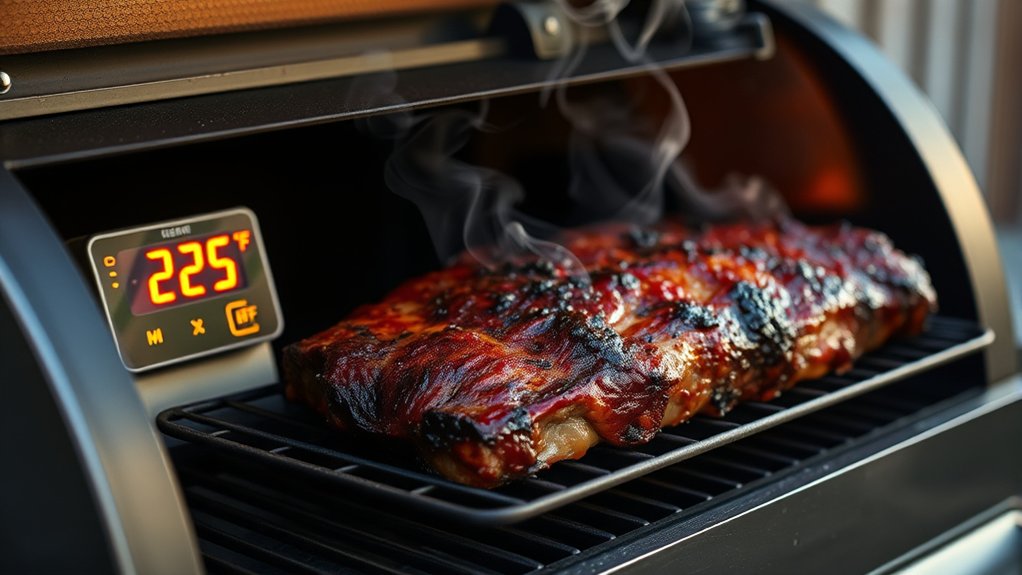
To choose the perfect temp for cooking brisket on a pellet grill, aim for a steady range between 225°F and 250°F. This low-and-slow approach helps break down connective tissue for tender meat while developing a flavorful bark.
Adjust slightly based on weather or brisket size, and monitor with a reliable thermometer.
Keeping the temperature consistent is key to juicy, evenly cooked results. If you want more tips, keep exploring for expert advice.
Key Takeaways
- Aim for a temperature range of 225°F to 250°F for slow, even cooking and optimal tenderness.
- Use a reliable meat thermometer to monitor internal temperature accurately throughout the cook.
- Adjust the grill temperature based on external conditions like weather, the size of the brisket, and your desired cook time.
- Keep the heat steady by minimizing lid openings and making sure your pellet grill is properly calibrated.
- Cook until the internal temperature reaches 195°F to 203°F, then let it rest for maximum juiciness and flavor.
Why Temperature Matters for Perfect Brisket
Temperature is a critical factor in achieving a tender, flavorful brisket. Your choice of cooking techniques relies heavily on maintaining the right temperature throughout the process.
When you select the meat, look for well-marbled briskets, as fat renders during cooking, keeping the meat moist and enhancing flavor. Proper temperature control ensures your brisket reaches the ideal internal temperature, breaking down connective tissues without drying out.
If you cook too hot, you risk tough, dry meat; too low, and it may not cook evenly or become tender enough. Using precise temperature management with your pellet grill allows you to develop that perfect bark and juicy interior.
What Is the Ideal Temp Range for Brisket on a Pellet Grill
The ideal temperature range for cooking brisket on a pellet grill is generally between 225°F and 250°F. It’s a nice, steady range that helps break down the meat slowly and evenly.
You can tweak the temperature within this range depending on how tender you want your brisket and how much smoky flavor you’re aiming for. Being flexible with the temperature gives you a bit of room to fine-tune the process and get that perfect result you’re after.
Optimal Cooking Temperatures
Achieving tender, flavorful brisket on your pellet grill depends heavily on maintaining the right cooking temperature. For best results, keep your grill between 225°F and 250°F.
This range allows the meat to cook slowly, breaking down connective tissues for that melt-in-your-mouth texture. Before cooking, apply a rub to boost flavor and consider meat injection to keep the brisket moist during the long cook.
Maintaining this temperature ensures a steady cook, preventing the meat from drying out or becoming tough. Use a reliable thermometer to monitor the grill’s heat and adjust as needed.
Staying within this temperature window helps you achieve the ideal balance of tenderness and flavor, making your brisket perfect every time.
Temperature Range Flexibility
While sticking to the recommended 225°F to 250°F range is ideal for tender, flavorful brisket, there’s some flexibility depending on your goals and timing. Adjusting the cooking temperature slightly can influence meat tenderness and cooking time.
Running the pellet grill at lower temps, around 200°F, may extend the cook and deepen flavors but risks less uniform tenderness. Conversely, higher temps, nearing 275°F, can speed up the process but might compromise juiciness.
The key is understanding how temperature variations impact your brisket’s texture. If you aim for maximum tenderness, maintaining a consistent temperature within the suitable range is best.
However, small adjustments can help tailor the end result to your preferred balance of flavor, moisture, and cooking time.
How to Set Your Pellet Grill for the Best Results
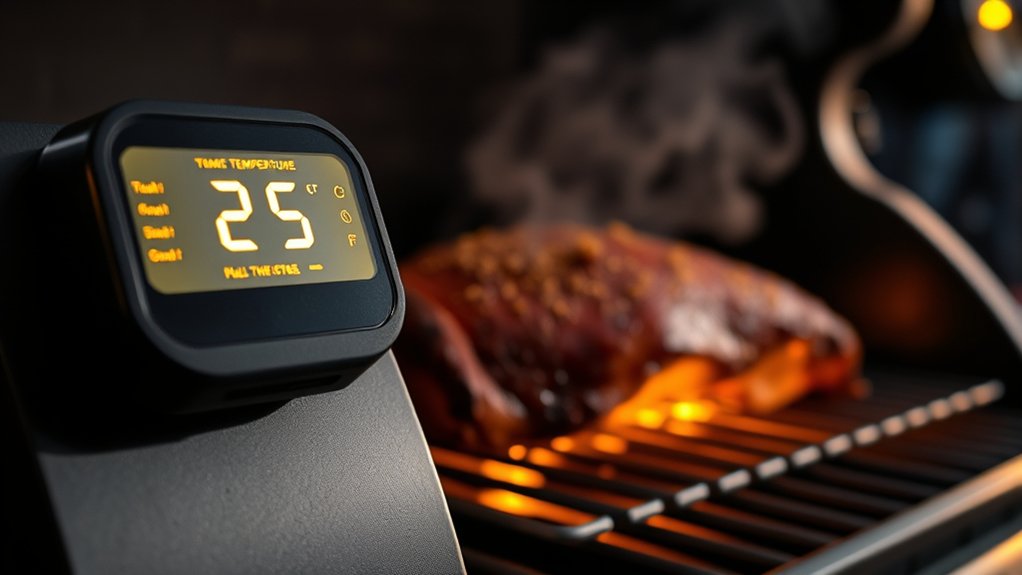
Setting your pellet grill correctly is key to getting consistently great brisket. First, make sure the cooking surface is clean and preheated properly. A stable surface helps keep the heat even, which is crucial for tender, flavorful meat.
Use quality pellets, because pellet quality really affects temperature consistency and smoke flavor. Good pellets burn more efficiently, produce cleaner smoke, and help prevent temperature fluctuations that could mess up your cook.
Set your grill to the right temperature using the control panel, and try not to open the lid too often. Every time you do, the temperature drops, which can throw off your cook. Keep a digital thermometer nearby to check the internal temperature accurately.
If you notice any fluctuations, adjust the grill’s settings and let it stabilize before placing your brisket on. Proper setup creates a steady heat environment, helping your brisket cook evenly and develop that perfect bark and tenderness you want.
Low-and-Slow vs. Higher Temperatures: Which Is Better for Brisket?
Deciding whether to cook your brisket low-and-slow or at higher temperatures really comes down to what you’re looking for. When you go low-and-slow, it’s all about allowing those flavors to really develop and letting the meat stay nice and juicy. Sure, it takes a bit more patience since it takes longer, but the results are usually worth it.
On the other hand, cooking at higher temperatures can cut down the cooking time quite a bit. But here’s the thing—if you crank up the heat too much, you might risk drying out the brisket or losing some of that rich flavor complexity you get with the slow method. So, it’s all about finding the right balance for what you want in your final bite.
Flavor Development Differences
Cooking brisket at low-and-slow temperatures lets the meat develop deep, rich flavors through longer smoke exposure and gradual breakdown of connective tissues. This method *improves* flavor infusion, giving the meat a smoky, well-rounded taste.
Your seasoning techniques are *vital* here; slow cooking helps spices and rubs meld into the meat, making the flavor more intense. Higher temperatures might produce a more prominent bark but can limit how deep the flavor goes.
To get the most flavor out of your brisket, try using a rub with bold spices for better infusion. You can also apply a marinade or injection before cooking. Keeping smoke levels steady helps seasoning penetrate evenly.
Choosing the right temperature depends on the flavor profile you’re after and how much you want the seasoning to shine through.
Tenderness and Moisture Levels
When it comes to achieving tender, juicy brisket, temperature control is really important. Cooking at lower temperatures for a longer time helps break down the marbling, giving you that melt-in-your-mouth texture.
Cooking faster at higher temperatures can work, but it risks drying out the meat if you’re not careful. To keep the moisture up, use seasoning techniques like a good rub and wrapping the brisket during cooking.
Low-and-slow methods help promote even tenderness and keep the natural juices in, making it more succulent. On the other hand, higher temperatures can make the meat firmer with less moisture.
Ultimately, your choice depends on whether you want more tenderness or moisture. But generally, slow cooking at a steady, low temp gives the best results for juicy, tender brisket.
Cooking Time Variations
Deciding between low-and-slow and higher temperature methods depends on your priorities for the brisket. Low-and-slow cooking means longer times at lower temps, which makes the meat tender, juicy, and full of flavor. Higher temps cook faster but can dry out or toughen the meat if you’re not careful.
Your choice affects the overall cooking techniques and the type of meat you use. Keep in mind that low-and-slow helps preserve moisture and boosts tenderness, making it great for tougher cuts. Higher temps cut down cooking time but need close attention to avoid drying out.
Meat selection also matters. Well-marbled brisket cooks more evenly and handles higher temperatures better. Pick your method based on how patient you are, the texture you want, and the quality of your meat.
Monitoring and Adjusting Your Grill’s Temperature During Cooking
Maintaining a steady temperature is key to getting tender, flavorful brisket. You’ll want to keep a close eye on your grill’s heat throughout cooking. Regularly check your grill’s thermometer to make sure it’s reading accurately, especially if your grill isn’t calibrated well.
Adjust the pellet feed or airflow as needed to keep the smoke and heat levels consistent. Small tweaks can make a big difference in maintaining your target temperature. Keep an eye out for fluctuations and make quick corrections to stay on track.
| Adjustment Method | Purpose |
|---|---|
| Pellet feed control | Regulate temperature rise or fall |
| Airflow adjustment | Keep heat stable |
| Thermometer calibration | Ensure accurate readings |
| Vent adjustments | Fine-tune smoke and heat |
| Lid management | Control heat loss or gain |
This active monitoring helps prevent temperature swings and ensures your brisket cooks evenly.
Common Mistakes When Setting Your Pellet Grill Temperature
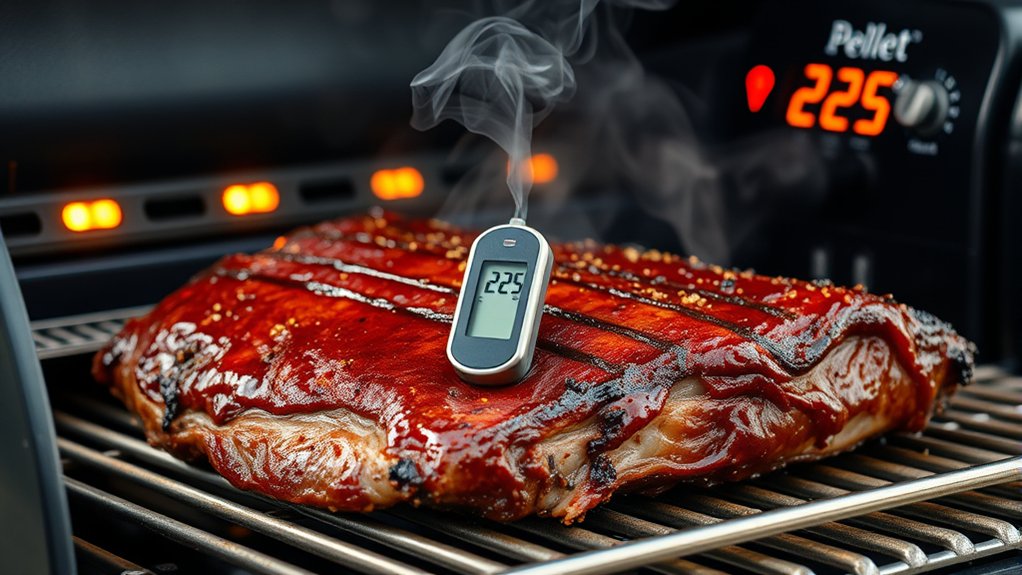
One mistake people often make is ignoring those temperature fluctuations. It might seem minor, but it can really mess with your cooking, causing uneven results.
Another thing to watch out for is rushing the smoking process by turning up the heat too high. That usually leads to tough, overcooked brisket instead of the juicy, tender meat you’re aiming for.
The key is to stay attentive and patient. Taking your time and keeping an eye on the temperature helps ensure you get consistent, perfectly tender results every time.
Ignoring Temperature Fluctuations
Ignoring temperature fluctuations is a common mistake that can seriously affect your brisket’s outcome. Fluctuations can cause uneven cooking, dry spots, or sections that aren’t cooked enough.
To avoid this, focus on keeping the temperature steady by regularly checking your grill’s calibration. Proper calibration ensures your pellet grill heats accurately and consistently.
Be mindful of signs of temperature swings during cooking and adjust as needed. Also, don’t forget to verify your grill’s calibration before you start.
Without stable heat, your brisket won’t develop that perfect bark or tender interior. Consistent temperature control is key, so keep an eye on your grill and calibrate it regularly for the best results.
Rushing the Smoking Process
Rushing the smoking process is a common mistake that can mess up the quality of your brisket. Many beginners try to speed things up by turning up the pellet grill temperature, but that usually results in dry, tough meat.
Instead, focus on proper marinade techniques and applying spice rubs evenly to boost flavor without losing tenderness. Patience lets the brisket develop a rich smoke ring and soak up flavors deeply.
By keeping a steady, lower temperature, you give the collagen time to break down, making the brisket tender and juicy. Rushing this step can cause uneven cooking, which ruins the final texture.
Take your time, trust the process, and your brisket will turn out more flavorful and perfectly cooked.
How to Know When Your Brisket Is Done Based on Temperature and Feel
Knowing when your brisket is truly done isn’t just about checking the temperature; feeling the meat is just as important. As it cooks, the brisket should feel tender yet firm, showing that the connective tissue has broken down properly.
Use these cues to know it’s ready: The meat should have a gentle wobble when you lift it, which means it’s perfectly tender. It should feel slightly springy but not mushy, indicating good collagen breakdown.
The surface may develop a slight bark, which adds flavor and helps smoke penetrate. Pay attention to the internal temperature — around 195-203°F is ideal. But don’t rely on temperature alone.
Feeling the meat tells you if it’s reached the right balance of moisture and tenderness. A properly cooked brisket will be juicy and full of smoky flavor. Trust your senses to know exactly when it’s just right.
Resting Your Brisket: Best Practices for Juiciness and Flavor
Once your brisket reaches that perfect tenderness, resting it is key to locking in the juices and boosting flavor. It helps the meat’s juices redistribute so each bite stays moist and tasty. Wrap your brisket loosely in foil or a clean towel to keep it warm, but avoid tight wrapping that traps moisture.
During resting, if you used a marinade, it helps to intensify those flavors. When you’re ready to cut, slice against the grain to maximize tenderness. Resting also stops juices from spilling out when you carve, keeping each slice juicy and tender.
| Rest Time | Benefits | Tips |
|---|---|---|
| 10-15 mins | Juiciness retention | Wrap loosely in foil |
| 20 mins | Flavor concentration | Slice against the grain |
| 30 mins | Even distribution | Use sharp knives |
| 45 mins | Ideal tenderness | Rest in a warm place |
Weather and Brisket Size: How External Factors Affect Your Temp Choices
External factors like weather conditions and the size of your brisket can really influence the temperature you should set on your pellet grill. Weather patterns such as wind, humidity, and temperature swings can cause your grill’s internal temperature to fluctuate.
When it’s cold or windy, you might need to bump up your grill’s temperature to keep things steady. A larger brisket takes longer to cook through, so it may require a different approach compared to a smaller cut.
Keep these key points in mind:
- Cold or windy weather means increasing your grill’s temp to make up for heat loss.
- Higher humidity can slow evaporation, which can affect your cooking time.
- Bigger briskets might need slightly lower temps for longer, even cooking.
Adjusting your temperature based on weather and brisket size helps you get consistent results and a perfectly cooked brisket.
Tips for Achieving a Perfect Smoke Ring and Juicy Texture
Achieving a perfect smoke ring and juicy texture on your brisket takes attention to detail and some smart techniques. To boost marbling and smoke penetration, start with a well-marbled brisket. The fat keeps the meat moist and flavorful.
Before cooking, apply a light coat of mustard or your favorite rub. This helps the seasoning stick evenly and makes sure the smoke adheres well. During smoking, keep the temperature steady and low to let the smoke work its magic without drying out the meat.
Wrapping the brisket halfway through helps trap moisture and keeps it juicy. Don’t over-trim the fat cap—more fat means better insulation and smoke absorption. Patience is key. Slow, steady cooking results in a deep smoke ring and tender, juicy brisket.
Frequently Asked Questions
How Do Ambient Weather Conditions Influence the Ideal Cooking Temperature?
Ambient weather conditions greatly influence your cooking temperature consistency. Cold, windy, or rainy weather can cause fluctuations, making it harder to keep a steady temperature.
You might need to turn up your grill’s settings or add insulation to counteract these effects. Adjusting for the weather helps ensure your brisket cooks evenly and stays tender and flavorful.
Always keep a close eye on your grill during extreme weather to get the best results. Being aware of how the weather impacts your cooking can make all the difference.
Can Different Pellet Flavors Affect the Optimal Cooking Temperature for Brisket?
Like a painter mixing colors, your pellet flavor influences the brisket’s taste and cooking process. Different pellet flavors can subtly alter the heat consistency, affecting how your meat cooks.
Some flavors, like hickory, might require a slightly lower temp for best results. Meanwhile, fruit woods can handle higher temps more easily.
Pay attention to pellet consistency, as uneven pellets can impact temperature stability. This helps ensure your brisket cooks perfectly regardless of flavor choice.
How Does Brisket Size Impact the Ideal Temperature and Cooking Time?
You’ll find that larger briskets need longer cooking times, which helps break down connective tissues for ideal tenderness. Keep in mind, bigger cuts benefit from a slightly lower temperature to ensure even cooking and flavor infusion throughout.
Smaller briskets cook faster but may require a higher temp to reach the same level of tenderness. Adjust your temperature accordingly, and you’ll get juicy, flavorful results every time, no matter the size.
Should I Adjust the Temperature if I’M Cooking Other Meats Simultaneously?
Think of your pellet grill as a symphony conductor—each meat needs its own tempo. If you’re cooking other meats, you might want to adjust the cooking temperature so each piece reaches its ideal tenderness.
For example, poultry may need a slightly higher temp for safety, while brisket benefits from a lower, slow cook. Keeping an eye on each meat’s tenderness helps you create a harmonious, delicious meal.
What Are the Signs of Temperature Fluctuations During Cooking?
You’ll notice temperature fluctuations if your cooking temperature varies or the pellet flavor influence shifts unexpectedly. Signs include inconsistent smoke output, uneven cooking, or temperature swings on your grill’s thermometer.
To keep things steady, regularly check your grill’s settings and pellet supply. Fluctuations can change how the pellet flavor influences your food, affecting taste and texture.
Keep an eye on your grill’s performance, and make adjustments quickly. This way, you’ll ensure a consistent, flavorful brisket every time.
Conclusion
Mastering the perfect brisket on your pellet grill is like tending a slow-burning fire. Patience and precision are key to revealing tender, smoky goodness.
When you set the right temperature, you’re guiding your meat through a gentle dance of heat and time. This transforms raw cuts into melt-in-your-mouth perfection.
With each tweak and turn, you’re not just cooking—you’re crafting a flavorful masterpiece. It’s a story of care, heat, and the art of barbecue.
Choosing the ideal temperature is crucial for a perfect brisket on your pellet grill. Generally, cooking at 225°F to 250°F yields the best results.
Low and slow is the way to go for tender, flavorful brisket. This range allows the connective tissues to break down slowly, making the meat juicy and tender.
Remember, patience is everything. Maintaining a consistent temperature helps you achieve a beautifully smoked brisket that’s worth the wait.
So, when in doubt, start at around 225°F. It’s a reliable sweet spot for mastering the art of brisket on your pellet grill.